In short: The fire code uses Maximum Allowable Quantity (MAQ) to limit active flammable liquids. However, barreled spirits in rickhouses fall under IFC Chapter 40, treating them as an alternative S-1 storage occupancy rather than high-hazard. This keeps large-scale barrel aging compliant without violating your production MAQ limits.
Few topics cause more confusion on a distillery floor than the fire code. Distillery owners hear the phrase maximum allowable quantity, or MAQ, and immediately look at their rickhouses. If the code limits flammable liquids to a few hundred gallons, they wonder, how can a facility legally hold thousands of barrels of high-proof bourbon? The reality is more nuanced. Understanding this distinction is the difference between an anxious guess and a defensible position when the fire marshal visits. This friction usually happens during an expansion or initial permitting, when local officials ask for a complete breakdown of every hazardous material in your plant.
What does MAQ actually limit in a distillery?
A control area is a specific space within a building where hazardous materials are stored, dispensed, or used. These areas are bounded by fire-resistant construction, typically one-hour or two-hour fire barriers depending on the building type. The International Fire Code allows you to subdivide a building into multiple control areas. For example, you can generally have up to four separate control areas on the ground floor of a building.
For each hazard class, the International Fire Code sets a maximum allowable quantity per control area in IFC Table 5003.1.1. As long as you stay at or below the MAQ, the space is treated under its normal occupancy classification, such as F-1 for factory industrial uses. This is ideal for normal daily operations.
If you exceed the MAQ, the area is reclassified as a high-hazard occupancy. For flammable liquids like distilled spirits, this typically means an H-3 occupancy. High-hazard classifications bring far more demanding construction, separation, electrical, and ventilation requirements. Building an H-3 processing room is drastically more expensive than outfitting a standard F-1 room.
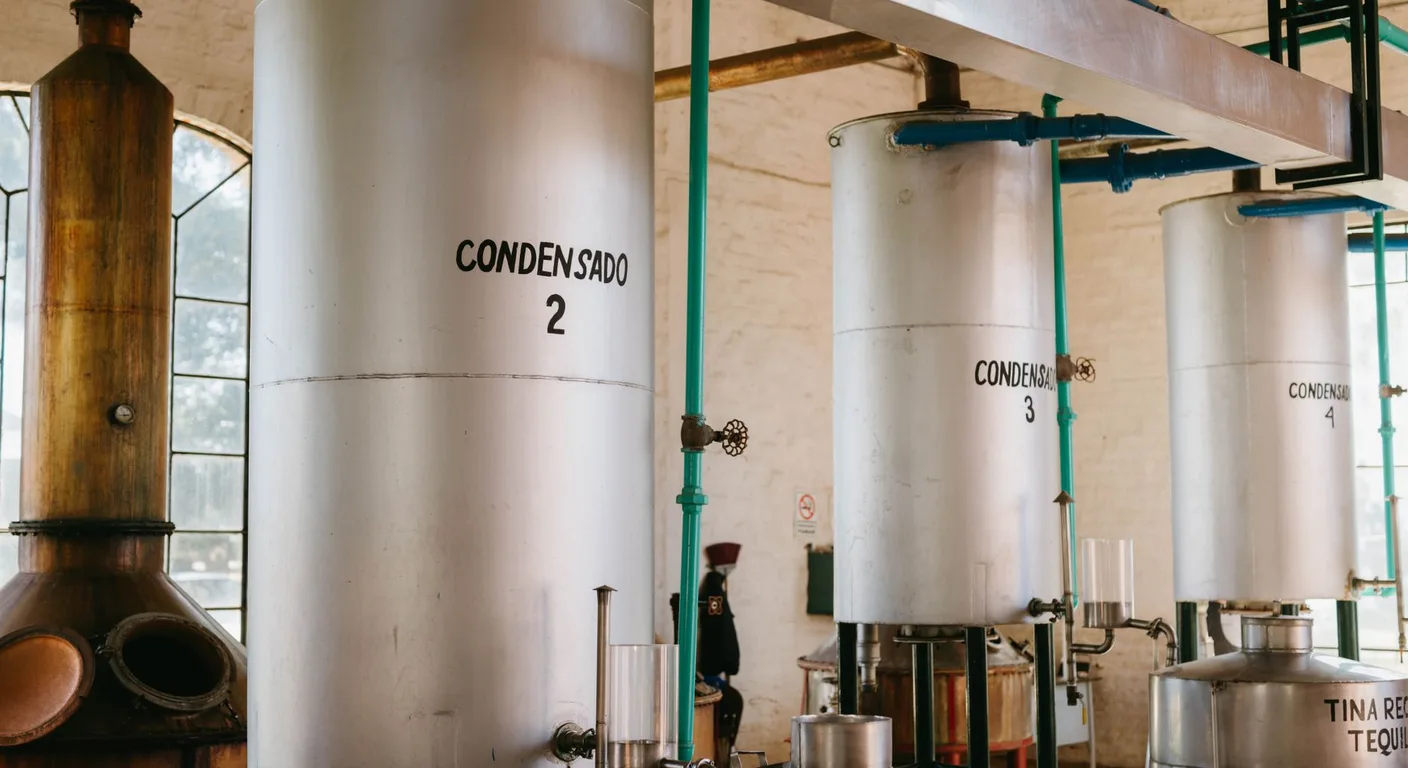
The MAQ applies directly to the flammable liquids you handle in active operations. This includes the spirit in your still receivers, your proofing tanks, your bottling areas, and your finished goods staging. Furthermore, the base table quantities decrease depending on the floor level. First floor control areas get 100 percent of the base MAQ. Second floor areas might only get 75 percent, and third floor areas drop to 50 percent. A careful distillery management system treats the base MAQ as a configurable value and computes your headroom based on the specific control area and floor, rather than asserting a single legal number across the entire plant.
How does NFPA 30 classify flammable spirits?
The hazard class assigned to a liquid drives its maximum allowable quantity. NFPA 30 is the Flammable and Combustible Liquids Code. It classifies liquids by closed-cup flash point and boiling point. It does not classify liquids strictly by alcohol by volume, which is the single most common mistake distillers make.
Flash point is the lowest temperature at which a liquid gives off enough vapor to ignite in the air. The closed-cup testing method traps these vapors in a small chamber, which generally results in a lower, more conservative flash point reading compared to open-cup testing. Mapping ethanol and water flash points to the NFPA 30 classes gives a practical picture for a distillery.
Spirit at roughly 60 percent ABV, or 120 proof, and above has a flash point at or below 22.8 degrees Celsius (73 degrees Fahrenheit) and a boiling point above 37.8 degrees Celsius (100 degrees Fahrenheit). This puts it squarely in Class IB.
Spirit around 40 to 55 percent ABV, which covers 80 to 110 proof, generally lands in Class IC. This class has a flash point between 73 and 100 degrees Fahrenheit. Lower-proof liquids climb into Class II and beyond as the flash point rises and the flammability risk decreases.
This means barrel-entry spirit near 125 proof is almost always Class IB, and most bottling-strength product is Class IC. Class IB has a lower base MAQ than Class IC. While the pure ethanol and water curve provides an excellent baseline, the heavy congeners and oils in aged whiskey can occasionally alter the exact flash point slightly. A robust tracking system implements this as a proof-to-flash-point lookup, referencing the established ethanol flash point curve, while allowing the operator to override it when a specific lab measurement dictates otherwise.
How can you increase your base MAQ ceiling?
The base MAQ listed in the fire code is rarely the final limit. The code rewards engineered fire protection with significant quantity increases. A control area protected throughout by an approved automatic sprinkler system can increase the base MAQ for flammable liquids by 100 percent.
Storing those liquids in approved flammable liquid storage cabinets can add another 100 percent increase. The cabinets must meet specific safety standards and cannot simply be standard metal lockers. These two increases are cumulative. Together, they can raise your operational allowance up to four times the original base quantity.
This multiplier effect is exactly why a properly sprinklered and cabinet-equipped operation can legally hold substantially more active spirit than the bare table value implies. Modeling these multipliers against your actual building configuration is crucial before you plan a bulk transfer. Moving a 500-gallon portable tank of 120-proof spirit into a bottling room could trigger an H-3 violation if the room lacks sprinklers, but it might be perfectly compliant if the room is fully protected. Understanding your multipliers is the key to flexible production scheduling.
Why is barreled spirit governed by IFC Chapter 40?
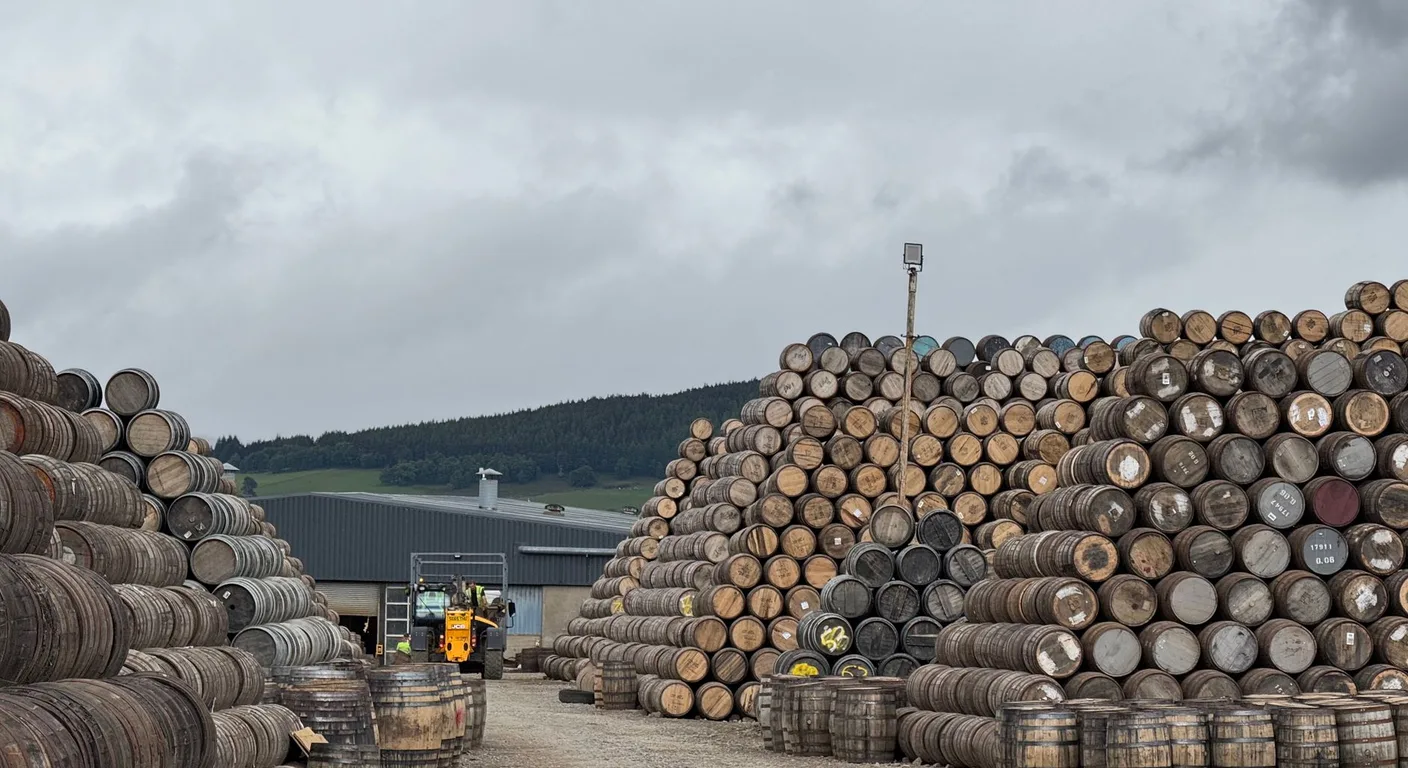
Here is the part that resolves the rickhouse paradox. Distilled spirits stored in wooden barrels are not handled as a magical exemption from the control-area MAQ. Instead, they are governed by IFC Chapter 40, titled Storage of Distilled Spirits and Wines.
Chapter 40 provides an alternative storage method specifically designed for the alcohol beverage industry. The code recognizes that storing flammable liquids in wooden barrels is fundamentally different from storing them in plastic totes or steel drums. The wood allows the spirit to breathe, and the traditional storage geometries present unique fire dynamics that generic flammable liquid codes simply do not address well.
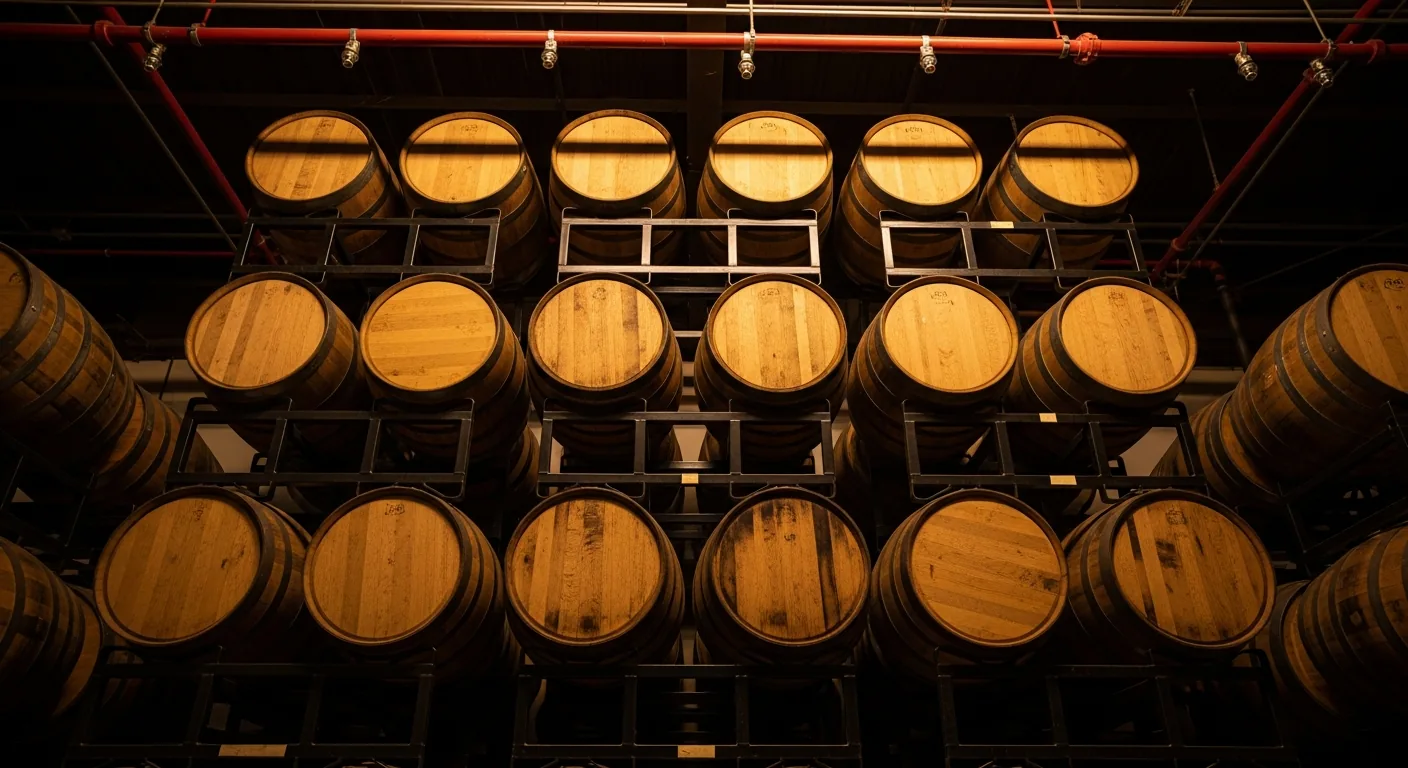
Under Chapter 40, your barrel storage building, or rickhouse, is classified as an S-1 occupancy for storage above 20 percent ABV, or an S-2 occupancy for spirits at or below 20 percent ABV. It avoids the H-2 or H-3 high-hazard classifications entirely, provided you follow a strict set of alternative protection rules. This occupancy path was carefully developed to allow traditional aging practices to exist safely without triggering prohibitive high-hazard construction costs.
The practical consequence is massive. When Chapter 40 applies, your barreled spirit is excluded from the control-area MAQ tally that governs your active operations spaces. It is not that the barrels are unregulated. It is that they are regulated under a different, purpose-built set of rules.
What are the specific requirements of Chapter 40?
Opting into Chapter 40 means trading the strict volume limits of MAQ for strict engineering and layout controls. The local Authority Having Jurisdiction, or AHJ, will evaluate your facility against several core requirements before granting the S-1 classification.
First, the building must typically feature automatic sprinkler protection. The design criteria for these sprinklers are highly specific. They must account for the unique fire loads of wooden barrels and high-proof alcohol, which burns differently than standard combustibles.
Second, the code limits pallet stacking heights. For palletized storage, the rules often restrict stacks to roughly seven pallets high, depending on the specific sprinkler technology and ceiling height. The goal is to ensure sprinkler water can actually reach the source of a fire before it spreads.
Third, racking and spacing rules apply. Traditional rickhouses and palletized warehouses must maintain clear aisles and minimum flue spaces. Six-inch flue spaces are standard between pallets or racks to allow water from the overhead sprinklers to penetrate down through the storage array.
Finally, drainage and containment are required for spilled or burning spirit. If a barrel fails, the resulting spill must be contained or directed away from the building to prevent a running pool fire from spreading the hazard. This often involves sloped floors, trench drains, and exterior containment basins engineered to hold the volume of the spill plus the expected sprinkler water.
Because the determination of whether Chapter 40 applies depends entirely on your building design and the interpretation of your AHJ, a sound distillery management system treats the Chapter 40 classification as a configured setting. It never hardcodes a rigid barrel-storage ceiling based on assumptions.
How do fire codes intersect with TTB bonded storage?
Distillery operators must satisfy two different masters at the same time. The local fire marshal enforces the International Fire Code, while the Alcohol and Tobacco Tax and Trade Bureau, or TTB, regulates the plant under federal law.
According to 27 CFR Part 19, which you can review in the eCFR at https://www.ecfr.gov, your facility must be strictly segregated, secured, and qualified as a distilled spirits plant. The TTB requires you to accurately track every proof gallon to protect federal tax revenue. They mandate strict locks, secure perimeters, and controlled access to all bonded areas.
The fire marshal, on the other hand, requires you to track hazardous volumes to protect human life and property. Fire codes mandate emergency egress, crash bars, and unhindered escape routes. These two regulatory frameworks do not perfectly overlap and often directly conflict when it comes to door hardware and building access.
A space might be fully approved by the TTB as a bonded storage area, but if it lacks the proper sprinklers, the local AHJ will still shut it down for exceeding the MAQ. Conversely, a fully sprinklered S-1 rickhouse that complies with IFC Chapter 40 cannot legally hold spirits until the TTB approves the building as an extension of your bonded premises. You must align your federal site plan with your local life safety plan, keeping detailed records that satisfy both agencies.
Putting it together in practice
The point of modeling all of this data is to make your fire code status something you can see on a dashboard, rather than something you hope is true. A live MAQ view shows your current active liquid quantity, the configured base limit, the sprinkler and cabinet multipliers currently in effect, and your remaining headroom. It provides a clear visual signal of your compliance status at any given moment.
Before you move a portable tank of high-proof spirit into a processing area, you can preview the transfer against that specific room's headroom. Meanwhile, your barrel storage is distinctly shown under its Chapter 40 framing, clearly marked with the S-1 or S-2 occupancy. This ensures the thousands of gallons in your rickhouse are never mistakenly counted as a MAQ violation in your active production areas.
None of these values should be presented by software as a fixed legal ceiling. They are computed dynamically from the active quantities, hazard classes, and physical protections you enter into the system. Relying on software to automatically calculate your remaining footprint saves hours of manual spreadsheet math and drastically reduces the risk of accidental noncompliance.
Spirit Sight models MAQ headroom, NFPA 30 classification by flash point, and Chapter 40 barrel storage as a core part of its safety and compliance suite. This makes your fire code posture visible and defensible. You can explore these capabilities on the EHS Command Center page.
Please note that this article provides general information and is not legal, tax, or engineering advice. Always confirm every compliance determination, TTB application, and occupancy classification directly with your Authority Having Jurisdiction and your legal counsel.
Key takeaways
- MAQ per control area comes from IFC Table 5003.1.1, and exceeding it triggers strict high-hazard occupancies.
- NFPA 30 classifies liquids by closed-cup flash point rather than ABV, making barrel-entry spirit Class IB and bottling spirit Class IC.
- Automatic sprinklers and approved storage cabinets can each increase your base MAQ by 100 percent.
- Barreled spirit is governed by IFC Chapter 40 as an alternative S-1 or S-2 storage method, which excludes it from active-operations MAQ totals.
- Fire code and TTB bonded storage regulations overlap but require distinct compliance efforts to satisfy both federal law and local safety codes.
Frequently asked questions
What is a maximum allowable quantity (MAQ) in the fire code?
The maximum allowable quantity is the largest amount of a hazardous material permitted in a single control area before the space becomes a high-hazard occupancy.
Does NFPA 30 classify distilled spirits by alcohol by volume (ABV)?
No. NFPA 30 classifies liquids by closed-cup flash point and boiling point, meaning most barrel-entry spirits are Class IB and bottling-strength spirits are Class IC.
How much can sprinklers and cabinets increase my MAQ limit?
A fully sprinklered control area adds a 100 percent increase, and using approved flammable-liquid cabinets adds another 100 percent, cumulatively raising the limit up to four times the base quantity.
Why is barreled spirit handled under IFC Chapter 40 instead of as a MAQ exemption?
Distilled spirits in wooden barrels are governed by IFC Chapter 40 as an alternative storage method with specialized rules, placing them in an S-1 or S-2 occupancy rather than a high-hazard class.
Do TTB bonded storage rules automatically satisfy local fire codes?
No. TTB regulations mandate security and tax tracking under federal law, while local fire codes enforce structural safety and hazard limits. You must satisfy both authorities independently.