
Regauge
A regauge is the act of re-measuring a barrel's volume and proof during aging, recording the current contents so loss and value are based on real measurements, not estimates.
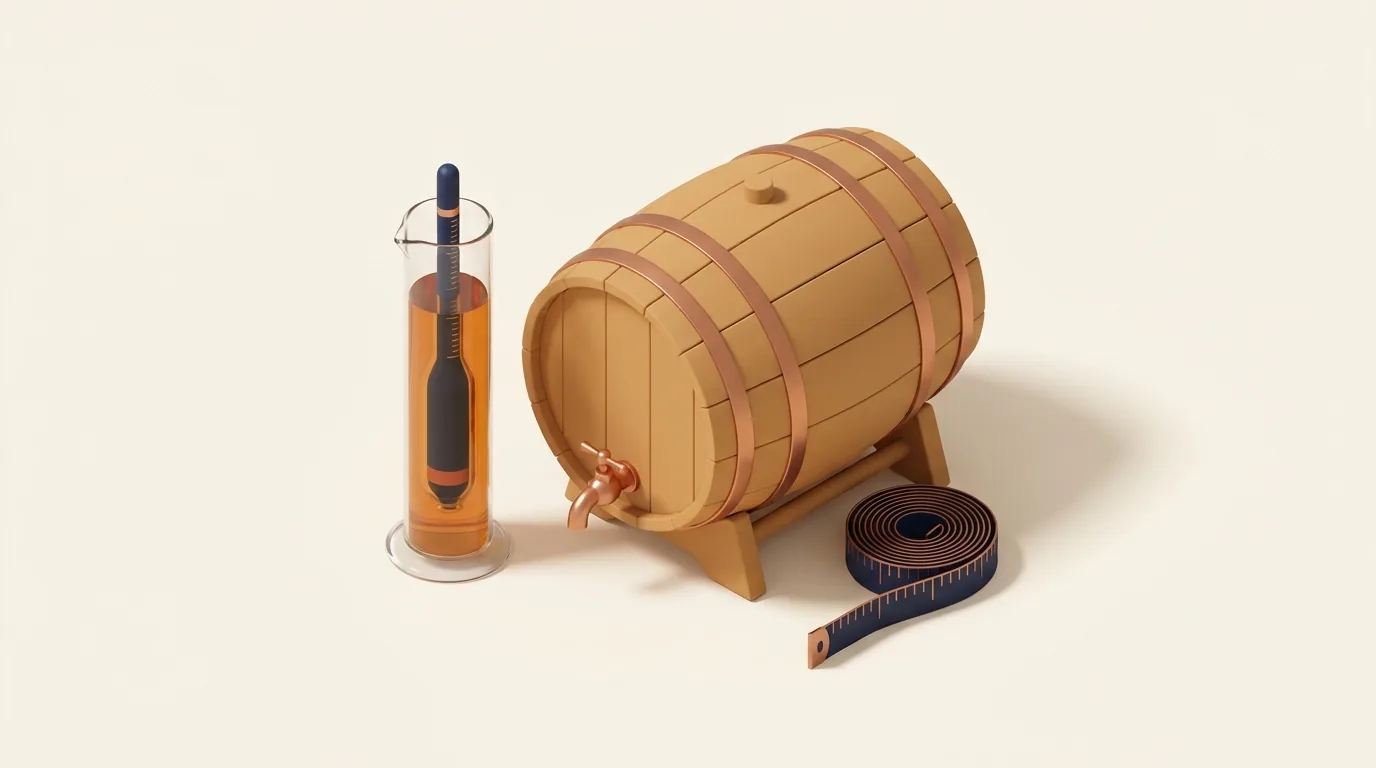
In short: A regauge is the act of re-measuring a barrel's volume and proof during aging, recording the current contents so loss and value are based on real measurements, not estimates.
Spirits lose volume and change proof as they age, so periodic regauging keeps inventory accurate and supports compliance and valuation. Capturing each regauge against the barrel builds a measured history of loss over time.
Why do distilleries regauge barrels?
Proof and volume both drift during aging, so the contents of a barrel are only known when they are measured. Regular regauges turn the angel's share from a guess into a measured loss rate per barrel, which feeds the TTB storage account, insurance values, barrel valuation, and dump planning. Most programs regauge on a sampling cadence and extrapolate to comparable barrels rather than opening every cask.
How is a barrel regauged?
The two accepted approaches are weight-based gauging, where the barrel is weighed and the spirit weight is converted to wine gallons using the TTB weight tables, and volumetric gauging by dip or by emptying into a calibrated vessel. Proof is read with a hydrometer and corrected to 60 degrees F using TTB Gauging Table 1. The corrected proof and volume are recorded against the barrel so its loss history stays continuous.
Tracking this in a spreadsheet? Spirit Sight records it where it happens and builds inventory, compliance, and the books from the same entry. See it on a demo.
Related
See your distillery in Spirit Sight
Book a walkthrough with our team. We’ll show your operation - barrels, TTB, and the books - in one place.
Schedule a Demo