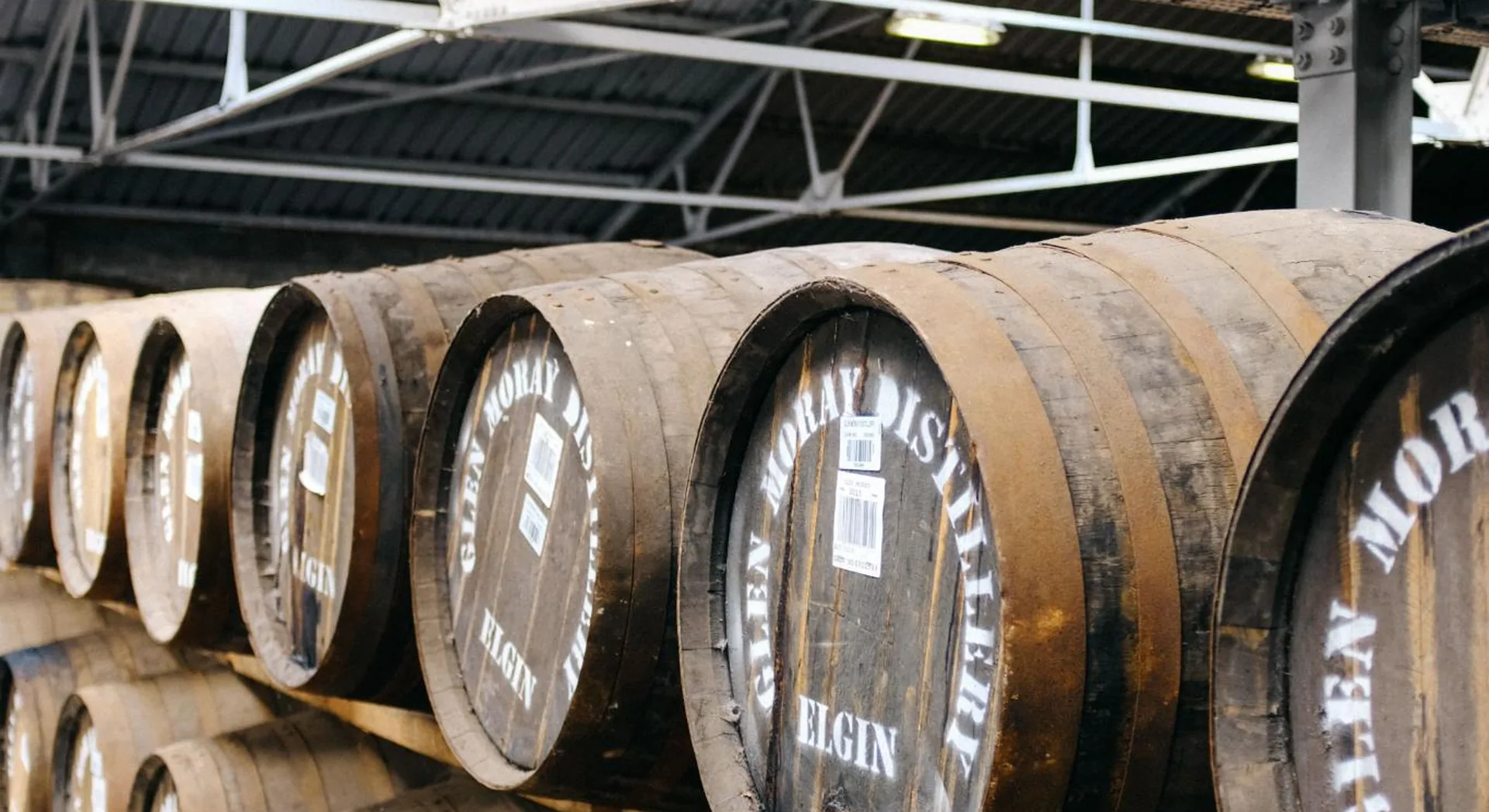
Barrel Management and Rickhouse Software
Aging is where whiskey gains its value and where it quietly loses volume. A barrel management system means knowing what every cask is, where it sits, how it is changing, and what it is worth, all without a clipboard. This guide covers barrel tracking, the angel's share, placement, and turning maturation into numbers you can plan around.
In short: Barrel management software is a barrel tracking system that follows every cask through aging: its proof, volume, age, location, and value, plus the angel's share lost to evaporation. Rickhouse management adds the warehouse dimension, where position and conditions change how each barrel matures.
A barrel tracking system that carries every number
Each barrel carries a serial, lot, mashbill, fill and dump dates, entry and current proof, volume, location, and live value. When that lives in one system, you can find any cask and know its worth in seconds, across every rickhouse and campus, and each regauge updates proof, volume, and value together instead of in three disconnected places. Because the same records drive compliance and costing, the barrel count you see is the barrel count the TTB reports and the ledger see, an equality enforced by 366 automated reconciliation checks.
The angel's share, on the books
Evaporative loss, the angel's share, runs a few percent a year and varies by floor, position, and season. Tracking it per barrel turns it from a year-end surprise into a forecastable cost that flows into valuation, processing-loss reporting, and true cost per proof gallon. What was an unpleasant reconciliation becomes a planned line.
Placement and conditions change the whiskey
Ricks span floors as real warehouses are built, and upper floors run hotter than lower ones. Position drives uneven aging, so seeing occupancy, gaps, and temperature and humidity by floor lets you place barrels deliberately rather than wherever there is room, and pull for a dump from the positions that matured the way you want.
See it in three dimensions
A live 3D rickhouse renders every barrel in place with gap detection and heatmaps, so capacity you are losing to empty positions becomes visible instead of hidden in a spreadsheet. A Locate action jumps straight from a barrel record to its exact spot in the warehouse, so a cask is never lost.
The barrel report: every cask tells its story
Because the record is barrel-centric, any cask can produce its full report on demand: cooperage and char, mashbill and fill, every regauge and movement, measured loss, tastings, and the readiness assessment. For single-barrel programs and private picks that report is a sales asset, the buyer sees the whole provenance of the exact cask they are choosing, backed by records instead of a story.
Explore this topic
Barrel inventory software
Every cask, with proof, loss, and value.
Rickhouse management software
3D view, gaps, and heatmaps.
Whiskey inventory software
Barrel, bulk, and bottled in one ledger.
Bourbon distillery software
Built for charred-oak aging.
The angel's share
Evaporative loss during aging.
Rickhouse
How aging warehouses are built.
Regauge
Remeasuring proof and volume.
Distillery warehouse management software
Bonded and third-party warehouse operations.
Barrel maturation software
Aging, measured loss, and flavor development.
Smart warehouse
Sensors, digital twin, and structural monitoring.
Spirit Intelligence
Digital-twin flavor predictions per barrel.
Frequently asked
What is barrel management software?
How do distilleries track barrels?
What is the angel's share and can it be tracked?
Does barrel position really matter?
See your distillery in Spirit Sight
Book a walkthrough with our team. We’ll show your operation - barrels, TTB, and the books - in one place.
Schedule a Demo