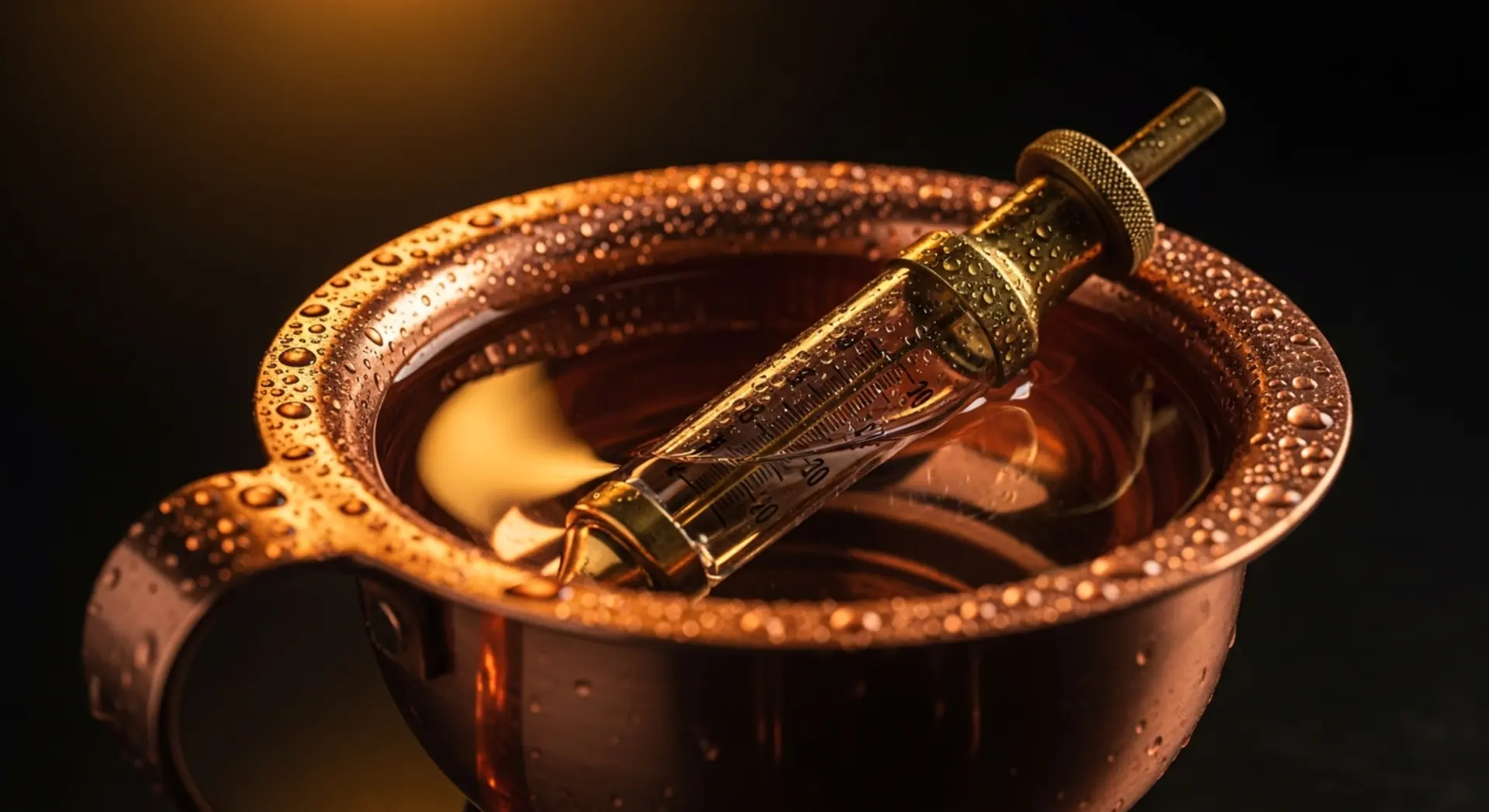
Barrel Proof
Barrel proof (or cask strength) describes whiskey bottled at or near the proof at which it came out of the barrel, with no water added to bring it down to a standard bottling proof.
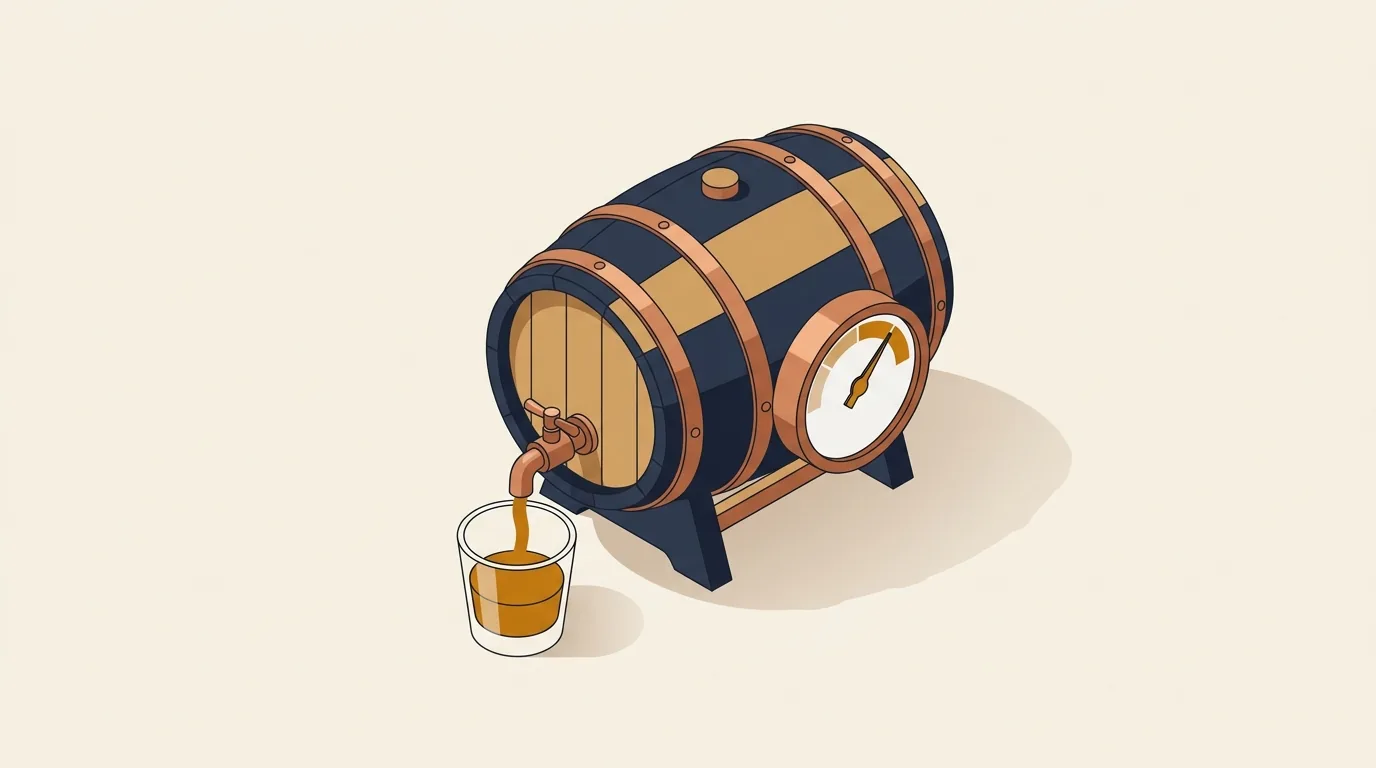
In short: Barrel proof (or cask strength) describes whiskey bottled at or near the proof at which it came out of the barrel, with no water added to bring it down to a standard bottling proof.
Because spirit gains or loses proof during aging depending on warehouse conditions, barrel-proof bottlings vary batch to batch and are typically well above 100 proof. Bottling at barrel proof requires an accurate regauge at dump so the label proof matches the measured contents. The dump proof also drives the proof-gallon math for tax.
What does barrel proof mean on a label?
Barrel proof (or cask strength) means the whiskey was bottled at the proof it reached in the barrel, without dilution. TTB guidance ties the claim to the proof at dump, so the gauging record is the evidence behind the label.
Why does proof change in the barrel?
Water and alcohol evaporate at different rates depending on warehouse conditions; in Kentucky's hot upper floors proof usually rises with age, while cool, humid storage can lower it. Regauges capture the drift so the dump proof is a measurement, not a surprise.
Tracking this in a spreadsheet? Spirit Sight records it where it happens and builds inventory, compliance, and the books from the same entry. See it on a demo.
Related
See your distillery in Spirit Sight
Book a walkthrough with our team. We’ll show your operation - barrels, TTB, and the books - in one place.
Schedule a Demo