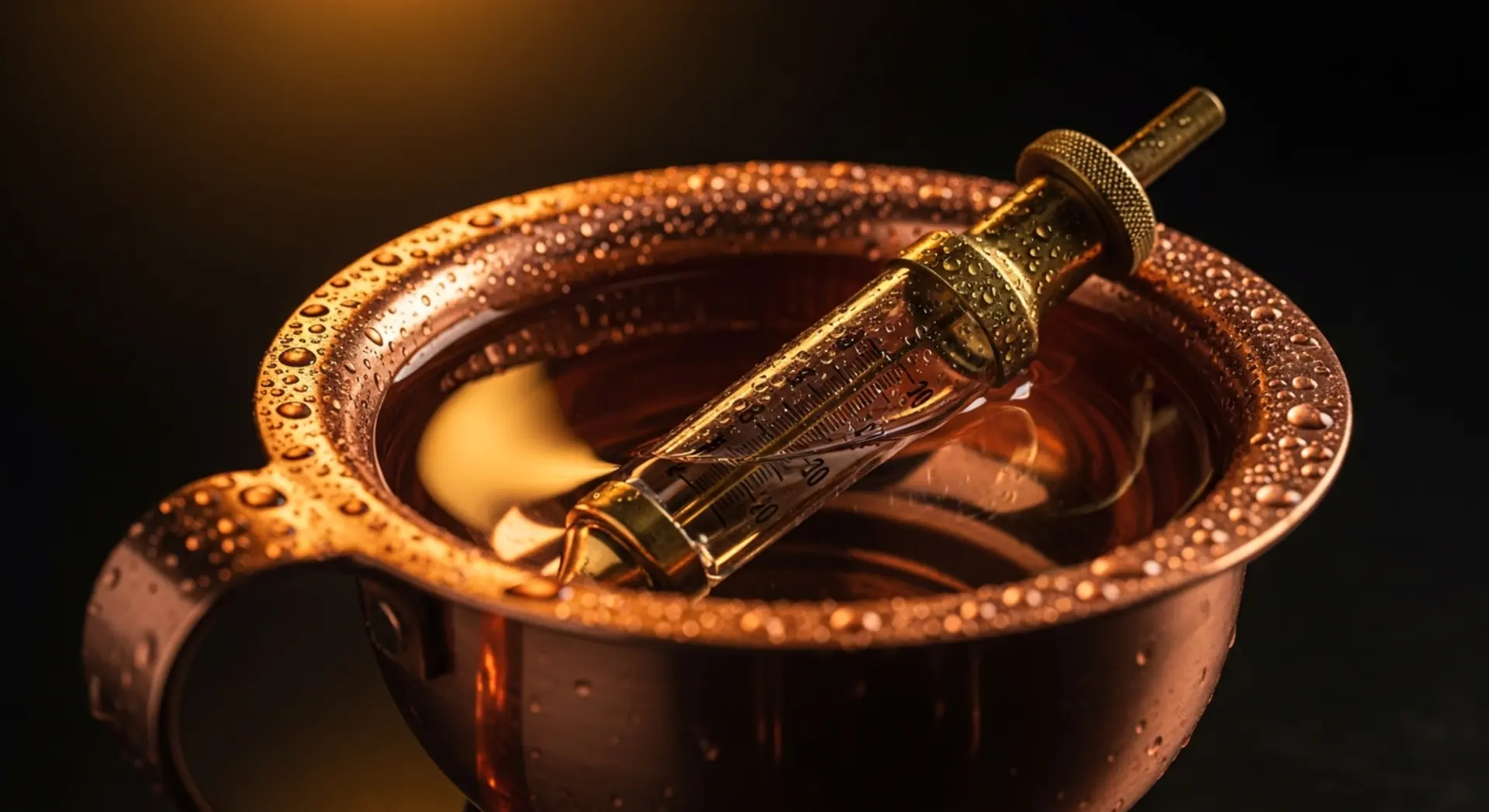
Pot Still
A pot still is a batch distillation vessel, usually copper, that is filled, heated, and emptied for each run. It produces a heavier, more flavorful distillate and is traditional for single malt whiskey and many craft spirits.
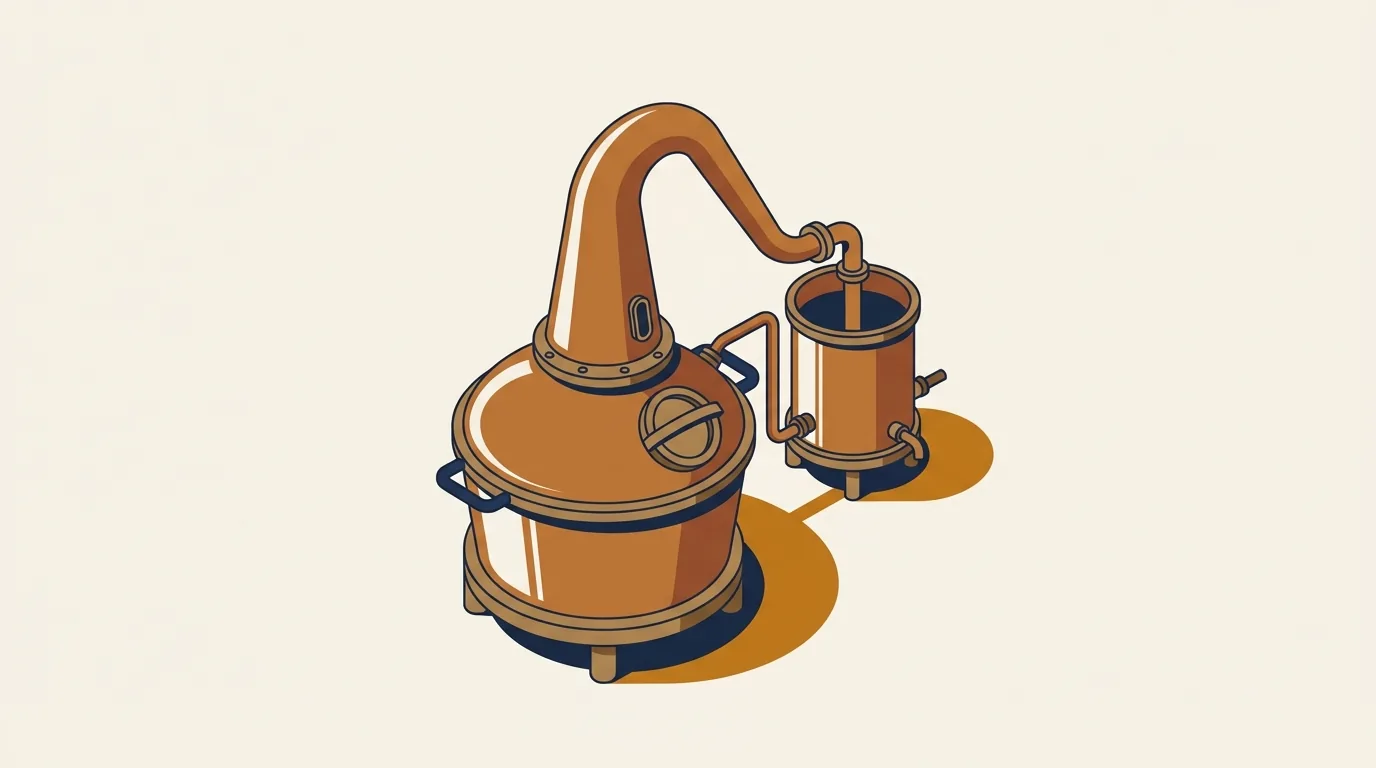
In short: A pot still is a batch distillation vessel, usually copper, that is filled, heated, and emptied for each run. It produces a heavier, more flavorful distillate and is traditional for single malt whiskey and many craft spirits.
Because a pot still works in batches rather than continuously, it gives the distiller direct control over the heads, hearts, and tails cut, at the cost of throughput. Copper matters: it strips sulfur compounds and shapes the final character. Many craft distilleries run a pot still or a hybrid pot-and-column setup, recording each batch run as its own production record.
How does a pot still work?
A pot still is a batch vessel: fill it with wash or low wines, heat it, and collect what evaporates, making the heads, hearts, and tails cut as the run progresses. Each charge is a discrete batch with its own record.
Pot still vs column still character
Pot stills pass more congeners into the spirit, giving heavier, more textured distillate; columns strip more efficiently toward neutrality. Many American operations pair a column for the stripping work with a pot doubler for character.
Tracking this in a spreadsheet? Spirit Sight records it where it happens and builds inventory, compliance, and the books from the same entry. See it on a demo.
Related
See your distillery in Spirit Sight
Book a walkthrough with our team. We’ll show your operation - barrels, TTB, and the books - in one place.
Schedule a Demo