Distillation
Distillation is the process of heating fermented wash to separate alcohol from water and other compounds by their different boiling points, then condensing the alcohol vapor into a higher-proof spirit.
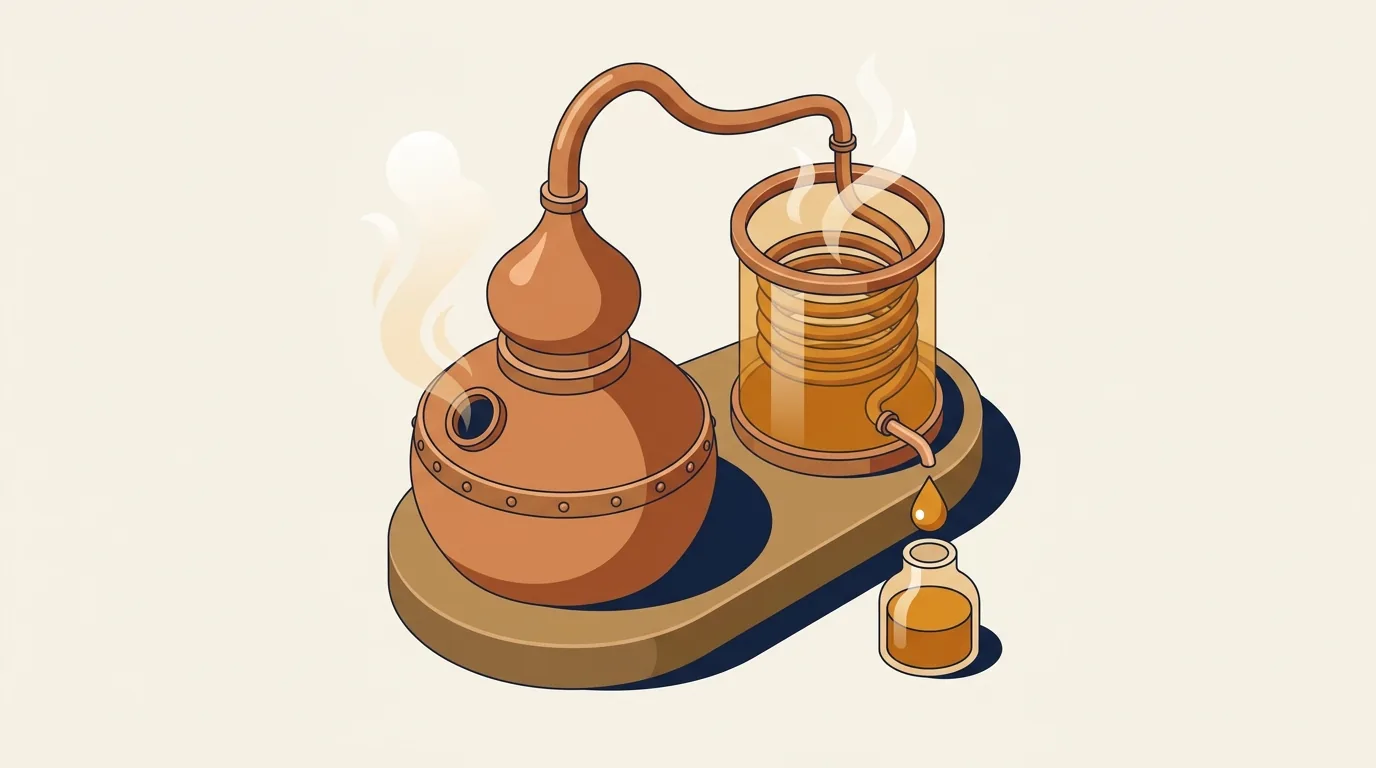
In short: Distillation is the process of heating fermented wash to separate alcohol from water and other compounds by their different boiling points, then condensing the alcohol vapor into a higher-proof spirit.
Alcohol boils at a lower temperature than water, so careful heating concentrates it in the vapor. The distiller separates the run into heads (volatile, harsh), hearts (the clean spirit kept), and tails (heavier, oily), a decision that defines quality and yield. The volume and proof of the hearts cut is the basis for production reporting and costing.
How many times is whiskey distilled?
American whiskey is commonly distilled twice: a stripping run (often on a column still) that concentrates the wash into low wines, then a second pass through a doubler or pot still that raises proof and refines the cut. Bourbon may not leave the still above 160 proof, which preserves grain character.
What does the distillation record capture?
Proof and volume off the still, cut points, and the run's date and equipment. The proof gallons produced flow to the TTB production report and set the yield per bushel that costing depends on.
Tracking this in a spreadsheet? Spirit Sight records it where it happens and builds inventory, compliance, and the books from the same entry. See it on a demo.
Related
See your distillery in Spirit Sight
Book a walkthrough with our team. We’ll show your operation - barrels, TTB, and the books - in one place.
Schedule a Demo