
Age Statement
An age statement is the declaration on a whiskey label of how long it aged, which by U.S. law must reflect the youngest spirit in the bottle. Straight whiskey under four years old must carry one.
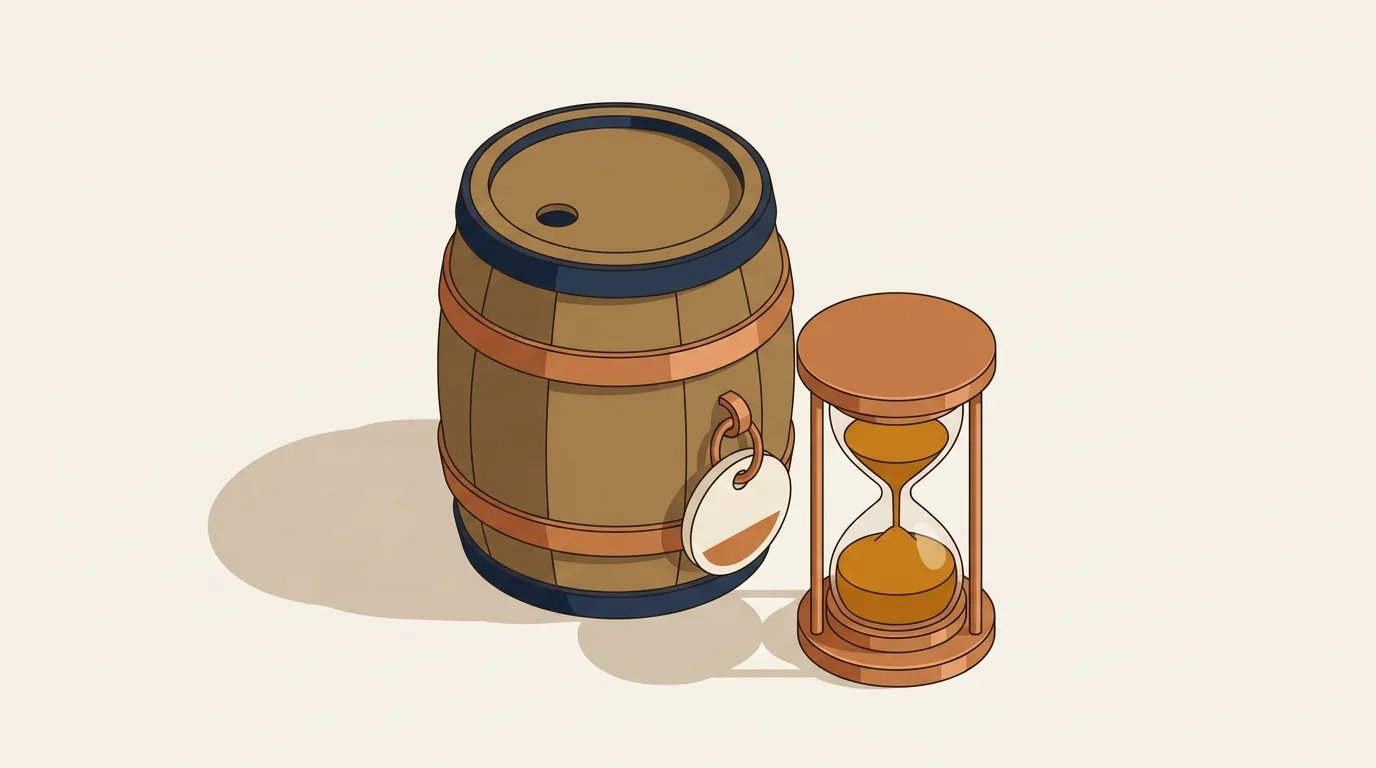
In short: An age statement is the declaration on a whiskey label of how long it aged, which by U.S. law must reflect the youngest spirit in the bottle. Straight whiskey under four years old must carry one.
Because a blend is only as old as its youngest component, age statements depend on knowing the fill date of every barrel that went into a bottling. Accurate barrel-level dates and dump records are what make an age claim defensible, and they tie directly to maturation tracking and lot traceability.
What can an age statement legally say?
A stated age must reflect the youngest whiskey in the bottle. Whiskies under four years old must carry an age statement; at four years and beyond it becomes optional, which is why so many labels go silent at exactly that point.
How is an age statement proven?
From fill dates on the barrels behind each bottling lot. A batch record that ties bottles to casks, and casks to fill dates, is the whole defense; without it an age claim is folklore.
Tracking this in a spreadsheet? Spirit Sight records it where it happens and builds inventory, compliance, and the books from the same entry. See it on a demo.
Related
See your distillery in Spirit Sight
Book a walkthrough with our team. We’ll show your operation - barrels, TTB, and the books - in one place.
Schedule a Demo