Bourbon
Bourbon is an American whiskey made from a mashbill of at least 51% corn, distilled to no more than 160 proof, entered into new charred oak barrels at no more than 125 proof, and bottled at no less than 80 proof. It carries no minimum aging period unless labeled straight.
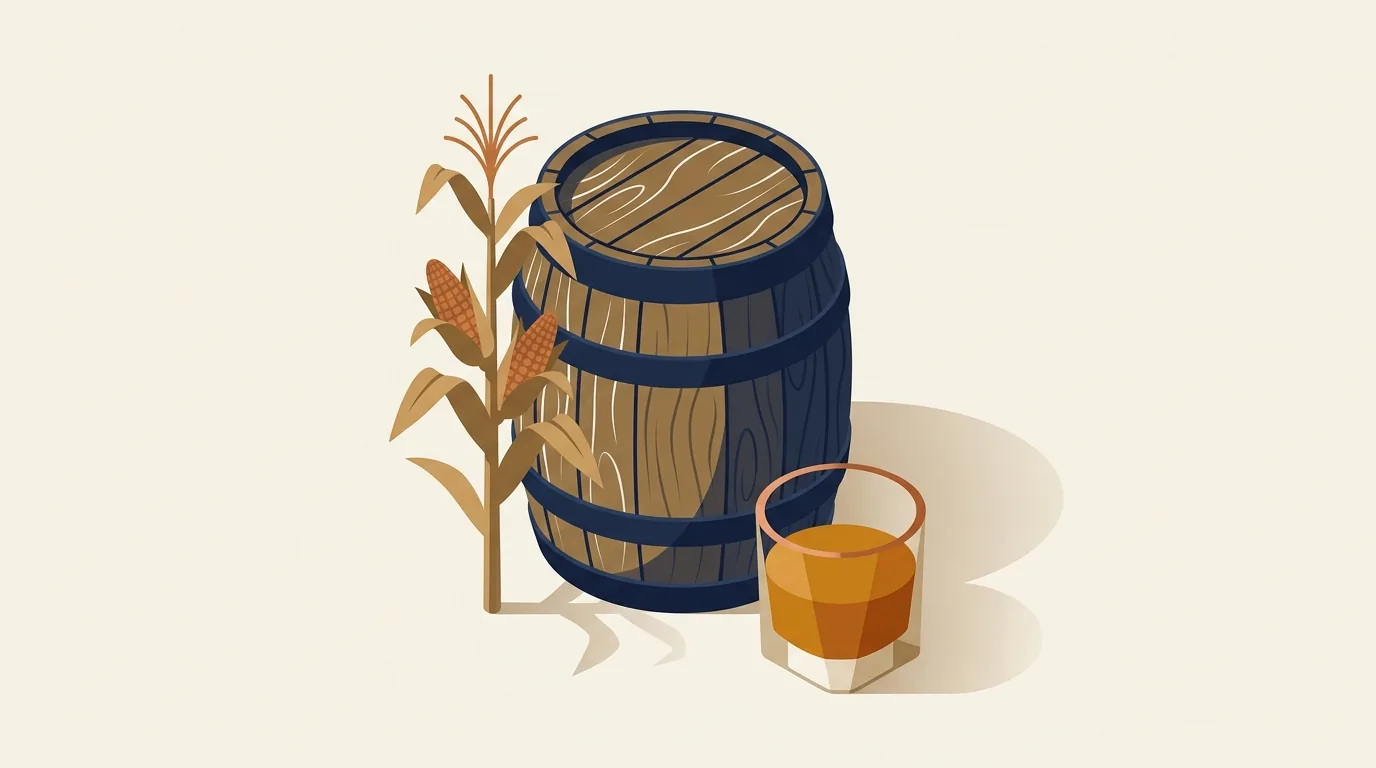
In short: Bourbon is an American whiskey made from a mashbill of at least 51% corn, distilled to no more than 160 proof, entered into new charred oak barrels at no more than 125 proof, and bottled at no less than 80 proof. It carries no minimum aging period unless labeled straight.
The standards of identity for bourbon are set in 27 CFR Part 5. There is no geographic requirement beyond being made in the United States, despite the strong association with Kentucky. To call a product straight bourbon it must age at least two years, and any bourbon aged under four years must carry an age statement. Tracking the mashbill, entry proof, and barrel history per fill is what lets a distillery prove these claims.
What legally makes a whiskey bourbon?
Bourbon is made in the United States from at least 51% corn, distilled at no more than 160 proof, entered into charred new oak containers at no more than 125 proof, and bottled at 80 proof or more. No added flavoring or coloring; straight bourbon additionally requires two years in oak.
What records back a bourbon claim?
The mash bill on the cook, the still proof on the run, the entry proof and new-charred-oak cooperage on the fill, and the fill dates behind any age statement. Every element of the legal definition maps to a record a distillery should be able to produce.
Tracking this in a spreadsheet? Spirit Sight records it where it happens and builds inventory, compliance, and the books from the same entry. See it on a demo.
Related
See your distillery in Spirit Sight
Book a walkthrough with our team. We’ll show your operation - barrels, TTB, and the books - in one place.
Schedule a Demo