
Dumping
Dumping is the act of emptying aged spirit out of one or more barrels, typically to bottle or blend it. At the dump the barrel's final volume and proof are measured (regauged).
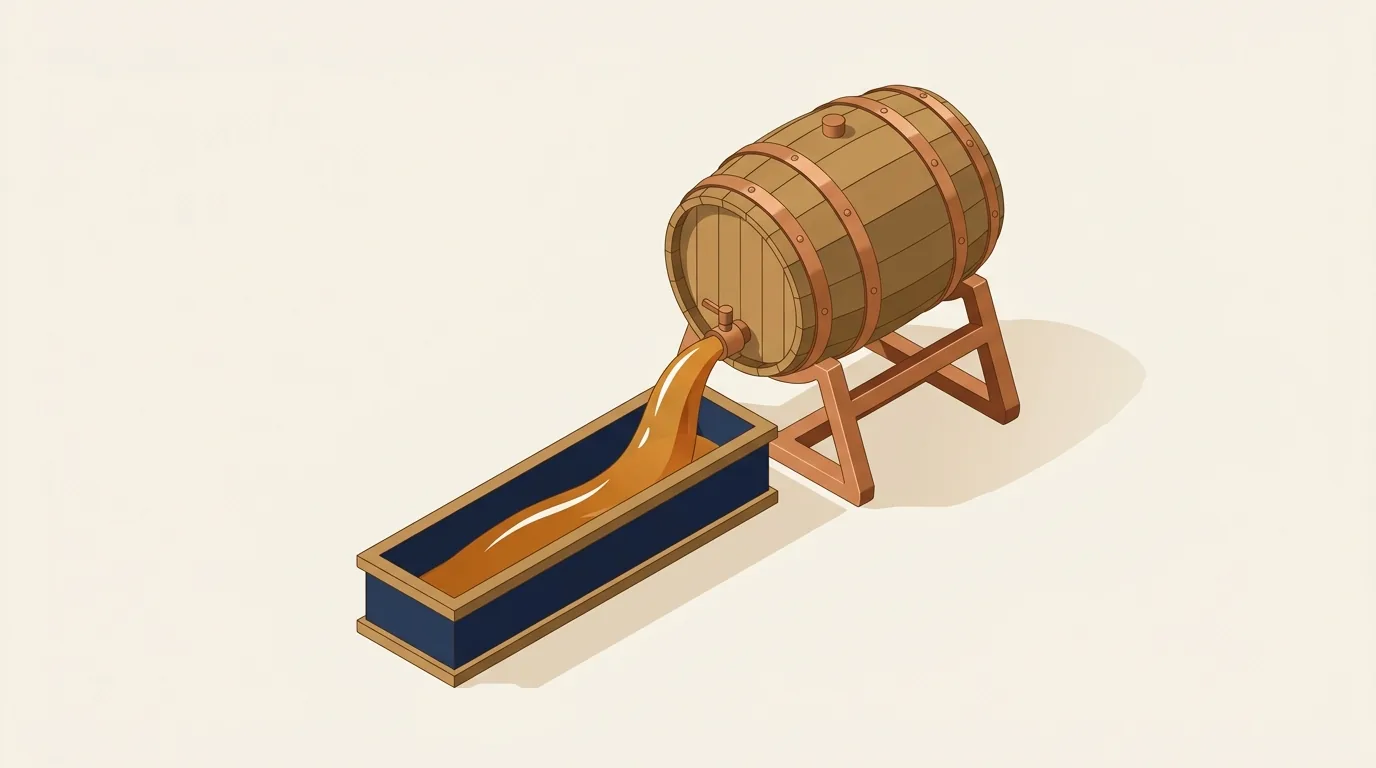
In short: Dumping is the act of emptying aged spirit out of one or more barrels, typically to bottle or blend it. At the dump the barrel's final volume and proof are measured (regauged).
The dump is a critical compliance and costing moment: it records the actual yield after years of evaporative loss, fixes the proof gallons for tax, and moves spirit from storage into processing. Capturing the dump regauge per barrel is what reconciles the angel's share, finalizes cost per barrel, and feeds bottle-yield planning.
What happens when a barrel is dumped?
Dumping empties the barrel over a trough, the spirit is gauged (proof and volume measured), and the whiskey moves from the storage account to processing for batching and bottling. The measured dump is where years of projected loss become a real number.
Why is the dump gauge so important?
It closes the barrel's story: fill proof gallons minus dump proof gallons is the actual angel's share, which drives the TTB storage report, the loss allowance, and the true cost per proof gallon of what survived.
Tracking this in a spreadsheet? Spirit Sight records it where it happens and builds inventory, compliance, and the books from the same entry. See it on a demo.
Related
See your distillery in Spirit Sight
Book a walkthrough with our team. We’ll show your operation - barrels, TTB, and the books - in one place.
Schedule a Demo