
Mash
Mash is the mixture of milled grain and hot water in which starches are converted to fermentable sugars before yeast is added. The grain recipe used is the mashbill.
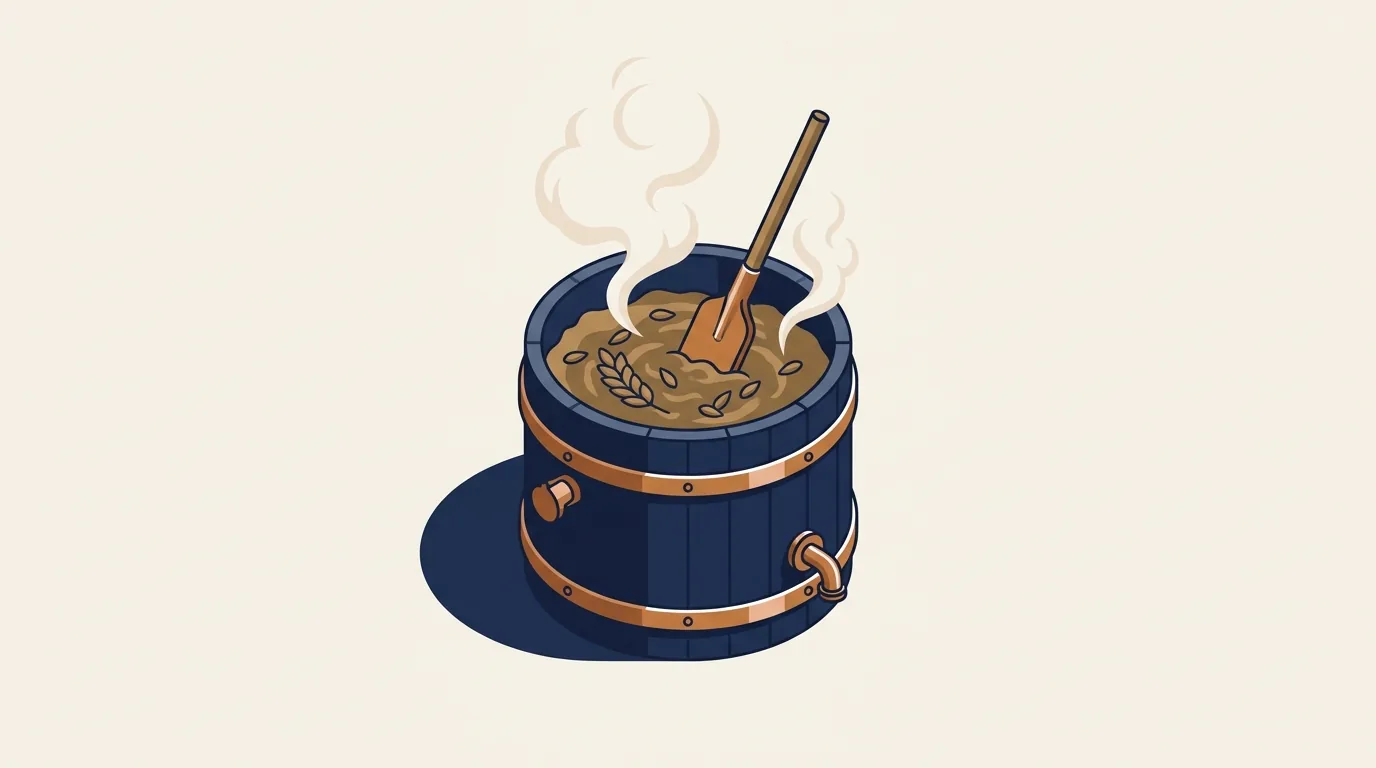
In short: Mash is the mixture of milled grain and hot water in which starches are converted to fermentable sugars before yeast is added. The grain recipe used is the mashbill.
Cooking the mash gelatinizes the grain starches, and enzymes (natural or added) convert those starches to sugar. The resulting sweet liquid is cooled and pitched with yeast to begin fermentation. Mash data, including grain quantities and conversion, is the first measured step in production and ties directly to the mashbill and downstream yield.
What is in a whiskey mash?
Milled grain, water, and often backset from a previous distillation, cooked so the starches gelatinize and convert to fermentable sugar. The grain proportions are the mash bill, the recipe that defines the whiskey's style.
Why do mash records matter?
Grain weights, water volumes, and cook temperatures set the ceiling on alcohol yield and make a recipe reproducible. A yield miss traces back to the mash record or it stays a mystery.
Tracking this in a spreadsheet? Spirit Sight records it where it happens and builds inventory, compliance, and the books from the same entry. See it on a demo.
Related
See your distillery in Spirit Sight
Book a walkthrough with our team. We’ll show your operation - barrels, TTB, and the books - in one place.
Schedule a Demo