Sour Mash
Sour mash is a process that uses a portion of spent mash (backset or setback) from a previous distillation to acidify a new mash, ensuring consistent pH and protecting fermentation from contamination.
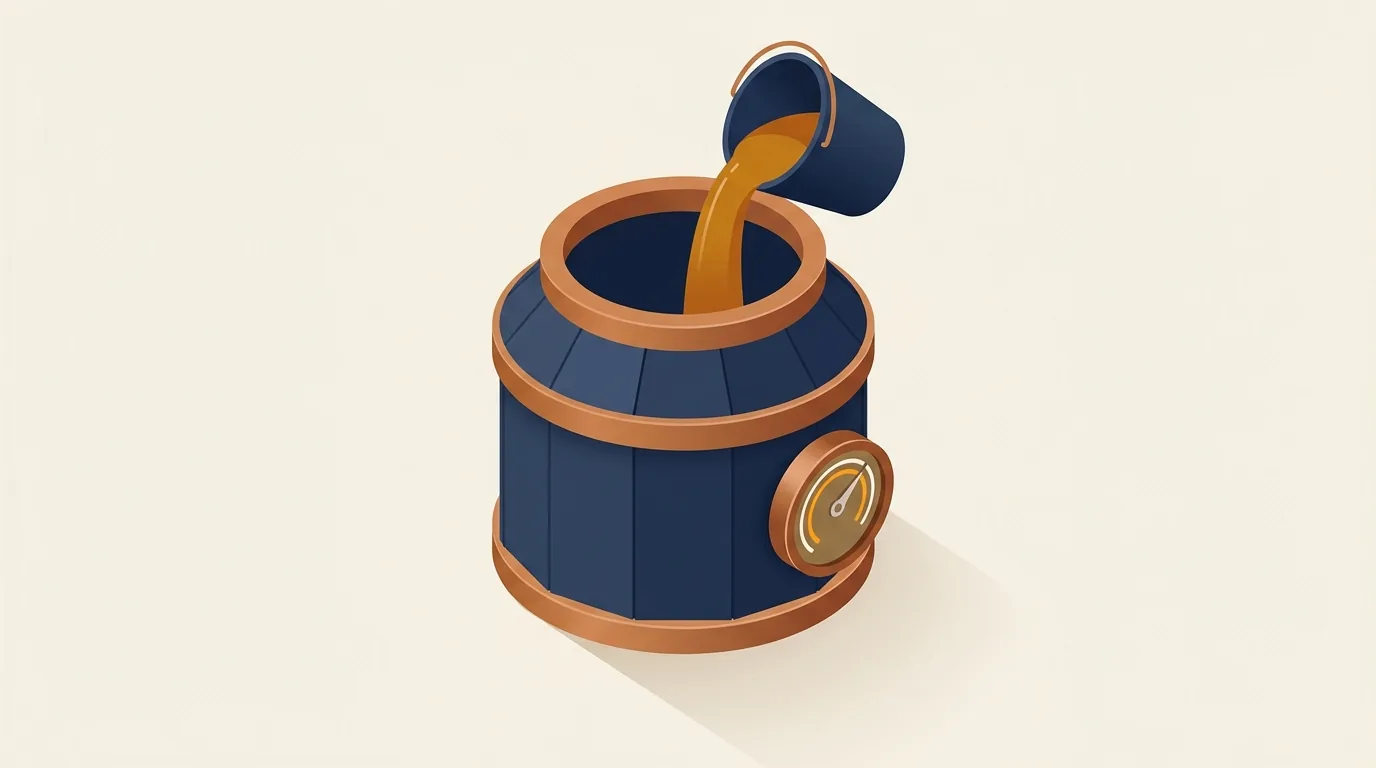
In short: Sour mash is a process that uses a portion of spent mash (backset or setback) from a previous distillation to acidify a new mash, ensuring consistent pH and protecting fermentation from contamination.
Adding backset lowers the mash pH to a range yeast favors and bacteria do not, giving batch-to-batch consistency. Nearly all Kentucky bourbon is made by the sour mash process. The opposite approach, sweet mash, uses only fresh ingredients and is harder to keep consistent. Recording the backset percentage per cook supports both quality control and traceability.
What does sour mash actually mean?
Sour mashing adds backset, the acidic spent liquid from the bottom of the still, to the new mash. The lower pH suppresses wild bacteria, gives the yeast a consistent environment, and links each batch chemically to the one before it.
Is sour mash a flavor claim?
Not really; nearly all bourbon is sour mash, so the phrase on a label describes standard practice rather than a special process. Its value is consistency and infection control, not sourness in the glass.
Tracking this in a spreadsheet? Spirit Sight records it where it happens and builds inventory, compliance, and the books from the same entry. See it on a demo.
Related
See your distillery in Spirit Sight
Book a walkthrough with our team. We’ll show your operation - barrels, TTB, and the books - in one place.
Schedule a Demo