
Mashing In
Mashing in is the step of combining milled grain with hot water to begin converting starches to fermentable sugars. It is the start of the mash that will later be fermented.
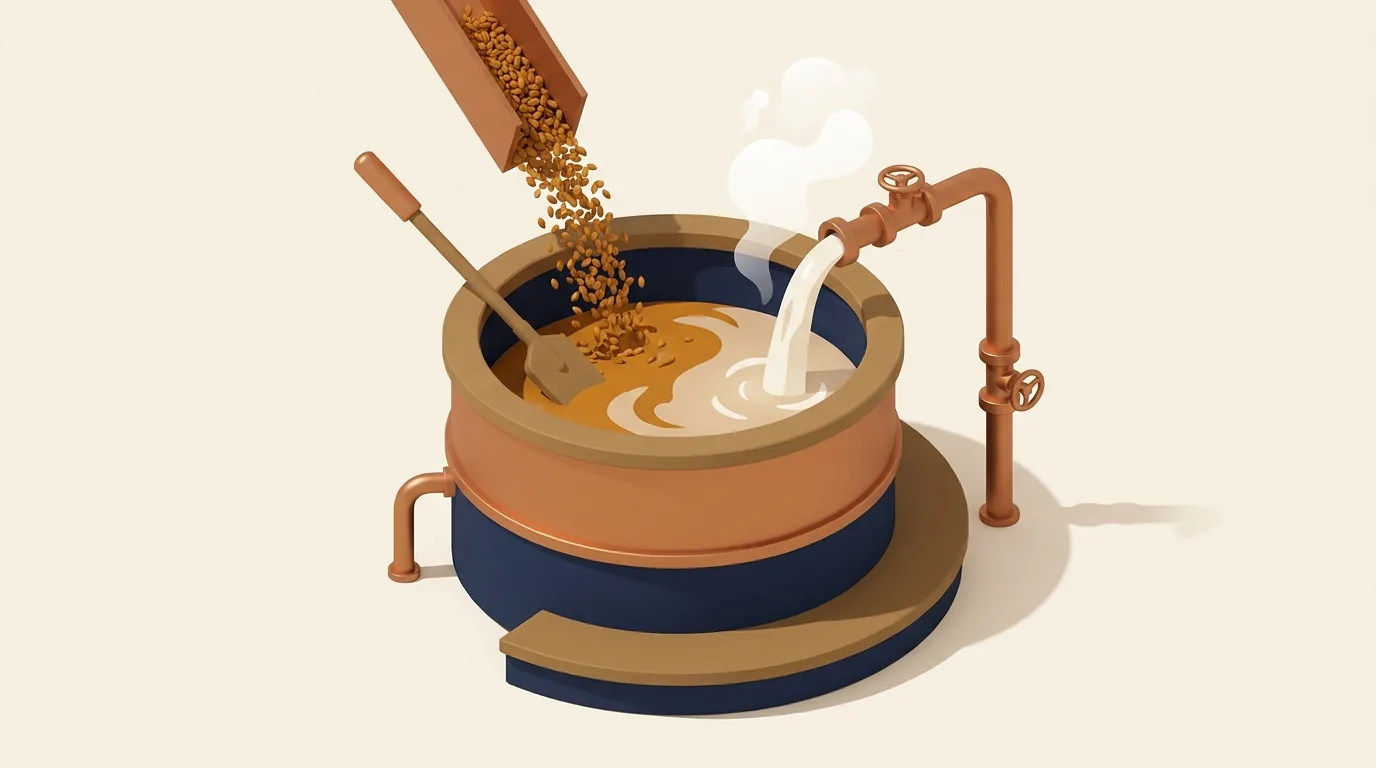
In short: Mashing in is the step of combining milled grain with hot water to begin converting starches to fermentable sugars. It is the start of the mash that will later be fermented.
Temperature and timing at mashing in govern how well starches gelatinize and convert to sugar, which sets the ceiling on alcohol yield. Recording mash-in temperatures and grain quantities ties the cook to the mashbill and to downstream yield.
What temperatures are used for mashing in?
A bourbon cook typically works down a temperature ladder: corn goes in near boiling to gelatinize, the mash is cooled to add rye in the range of 160 degrees F, and cooled again to around 145 to 150 degrees F for malted barley so its conversion enzymes survive. Each grain's addition temperature is a control point worth recording.
Why mash-in records matter
Mash-in temperatures and grain weights set the ceiling on fermentable sugar, and therefore on alcohol yield per bushel. Recording them per cook lets a distillery compare batches, explain a yield miss, and keep the cost per proof gallon honest.
Tracking this in a spreadsheet? Spirit Sight records it where it happens and builds inventory, compliance, and the books from the same entry. See it on a demo.
Related
See your distillery in Spirit Sight
Book a walkthrough with our team. We’ll show your operation - barrels, TTB, and the books - in one place.
Schedule a Demo