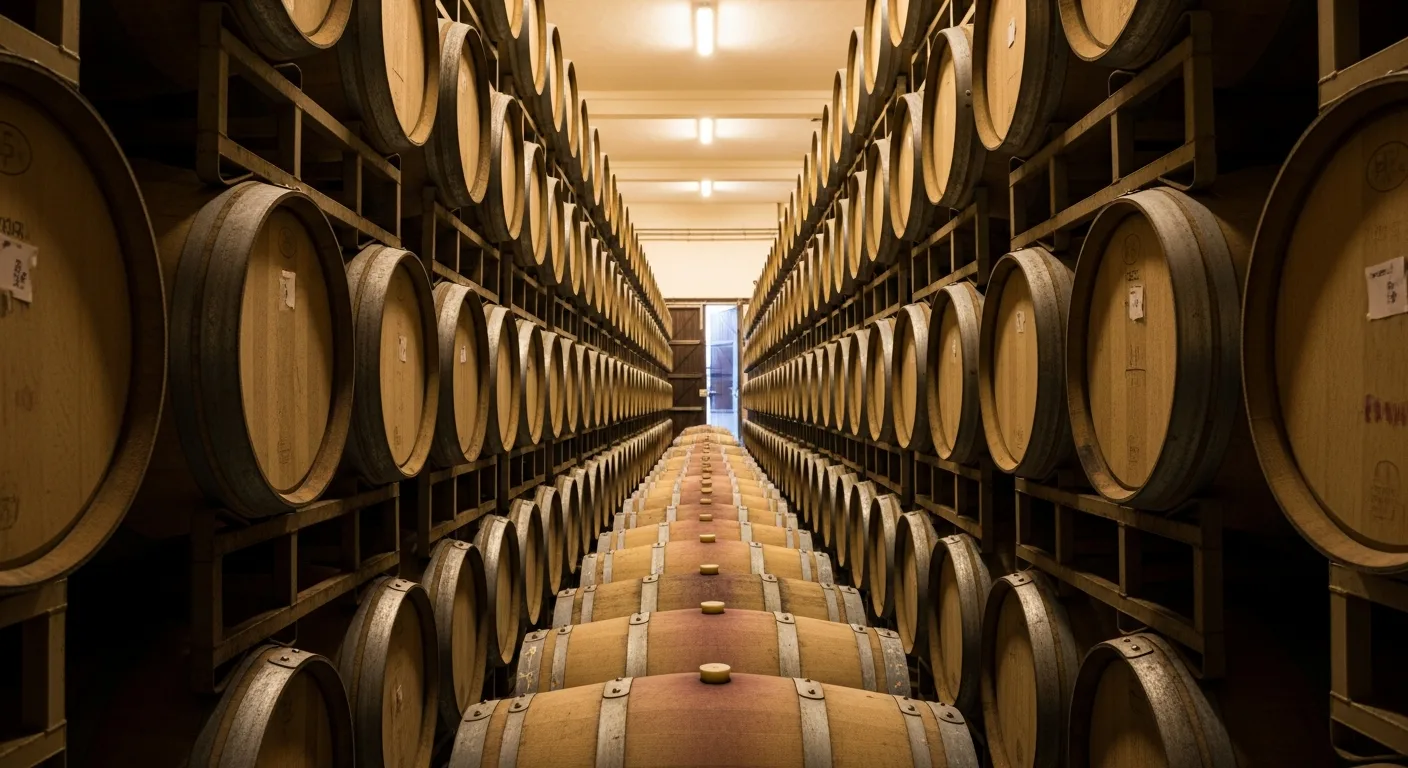
In short: The TTB allows distilleries to store aging barrels in an off-site building by registering it as a noncontiguous extension of your bonded premises. You must update your federal registration, ensure bond coverage includes both locations and transit, and maintain strict physical security to protect federal tax revenue.
Growing distilleries inevitably hit the same wall. The rickhouse is full, the tasting room and still are anchored to a location that draws tourists, and the most affordable warehouse space is miles away. The question that follows is always the same: can untaxed, bonded barrels legally rest somewhere other than the building where they were filled? The short answer is yes, but the details decide whether the Alcohol and Tobacco Tax and Trade Bureau signs off. It is worth understanding the actual mechanics before you sign a commercial lease.
Please note that this article provides general educational information about distillery operations and is not formal legal or tax advice. Confirm your specific plan with the TTB and a compliance professional before you act on it.
Can a distillery store barrels off-site under TTB rules?
Yes. Federal regulations allow a distilled spirits plant to operate across multiple buildings. Under 27 CFR 19.53, the TTB may approve noncontiguous portions of a plant when the parts are located in the same general area, the arrangement does not jeopardize federal revenue, and it does not create administrative problems for the agency. In plain terms, the off-site building becomes part of your registered bonded premises rather than a separate, freestanding operation.
That distinction matters. If the warehouse is folded into your existing registration, the barrels never actually leave your bonded premises when you move them there. They are still in bond, still untaxed, and still tracked under your own production and storage records. You are simply extending the footprint of your distilled spirits plant.
The same underlying idea appears in 27 CFR 19.132, which addresses the physical continuity of plant premises. The continuity of a plant can be broken by a public thoroughfare such as a street or a highway, and the TTB can still register the premises when there is no jeopardy to the revenue. A building across the street, or down the block, does not automatically disqualify the arrangement. What the TTB cares about is whether it can still protect the excise tax it is owed on every proof gallon sitting in those barrels.
How does a noncontiguous plant extension actually work?
When you apply to add an off-site storage location, you are amending your existing permit rather than starting from scratch. You will use the Permits Online system to update your premises description. This requires providing a detailed diagram of the new space, outlining exactly which areas will hold bonded spirits and which areas are off limits.
The agency wants to see clear boundaries. If the off-site warehouse is a shared commercial space, your bonded area must be physically separated from other businesses by secure walls or chain link fencing. You cannot store bonded barrels in a common area where other tenants have unfettered access. The goal is to prove that only authorized distillery personnel can touch the aging inventory.
Recordkeeping also scales with this expansion. Even though both buildings are technically the same distilled spirits plant, your internal records must track exactly where each barrel physically resides. If an auditor walks into your main facility, they expect your daily logs and production reports to show exactly how many barrels are on site versus how many are resting at the secondary warehouse.
How far away can the off-site storage building be?
Distillery owners always want a clean mileage limit, but the TTB deliberately evaluates this on a case by case basis. The agency declined to adopt a fixed mileage limit, which means there is no magic radius that is automatically allowed and no distance that is automatically denied. Instead, the TTB decides each request based on whether the revenue is protected and whether the setup is administratively workable for the bureau.
In practice, distillers have successfully secured approvals for storage buildings well beyond walking distance. Some operators report approvals for buildings over ten miles from the main plant, but that is merely a data point, not a guaranteed threshold. The further the spirits sit from your core operation, the more attention the TTB is likely to pay to your security measures and recordkeeping practices. Those two factors are what keep the revenue safe when barrels are not under the same roof as the main still.
Treat distance as just one factor among several. A highly secure, well documented building ten miles away may be much easier to approve than a poorly secured space right next door. The standard is always revenue protection and administrative practicality, not a simple tape measure.
What do I need to file and bond for an off-site warehouse?
Three specific requirements come up consistently when distillers describe getting off-site storage approved.
First, list the location. The separate building must appear on your DSP registration. You cannot quietly move barrels to a site the TTB has not evaluated. Amending your registration through the electronic permit system and waiting for official approval is mandatory.
Second, your bond has to cover the expanded operation. Your bond coverage must extend to the off-site location and to the transport of spirits between your sites. Bonded spirits in transit and bonded spirits resting in an approved building are both part of the in-bond liability that the bond exists to secure. If your bond does not reach the new building, the entire compliance arrangement fails.
It is worth noting an important exception regarding the bond itself. Since the federal tax law changes in 2017, distilleries that reasonably expect to owe less than $50,000 in federal excise tax in a calendar year are generally exempt from the bond requirement under 26 USC 5551(d). However, this exemption applies solely to the financial bond. It does not exempt you from the obligation to register the space, document your inventory, and secure the building physically.
Third, the building has to be highly secure. Across industry discussions on this topic, the physical security of the storage building comes up again and again as the practical hinge point. A lockable, access controlled, clearly defined space is what allows the TTB to conclude the revenue is not in jeopardy. If a random visitor can wander into the building and walk out with a barrel, you have an obvious revenue problem. That is precisely the risk federal rules are written to prevent.
Off-site bonded premises versus transfer in bond: what is the difference?
This is a common area where distillers get tangled, so it is crucial to be precise. There are two entirely different legal mechanisms for storing barrels elsewhere, and they are not interchangeable.
If the off-site building is registered as part of your own distilled spirits plant, moving barrels there is simply an internal movement within your own business. The spirits stay under your existing registration, your own records, and your own bond. No official transfer document to another party is involved because there is no other party.
Conversely, moving full barrels to a completely different distilled spirits plant is known as a transfer in bond. A full, undumped barrel cannot simply leave your plant and be handed to a customer or a separate business tax-free without specific documentation. This process, governed by 27 CFR 19.501 through 19.510, requires both parties to have bonds covering the liability. This mechanism is used when selling aged bourbon barrels to another producer, not for your own storage.
Before you finalize your business plan, decide which path you are actually taking. Extending your own premises to a second building is one specific path. Shipping full barrels to someone else's bonded warehouse is a different path with completely different paperwork. Calling the second scenario off-site storage when it is really a formal transfer in bond will create massive confusion with your TTB specialist.
What are the physical security and fire code requirements?
Federal tax compliance is only one hurdle when securing off-site storage. Physical security and local fire codes often dictate whether a building is actually viable for aging whiskey.
From the federal perspective, physical security means heavy duty locks, strict access control, and potentially alarm systems or security cameras. The building should have commercial grade doors and secure windows. The TTB wants assurance that only your permitted employees can access the untaxed spirits.
From the local perspective, fire code compliance is usually the most expensive and complex part of the process. Aging whiskey is highly flammable. Local municipalities typically classify bulk ethanol storage under strict high hazard building codes, such as an H-3 occupancy classification. This means your off-site warehouse might require specialized fire suppression systems, explosion proof lighting, and secondary spill containment. A cheap agricultural barn might look great for your budget, but retrofitting it to meet fire codes can be incredibly expensive. Always consult your local fire marshal before signing a lease.
How do you legally transport barrels between your bonded locations?
Once your noncontiguous storage is approved, you still have to physically move the heavy barrels from the filling station to the aging warehouse. This transit phase carries its own set of rules and risks.
Because the barrels are moving between two parts of the same registered plant, you do not need to file a formal transfer in bond form. However, you must maintain commercial records of the movement. Your internal transfer logs must detail the date of the move, the specific barrel serial numbers, the fill proofs, and the total proof gallons in transit. If an accident or theft occurs during the drive, you must immediately report the loss to the TTB.
Distilleries often use box trucks or flatbeds to move inventory. Securing the load is vital for both safety and compliance. The spirits are still in bond while rolling down the highway. Ensure your drivers have a copy of the internal transfer manifest in the cab so they can prove the legality of the untaxed spirits if they are pulled over by law enforcement or transportation authorities.
Does state law change any of this compliance?
Yes, and this is the regulatory layer that catches operators who focus solely on the federal side. Federal approval is necessary, but it is rarely sufficient on its own. State and local permitting laws apply independently, and they vary widely from state to state.
Some states require you to hold a specific state warehouse permit to store spirits, even if the arrangement keeps the spirits untaxed at the federal level. Other states treat bonded and non-bonded warehousing entirely differently for their own control and access purposes. Some friendly state rules allow distillers to keep a tourist facing storefront while hiding the vast bulk of aging inventory in an industrial park.
The most important takeaway is not the specific state rule, since that changes by jurisdiction, but the operational discipline. You must clear your off-site storage plan with your state alcohol authority and local zoning officials in parallel with the federal process, not after the fact.
What should I have in place before I move the first barrel?
Pulling all these threads together creates a straightforward checklist, even if the actual approvals take months to finalize.
First, ensure the off-site building is listed on your registration through a formal permit amendment. Second, verify your bond reaches both the building and the transport route between sites, or confirm your excise tax exemption status while still registering the space. Third, ensure the building is physically secure and clearly defined so the revenue is not in jeopardy. Fourth, confirm whether this is an extension of your own premises or a formal transfer to another producer, and execute the right paperwork. Finally, verify that your state and local approvals are completely finalized.
The recurring failure mode for growing distilleries is not the federal rules themselves, which are entirely workable. The failure mode is recordkeeping that falls apart once barrels live in more than one place. The moment your inventory spans two or more buildings, knowing exactly which barrels are where, what proof gallons they hold, and what your in-bond liability is at any given moment stops being a simple spreadsheet exercise. It rapidly becomes a massive operational risk.
That is exactly the burden Spirit Sight is built to carry. Our software tracks every single barrel, its exact location, its fill date, and its proof gallons across multiple buildings and campuses. By utilizing a dedicated distillery ERP, your bonded inventory and tax liability stay perfectly reconciled no matter how many different roofs your spirits sleep under.
Key takeaways
- You can legally store bonded barrels at an off-site warehouse by applying to extend your existing distilled spirits plant registration.
- The TTB evaluates distance on a case by case basis, prioritizing physical security and the protection of federal tax revenue.
- Moving barrels to your own noncontiguous warehouse is an internal movement, whereas shipping them to a different business requires a formal transfer in bond.
- Distilleries must ensure their bond covers the new location and the transit route, even if they qualify for the financial bond exemption.
- Local fire codes and state warehouse laws are separate from federal regulations and must be cleared before you sign a commercial lease.
Frequently asked questions
Can I store untaxed bourbon barrels at a separate building I lease across town?
Yes, provided you amend your federal permit to include the building as a noncontiguous extension of your plant and secure it properly.
Does the TTB have a strict mileage limit for off-site distillery warehouses?
No, there is no fixed mileage limit, but the agency will scrutinize your security measures and recordkeeping more heavily the further away the building is.
Do I need a transfer in bond form to move my own barrels to my off-site storage?
No, moving barrels between two buildings registered under your single distilled spirits plant is an internal movement that requires commercial records, not a formal transfer in bond.
Will a standard commercial warehouse meet all distillery fire code requirements?
Often no, because aging spirits are highly flammable and local building codes generally classify bulk ethanol storage as a high hazard occupancy requiring specialized sprinklers.