In short: Understanding processing loss, evaporation, and how the TTB taxes spirits losses is essential for distillery compliance. The federal government allows ordinary evaporation during storage without tax penalty. However, unexplained processing shortages are often treated as taxable events, requiring accurate records and proof-gallon tracking to avoid costly liabilities.
When managing a working distillery, understanding processing loss, evaporation, and how the TTB taxes spirits losses is critical for protecting your bottom line. The federal government taxes alcohol based on volume and proof, meaning every drop that disappears to a leaky pump or barrel evaporation impacts your financial liability. Note: This article provides general educational information about distillery operations and is not intended as formal tax or legal advice.
What is the difference between processing loss and evaporation?
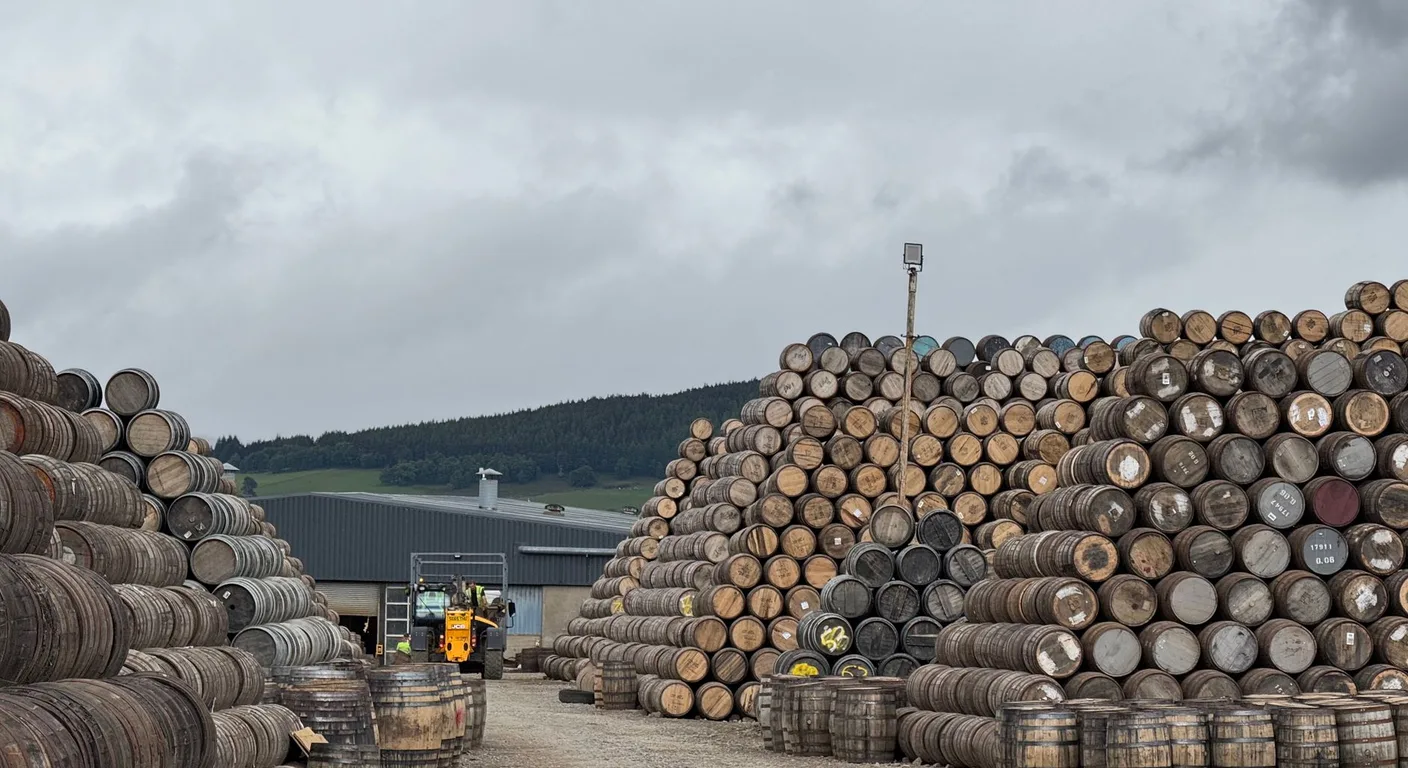
In a distilled spirits plant, alcohol disappears for two main reasons. The first is evaporation during maturation, universally known as the angels' share. This happens while barrels sit in your rickhouse or storage area. Wood is porous, allowing water and ethanol to slowly escape into the air over months and years. Because this occurs naturally in the storage account, it is a normal part of making whiskey.
The second category is processing loss. This happens after you pull a barrel from storage and move it into the processing account for dumping, blending, filtering, and bottling. Processing losses include alcohol left behind in the barrel wood, spills during transfer, evaporation from open mixing tanks, line purging, and minor leaks on the bottling line. While evaporation is a passive loss of inventory over time, processing losses are active losses that happen during hands-on production steps. Both reduce your final yield, but they are tracked and treated differently under federal regulations. To predict your expected maturation losses over time, you can use an angels' share calculator.
How does the TTB tax spirits losses?
To understand federal taxation on lost alcohol, you have to look at where and how the loss occurred. The standard federal excise tax on distilled spirits is $13.50 per proof gallon, though many craft producers qualify for a reduced rate of $2.70 per proof gallon on their first 100,000 proof gallons under the Craft Beverage Modernization Act. Because tax is generally paid when spirits are removed from the bonded premises for consumption or sale, the Alcohol and Tobacco Tax and Trade Bureau expects a strict accounting of any alcohol that disappears before it can be taxed.
Under 27 CFR Part 19 Subpart P, the government distinguishes between ordinary and extraordinary losses. Ordinary evaporation in the storage account is generally allowable without tax penalty, provided it is properly recorded when the barrel is eventually dumped and regauged. The government accepts that whiskey evaporates.
However, unexplained shortages, theft, or catastrophic spills may be treated differently. If you lose spirits in the processing account and the loss exceeds normal operational limits without a clear, documented cause, the regulatory agency may determine that the lost volume is taxable. They assume that if you cannot prove what happened to the alcohol, it could have entered the market tax-free. Therefore, maintaining precise daily logs of any spills, broken bottles, or tank leaks is a strict requirement for protecting your distillery from unexpected tax liabilities.
Why do proof gallons matter for measuring loss?
Every drop of alcohol you produce, store, and lose is measured in proof gallons. A proof gallon is defined as one liquid gallon of spirits at 100 proof, which is 50 percent alcohol by volume at 60 degrees Fahrenheit. Because the federal excise tax scales directly with the alcohol concentration, a loss of high-proof spirit costs you more in potential tax liability than a loss of low-proof spirit.
For example, if you spill 10 liquid gallons of water, you just mop it up. If you spill 10 liquid gallons of barrel-proof bourbon at 120 proof, you have lost 12 proof gallons of taxable product. If those 12 proof gallons are written off as an undocumented or unallowable shortage, you could be liable for the standard tax rate on that volume.
This precise measurement system is why operators must gauge tanks and barrels accurately. Correctly calculating the temperature and density of your spirits ensures that you are only paying tax on the alcohol you actually bottle and sell, rather than overpaying due to bad math on your loss reports.
Processing loss, evaporation, and how the TTB taxes spirits losses in practice
When a craft distillery matures whiskey, the financial impact of lost alcohol compounds over time. The aging cash-flow gap is already a defining hurdle for brown spirits producers. Tying up capital in barrels means you need every remaining drop to generate revenue.
When it is time to harvest, you will pull a barrel from storage and perform a regauge. This process measures the liquid remaining in the barrel to determine exactly how much was lost to evaporation. Once that barrel is officially transferred from the storage account to the processing account, the evaporation loss is locked in and reported on your monthly storage operations report.
From that moment on, any further reduction in volume is a processing loss. When you dump the barrel, filter the whiskey, and run it through the bottling filler, you will inevitably lose a small fraction of the batch. This processing shortage must be reported on your monthly processing operations report. If a specific incident causes a large loss, such as a forklift puncturing a tote or a valve failing on a blending tank overnight, you must document the event immediately. Federal rules require you to record the date, the volume lost, the proof, and the reason for the loss to prove it was a legitimate accident and not an unlawful removal.
How do environment and barrel size impact your overall yield?
The financial reality of running a craft distillery is heavily tied to the aging cash-flow gap. It often takes two years just to get a facility built, permitted, and operational. Once you finally fill a barrel, you are locking up capital for several more years. During that time, the environment plays a massive role in your total evaporation.
Rickhouses in hot, dry climates experience different evaporation patterns than those in cool, humid environments. Heat causes the liquid inside the barrel to expand, pushing into the porous oak, while cooling draws it back out. This breathing process creates flavor but also accelerates the loss of vapor into the atmosphere. If water evaporates faster than ethanol, the proof of the remaining whiskey will increase. If ethanol evaporates faster, the proof will decrease.
Barrel size also dictates the rate of volume loss. Many startup distilleries use smaller barrels to speed up oak extraction and get products to market faster. However, small barrels have a much higher surface-area-to-volume ratio. This means they evaporate at a significantly faster rate than standard 53-gallon barrels. A 15-gallon barrel might lose a large percentage of its contents in just one year. You must factor this accelerated evaporation into your financial projections, or you will find yourself with far less sellable inventory than you originally calculated.
How do spirits losses impact your distillery bond?
Before you can even produce or store alcohol, you must secure a surety bond. A distilled spirits plant needs a bond sized to cover the potential federal tax liability of all the spirits held on the bonded premises. The calculation is straightforward. You multiply your maximum expected proof gallons by the standard tax rate of $13.50.
Many experienced distillery operators report needing a minimum operations bond of $10,000, though costs scale up if you produce, store, and bottle in large volumes. Your bond acts as an insurance policy for the government. If your distillery closes unexpectedly or you have massive, undocumented losses that you cannot pay taxes on, the government will claim the bond.
Properly documenting your evaporation and processing losses keeps your on-paper inventory perfectly matched with your physical inventory. If you fail to record evaporation and your ledger says you have 10,000 proof gallons while your warehouse only holds 8,000, you are artificially inflating your tax liability. This phantom inventory could push you over your bond limit, forcing you to pay for a larger bond than you actually need.
Best practices for managing and documenting lost spirits
Managing evaporation and processing losses requires strict operational discipline. The most successful distilleries implement standard operating procedures to limit physical losses and capture the right data.
- Implement routine rickhouse walks. Visually inspect barrels weekly to catch slow leaks or failing hoops.
- Optimize barrel dumping times. Allow barrels to rest upside down over a trough to capture the last few ounces of spirit clinging to the charred wood.
- Maintain exact daily logs. Require staff to record every broken bottle, line purge, or minor spill before the end of their shift.
- Reconcile inventory monthly. Compare physical counts against your software or ledger to identify unexplained shortages early.
- Document destruction properly. If spirits must be voluntarily destroyed, ensure you follow federal notification rules so the volume is not treated as taxable.
Managing these details protects your margins and prevents compliance headaches down the road. Every proof gallon saved is a product you can eventually sell to your customers.
Managing the complex paperwork of federal compliance does not have to be a burden on your production team. Spirit Sight offers purpose-built distillery software that automatically tracks your proof gallons across storage and processing accounts, simplifying how you record evaporation and production shortages. By keeping your inventory and tax liabilities perfectly synchronized in real time, our platform helps you focus on crafting great spirits instead of worrying about compliance audits.
Key takeaways
- Evaporation is an allowable, passive loss in the storage account, while processing losses actively occur during filtering, dumping, and bottling.
- The federal government taxes undocumented processing shortages at the standard rate of $13.50 per proof gallon.
- Tracking losses accurately ensures you only pay excise tax on the spirits you actually sell.
- Failing to log evaporation can artificially inflate your on-paper inventory and force you to buy a larger surety bond.
Frequently asked questions
Do distilleries have to pay taxes on the angels' share?
No. The federal government considers normal evaporation during maturation to be an ordinary, allowable loss, meaning it is not taxed as long as it is properly documented.
What happens if I spill a large amount of whiskey in the processing room?
You must immediately record the date, volume, proof, and cause of the spill. Documented accidental losses are generally not taxed, but unexplained shortages may trigger tax liability.
How do I measure lost alcohol for tax purposes?
All losses must be converted into proof gallons, which measure the liquid volume at exactly 100 proof. This dictates the true taxable value of the missing spirit.
Can processing losses affect my distillery bond?
Yes. If you fail to log daily losses, your on-paper inventory will read higher than your physical inventory, potentially pushing you over your bond coverage limits.