In short: When calculating CBMA excise tiers: what craft distillers actually pay comes down to production volume. Under the Craft Beverage Modernization Act, eligible distillers pay $2.70 per proof gallon on their first 100,000 proof gallons removed from bond annually. Volumes above this threshold are taxed at higher standard rates.
When navigating TTB compliance, understanding CBMA excise tiers: what craft distillers actually pay is essential for accurate financial forecasting and inventory management. Under the Craft Beverage Modernization Act, most small producers pay a reduced federal excise tax rate of $2.70 per proof gallon on their first 100,000 proof gallons removed from bond each calendar year. Beyond that threshold, the tax burden increases significantly. This makes precise tracking of every barrel, bottle, and proof gallon critical for your bottom line. Mastering these calculations ensures your distilled spirits plant remains compliant while maximizing profit margins. Note that this article provides general information and does not constitute legal or tax advice.
Understanding CBMA excise tiers: what craft distillers actually pay
Before the Craft Beverage Modernization Act became permanent, all distillers faced a steep federal excise tax on every drop of alcohol they produced. Today, the tax structure is tiered to provide significant relief to small and mid-size producers. The standard federal excise tax on distilled spirits is $13.50 per proof gallon. However, under the current legislation, qualifying producers are eligible for a reduced rate.
The first tier covers the first 100,000 proof gallons removed from bonded premises for consumption or sale during a calendar year. For this volume, eligible distillers pay only $2.70 per proof gallon. This lower rate represents a massive cost savings for craft distilleries, allowing them to reinvest capital into equipment, barrels, and personnel.
The second tier applies to volumes above 100,000 proof gallons but less than 22.13 million proof gallons. Spirits removed in this bracket are taxed at $13.34 per proof gallon. While this is only a slight reduction from the standard rate, it still provides a marginal benefit for large regional or national brands.
The third tier applies to any volume exceeding 22.13 million proof gallons, which is taxed at the full standard rate of $13.50 per proof gallon. You can find the official statutory rates outlined in 26 U.S.C. 5001 on the official TTB website.
Because these limits reset on January 1 of each year, distillery finance teams must carefully track removals. If your production volume is close to the 100,000 proof gallon threshold, the timing of your removals at the end of the year can have a drastic impact on your total tax liability.
How is a proof gallon calculated for federal excise taxes?
Excise taxes are not based on the physical volume of liquid in a bottle or barrel. Instead, they are based on the total alcohol content. The standard unit of measurement for tax purposes is the proof gallon. A proof gallon is defined as one liquid gallon of spirits at 100 proof, which is 50 percent alcohol by volume at 60 degrees Fahrenheit.
To calculate the proof gallons for any given volume of spirit, you multiply the liquid wine gallons by the proof of the spirit, and then divide by 100. For example, if you have a standard 53 gallon barrel of bourbon that was filled at 120 proof, the calculation is straightforward. You multiply 53 wine gallons by 120 proof to get 6,360. Dividing that by 100 gives you 63.6 proof gallons.
In a commercial distillery setting, operators use highly accurate hydrometers and thermometers to measure proof and temperature. Because alcohol expands and contracts with temperature changes, you must use official TTB gauging tables to find the true proof at 60 degrees Fahrenheit. Failing to correct for temperature can lead to overpaying or underpaying your federal taxes. To streamline this process on the production floor, many operators rely on a digital proof gallon calculator to eliminate manual math errors.
If you bottle a spirit at a lower proof, the tax burden per physical bottle decreases. For example, an 80 proof spirit contains less alcohol per volume than a 100 proof spirit. Therefore, a standard 750 milliliter bottle of 80 proof vodka carries a federal excise tax of about $2.14 at the standard rate, whereas a 100 proof bottle carries a higher tax. Running these scenarios through an excise tax calculator can help you price your products appropriately for distribution and retail.
What processing activities qualify for the reduced rate?
A common misconception among new industry entrants is that simply owning a distilled spirits plant permit guarantees access to the $2.70 tax rate. In reality, the Craft Beverage Modernization Act requires distilleries to perform eligible activities to claim the reduced tier.
According to TTB CBMA guidance, a distillery must either distill the spirits, physically age the spirits in oak barrels, or perform an eligible processing activity that fundamentally changes the character of the spirits. If you purchase bulk ethanol, truck it to your facility, and immediately bottle it without any further processing, you may not qualify for the lower tax bracket on those specific gallons.
Eligible processing activities generally include filtering the spirit through specific media, blending different types of spirits, or adding approved flavors. Proofing down a bulk spirit with water does not always qualify on its own, depending on the specific circumstances and interpretations of the processing rules. Craft distillers who rely heavily on sourced spirits must document their processing methods thoroughly. Keeping detailed batch records proves to federal auditors that the liquid underwent a qualifying change while in your bonded processing account.
How does the angels share impact your final tax bill?
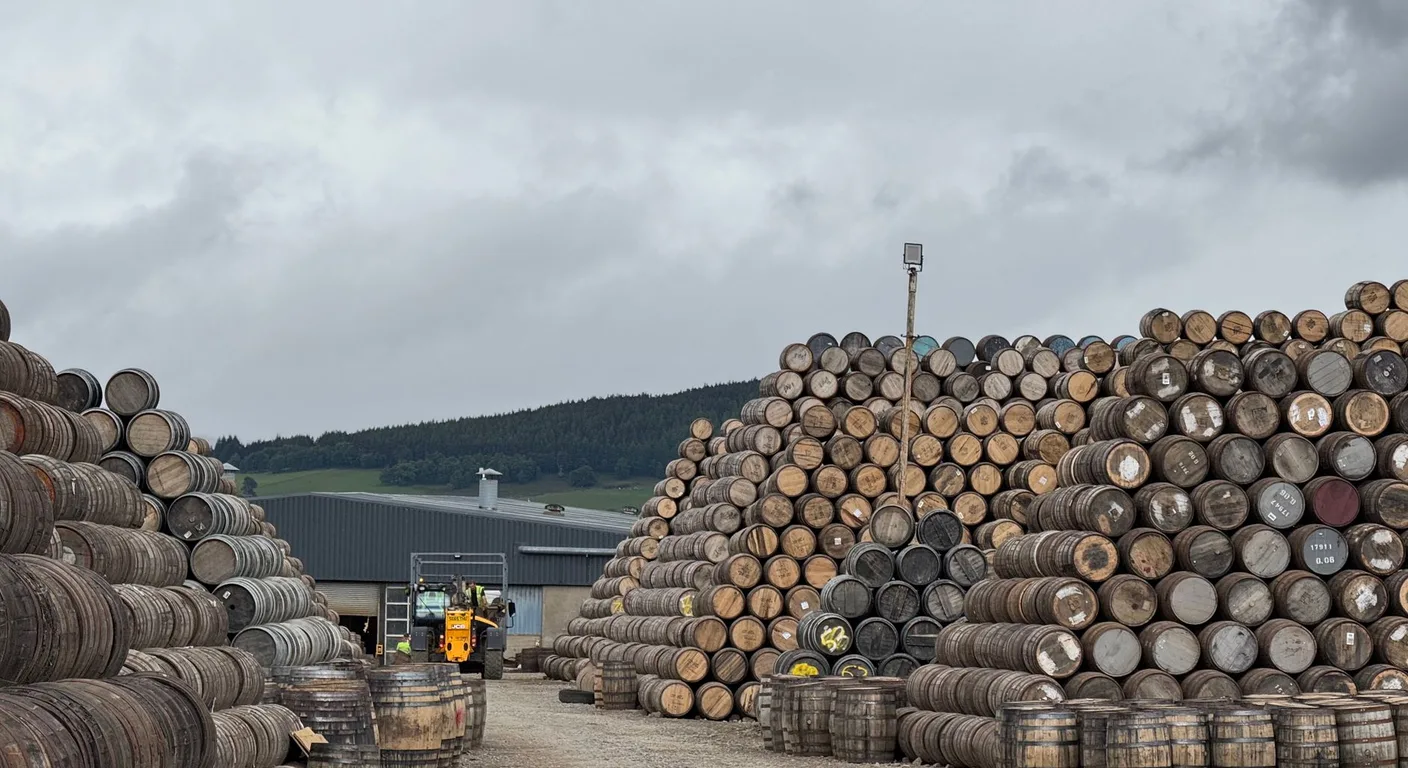
Whiskey and bourbon production require long periods of maturation in oak barrels. During this time, a significant amount of liquid evaporates through the porous wood. This evaporation is commonly known as the angels share. Depending on the climate of your rickhouse and the age of the barrel, you might lose anywhere from ten to forty percent of the initial volume.
Fortunately, federal excise tax is only levied on the alcohol that is actually removed from your bonded premises for consumption or sale. You do not pay federal tax on the evaporated volume. This makes precise barrel tracking absolutely critical. When a barrel is first filled, the entry proof and initial wine gallons are recorded in your storage account. Years later, when the barrel is pulled for dumping, the distillery team must perform a regauge.
A regauge involves weighing the barrel or measuring the liquid volume to determine the current wine gallons, then taking a new proof reading. Because alcohol and water evaporate at different rates, the proof may have gone up or down during maturation. The new proof gallon calculation dictates how much taxable alcohol is actually moving from your storage account into your processing account. Distilleries with large aging programs typically use dedicated barrel inventory software to track these changing values over time, ensuring they never pay taxes on liquid that vanished into the air.
How do DSPs track removals and maintain bond coverage?
Operating a distilled spirits plant requires managing three distinct accounts within your federal records: production, storage, and processing. Spirits are created in the production account, aged in the storage account, and filtered or bottled in the processing account. Tax liability is triggered when finished bottles or bulk containers are physically removed from the bonded premises.
To guarantee that the government receives its tax revenue, every distillery must hold a surety bond. The penal sum of this operations bond is calculated based on the maximum potential tax liability of all the spirits held on the premises. Even if you qualify for the $2.70 CBMA rate, TTB regulations dictate that your bond must be sized to cover the full $13.50 per proof gallon standard rate. A comprehensive approach to distillery compliance ensures you continually monitor your on hand inventory against your bonded limits. If a massive new run of whiskey pushes your potential liability above your current bond coverage, you must file to increase your bond before producing more spirit.
Distilleries report their removals and pay their excise taxes on a semi-monthly basis. This means tax periods end roughly every fifteen days. Within a few days of the period closing, you must file TTB Form 5000.24 and submit payment for the exact number of proof gallons removed. Even if you remove zero gallons during a specific period, you must still file a zero report to remain in good standing.
Why is accurate cost accounting essential for tax planning?
Federal excise tax is one of the largest line items on a distillery profit and loss statement. Knowing exactly what you will owe allows you to set accurate wholesale and retail prices. The tax is factored into your cost of goods sold alongside raw materials, glass, closures, and labor.
For mid-size distilleries experiencing rapid growth, tax forecasting is a vital survival tool. If your sales projections indicate you will cross the 100,000 proof gallon threshold in November, every bottle sold in December will incur the $13.34 per proof gallon tax rate. This sudden spike in production costs can erase your profit margins if you have not priced your core products to absorb the blow.
Detailed record keeping also protects you during an audit. The TTB requires distilleries to trace every drop of alcohol from the grain receiving silo to the outbound loading dock. This includes maintaining precise logs of distillation yields, transfer losses, bottling line losses, and retail room removals. The regulations governing these records are exhaustively detailed in 27 CFR Part 19. Distillers must implement robust tracking systems on day one to ensure full compliance and peace of mind.
Spirit Sight provides a comprehensive distillery management platform designed specifically for the complexities of modern spirits production. Our system automatically tracks your daily proof gallons, regauge data, and barrel inventory so you never have to guess your tax liability. By streamlining your production, storage, and processing records into one secure dashboard, Spirit Sight makes semi-monthly federal reporting simple and accurate.
Key takeaways
- The standard federal excise tax rate for distilled spirits is $13.50 per proof gallon.
- Qualifying craft distillers pay a reduced CBMA rate of $2.70 per proof gallon on the first 100,000 proof gallons removed each calendar year.
- Distilleries must perform eligible processing activities, not just bottling, to claim the reduced CBMA tax rate.
- Excise tax liability is based on the actual proof gallons removed from bond, requiring precise regauging after barrel aging to account for the angels share.
- Your distillery operations bond must be large enough to cover your maximum potential tax liability calculated at the full $13.50 rate.
Frequently asked questions
What is a proof gallon in distilling?
A proof gallon is one liquid gallon of spirits at 100 proof, which is 50 percent alcohol by volume at 60 degrees Fahrenheit. Excise taxes scale directly with the alcohol content of the liquid.
Do I have to pay federal excise tax on the angels share?
No. You only pay federal excise tax on the proof gallons that are actually removed from your bonded premises, meaning the volume lost to evaporation during aging is not taxed.
When is federal excise tax due for a distillery?
Federal excise tax on distilled spirits is typically paid on a semi-monthly schedule, meaning payments and reports are due roughly every fifteen days based on removals from bond.
Can I claim the reduced CBMA tax rate if I only bottle bulk spirits?
Simply bottling bulk spirits typically does not qualify as an eligible processing activity under TTB rules. To claim the reduced rate, you must perform a qualifying production or processing activity that changes the character of the spirit.