In short: Securing a distillery license requires navigating both federal and state regulations. While the TTB does not charge application fees for a federal Distilled Spirits Plant permit, Colorado state manufacturer licensing fees undergo periodic changes. Operators must strictly manage surety bonds, excise taxes, and facility build-outs.
Researching ttb permit requirements fee changes colorado requires separating federal rules from state rules. When navigating these overlapping regulations, operators must understand that while the federal government does not charge an application fee for a basic permit, state licensing bodies frequently adjust their annual costs. Operating a commercial distillery in the United States requires strict adherence to both federal mandates and local regulations. Before you can legally fire up a still, you must untangle a complex web of Distilled Spirits Plant registrations, surety bonds, and local excise tax obligations. Understanding how these layers interact will save your operation time, money, and costly compliance errors down the road.
Please note that this article provides general information regarding federal and state regulations and does not constitute legal or tax advice.
What are the ttb permit requirements fee changes colorado operators face?
The most common point of confusion for new distillery owners is blending federal and state requirements into a single budget line item. At the federal level, the Alcohol and Tobacco Tax and Trade Bureau oversees all distilled spirits production. The TTB does not charge a fee to apply for or maintain a federal basic permit or a Distilled Spirits Plant registration. Federal compliance costs come in the form of surety bonds and excise taxes, not application fees.
However, local compliance is a completely different story. In Colorado, the state Department of Revenue through its Liquor Enforcement Division manages local manufacturer licenses. The state enforces its own application fees, background check fees, and annual licensing fees. Because these state fees undergo periodic adjustments to match administrative costs, keeping an eye on fee changes in Colorado is a necessary part of your annual budgeting process.
A federal permit alone does not give you the right to operate. You must hold both an active federal Distilled Spirits Plant registration and an active state manufacturer license before you can produce, store, or bottle potable alcohol. Furthermore, Colorado operates on a dual licensing system. This means that in addition to your state approvals, you must also secure local licensing from your specific city or county government. Local municipalities often levy their own separate application fees and annual renewal charges that add to your upfront costs.
The foundation of federal compliance is found in 27 CFR Part 19, which details the exact operational, security, and recordkeeping requirements for all distilled spirits plants. TTB regulators evaluate your application based on these statutes, ensuring your facility is physically secure, your bonded areas are properly segregated, and your ownership group is thoroughly vetted.
Is a federal permit required to distill alcohol at any scale?
Yes. Under federal law, a basic permit and Distilled Spirits Plant registration are mandatory before you can distill any potable alcohol. Unlike home brewing for beer or home winemaking, home distilling for personal consumption is strictly illegal in the United States. The federal government requires all producers of potable alcohol to be licensed so that the spirit can be properly tracked and taxed.
There is no minimum production size required to obtain a federal permit. The TTB will license a very small operation as long as the applicant meets all statutory requirements. You can legally set up a small commercial operation if you have a properly structured business entity, obtain a Distilled Spirits Plant registration, secure your state licenses, and locate the still in an appropriate commercial space or a fully detached qualifying structure.
Even if you intend to run a tiny pilot still strictly for recipe development or educational purposes, the federal requirements remain exactly the same. You must map out your bonded premises, maintain precise daily logs, and file monthly operations reports. The TTB requires monthly reporting even if you produce absolutely nothing. Filing zero reports is a standard and required practice for newly licensed distilleries that are still refining their equipment or waiting on label approvals.
How do you navigate the Distilled Spirits Plant application process?
Applying for your federal permit is a rigorous process that takes place through the Permits Online portal. The application is not a simple form you fill out in an afternoon. It requires a comprehensive disclosure of your business structure, your funding sources, and your physical facility.
To successfully submit a Distilled Spirits Plant application, you must provide several key documents:
- Personnel Questionnaires for every owner, officer, and key investor.
- Detailed premises diagrams showing the exact boundaries of your bonded premises, general premises, and non-bonded areas.
- Descriptions of your physical security measures, including locks, alarms, and access control.
- Environmental impact statements and water quality details.
- Lease agreements or proof of property ownership that specifically allow for distilled spirits production.
Regulators will scrutinize your diagrams to ensure that tax-unpaid spirits are secure and separate from tax-paid spirits or public tasting rooms. Any ambiguity in your floor plan or missing details in your equipment list will result in the application being returned for corrections, which significantly delays your timeline.
How do federal excise taxes and CBMA rates impact your distillery budget?
Excise taxes represent one of the largest ongoing cash outflows for any operating distillery. Federal excise tax is calculated based on the volume and the alcohol concentration of the spirits you remove from your bonded premises for retail sale. The standard federal excise tax rate is $13.50 per proof gallon, which equates to roughly $2.14 per standard 750 ml bottle of 80 proof spirit.
A proof gallon is defined as one liquid gallon of spirits at 100 proof, which is 50 percent alcohol by volume at 60 degrees Fahrenheit. Because the tax scales directly with alcohol content, a gallon of barrel strength bourbon at 120 proof carries a higher tax burden than a gallon of 80 proof vodka. Distilleries can rely on an excise tax calculator to forecast their liability prior to removing product from bond.
Fortunately for domestic craft producers, the Craft Beverage Modernization Act provides significant tax relief. Under TTB Craft Beverage Modernization Act guidance, qualifying domestic distillers enjoy a heavily reduced rate of $2.70 per proof gallon on the first 100,000 proof gallons removed from bond each calendar year. The rate then increases to $13.34 per proof gallon for the next 22.13 million proof gallons, maxing out at the standard $13.50 rate for volumes beyond that limit.
Federal tax payments are typically due on a semi-monthly basis, meaning you will file returns and pay taxes roughly every fifteen days. Tracking these removals with absolute precision is critical. Underpaying your excise tax can trigger severe federal penalties, audits, and jeopardize your operating permit.
What bond do I need for a new distilled spirits plant?
Before the TTB approves your application, you must secure a surety bond. A distilled spirits bond is essentially an insurance policy that guarantees the federal government will receive its excise tax revenue if your business fails, your spirits are stolen, or your product is otherwise removed from bond without authorization. The size of the bond, known as the penal sum, is directly tied to your potential tax liability.
The bond amount is calculated by multiplying the maximum number of proof gallons you expect to hold in bond by the standard $13.50 tax rate. There are different types of bonds depending on your specific operations. An operations bond covers the production and storage of spirits. A withdrawal bond covers spirits removed from bond on a tax-deferred basis. Most operators utilize a combined unit bond that covers all activities on the premises.
For a new distilled spirits plant, operators commonly secure a combined unit bond starting around $11,000 to $16,000 if they plan to produce, store, and bottle spirits. The bond is one of the few elements of a TTB application that regulators cannot easily correct for you if you make a mistake. The legal business name, the employer identification number, and the penal sum on the bond document must perfectly match your TTB application.
As your distillery grows and your barrel inventory increases, you must closely monitor your total stored proof gallons. Once the tax liability of your stored spirits exceeds your current bond limit, you are legally required to file an amended application and increase your bond coverage.
How do rickhouses and barrel storage affect your federal bond?
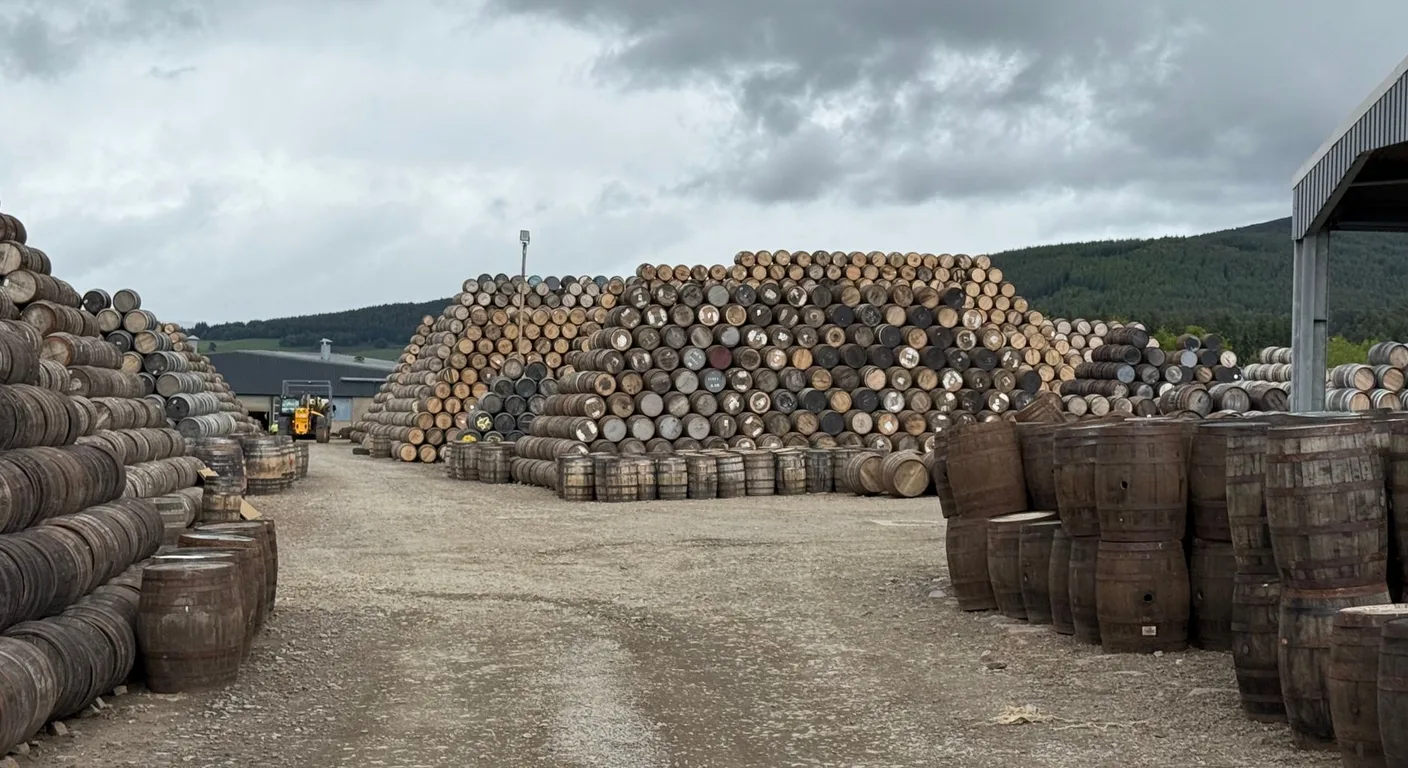
For whiskey and bourbon producers, barrel storage creates a unique and ongoing compliance challenge. As you fill barrels and lay them to rest in your rickhouse, your on-site proof gallon inventory steadily climbs. Every drop of alcohol resting in oak represents deferred federal tax liability. Because aging spirits can sit for four to ten years before bottling, the cumulative tax liability inside a mid-size rickhouse can quickly escalate into the millions of dollars.
This accumulation directly impacts your required bond limit. Distillers must accurately log the entry gauge of every single barrel, noting the exact proof gallons transferred into the wood. Over time, evaporation naturally reduces the volume and alters the proof of the spirit. While this evaporation reduces your actual tax liability upon dumping, the TTB requires you to hold bond coverage based on your currently recorded inventory.
When you finally dump the barrels for processing, you must perform a precise regauge to determine the exact volume and proof remaining. The difference between the entry gauge and the dump gauge is recorded as a loss. Proper documentation of these losses is critical to keep your inventory records clean and to prevent the TTB from assuming the missing spirit was removed illicitly. Managing this complex lifecycle requires diligent recordkeeping, which is why operators often implement dedicated TTB reporting software to track barrel locations, monitor bond thresholds, and generate required reports.
To remain compliant, you must properly summarize these barrel movements across three distinct operational reports each month:
- Form 5110.40 - Monthly Report of Production Operations
- Form 5110.11 - Monthly Report of Storage Operations
- Form 5110.28 - Monthly Report of Processing Operations
Failing to file these three reports accurately can result in compliance audits and regulatory action.
How long should you budget for getting permitted and open?
The timeline from initial concept to the first legally distilled drop of alcohol is often the biggest shock to new distillery owners. While the TTB publicly states a target processing time of roughly 60 to 75 days for a fully perfected application, real world timelines look much different. Most active distillers advise budgeting anywhere from 18 to 24 months to transition from a business idea to a fully operational plant.
This extended timeline is due to a stubborn scenario inherent in distillery licensing. The TTB requires your facility to be fully built out and your production equipment permanently installed before they will issue final approval. Regulators need to see the exact layout, the security of the bonded premises, and the precise serial numbers physically stamped on your stills and tanks. You cannot simply lease an empty room, get your permit, and build the distillery later. You must commit the capital, sign the lease, pour the concrete, and install the stainless steel all while waiting on federal and state approvals.
Once the physical plant is approved, the compliance journey continues. You must request access to the federal COLAs Online system, submit formulas for any products that require them, and wait for label approvals. Only after the labels are federally approved and state distribution licenses are secured can you finally move your tax-paid product into the commercial market.
How can Spirit Sight simplify your operational compliance?
Managing overlapping federal requirements, fluctuating state fees, and precise proof gallon inventory is a monumental task. Relying on fragile spreadsheets to calculate your bond limits and generate your TTB reports leaves your business vulnerable to clerical errors and regulatory fines.
Spirit Sight provides an enterprise distillery management system that streamlines this exact regulatory burden. By automatically tracking your raw materials, barrel lifecycle, and daily proof gallon movements, the platform generates your required TTB operations reports and accurately tracks your bond liability in real time. Spirit Sight helps craft and mid-size operators replace messy spreadsheets with confident compliance, allowing your team to spend less time auditing government forms and more time focusing on production and business growth.
Key takeaways
- The TTB does not charge application fees for a basic permit, but state authorities frequently update their licensing costs.
- A Distilled Spirits Plant registration is legally required before distilling potable alcohol at any commercial or hobby scale.
- Federal excise tax is paid based on proof gallons removed from bond, typically requiring semi-monthly payments to the TTB.
- Your surety bond penal sum must cover the total potential tax liability of all spirits stored in your facility.
- Facility buildouts must be completed and equipment installed before the TTB will approve a new distillery application.
Frequently asked questions
Are there federal fees for a TTB distillery permit?
No, the TTB does not charge an application or maintenance fee for a federal basic permit or Distilled Spirits Plant registration. Your primary federal costs will be your surety bond and the excise taxes paid on the spirits you produce.
Can I legally distill spirits at home for personal use?
No, it is illegal to distill potable alcohol at home without a permit in the United States. You must have a federal Distilled Spirits Plant registration and proper state licensing, even for small batch or educational distilling.
How does the Craft Beverage Modernization Act help distilleries?
The Craft Beverage Modernization Act significantly lowers the federal excise tax for qualifying domestic producers. It reduces the tax rate from the standard $13.50 per proof gallon down to $2.70 per proof gallon on the first 100,000 proof gallons removed annually.
How large does my distillery bond need to be?
Your bond size is determined by the maximum number of proof gallons you expect to hold in your bonded premises at any one time. The penal sum must cover the total federal excise tax liability of that inventory, often starting between $11,000 and $16,000 for new producers.
How long does it take to get a distillery permit approved?
While the TTB aims to process perfected applications in about 60 to 75 days, the entire process from securing a location and building the facility to receiving final federal and state approvals typically takes 18 to 24 months.