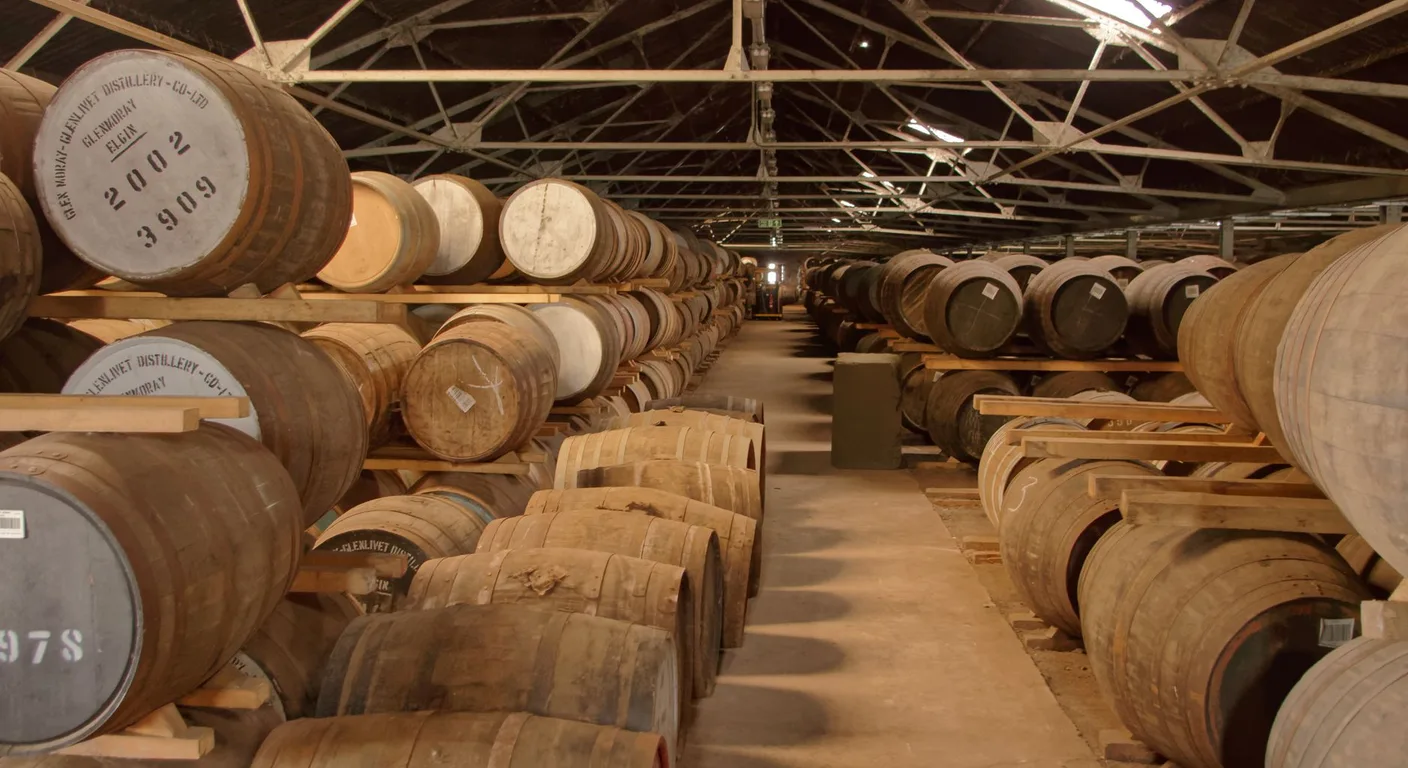
In short: Warehouse position changes a barrel as it ages by exposing it to different microclimates. Top floors are hot and dry, causing water to evaporate faster than alcohol and raising the proof. Bottom floors are cooler and damper, allowing alcohol to evaporate faster, which lowers the proof and slows extraction.
Understanding how warehouse position changes a barrel as it ages is critical for craft distillers who want to maintain a consistent, high-quality flavor profile. The microclimate surrounding each barrel dictates exactly how water and alcohol evaporate, directly impacting the final proof and the extraction of wood sugars. By placing barrels strategically throughout the rickhouse, distillery operators can control the maturation speed, the evaporation rate, and the delicate balance of tannins and vanilla in the finished spirit.
Does temperature and humidity really impact barrel maturation?
Temperature and humidity are the driving forces behind barrel aging. A barrel is a dynamic, porous vessel that breathes as the surrounding environment changes. When the air in the warehouse heats up, the liquid inside the barrel expands and is forced deep into the charred oak staves. When the temperature drops, the liquid contracts, pulling extracted wood compounds back into the main body of the spirit.
This continuous cycle of expansion and contraction is what matures the whiskey. If a barrel is stored in a consistently hot and humid climate, like central Texas, this cycle happens aggressively. Distillers in these environments often report yielding a rich, good-tasting bourbon in just three years. Conversely, in colder climates with fewer extreme temperature swings, the maturation process is much slower. A standard 53-gallon barrel in a cool, northern warehouse might need up to six years to achieve the same level of oak extraction. Understanding this timeline is vital because pulling a barrel too early results in a green, unpalatable spirit, while leaving it too long can result in a harsh, over-wooded product.
How warehouse position changes a barrel as it ages
The vertical location of a barrel in a multi-story warehouse dramatically alters its final flavor profile. Heat naturally rises, meaning the upper floors of a traditional rickhouse are significantly hotter than the ground floor. This temperature gradient creates distinct microclimates that change how the spirit interacts with the wood over time.
Barrels stored on the top floors experience intense heat during the summer months. This high heat causes extreme expansion, pushing the spirit past the char layer and deep into the red layer of the oak. As a result, top-floor barrels extract heavy tannins, deep color, and bold, spicy oak flavors very quickly. These barrels tend to taste more robust and aggressive.
On the other hand, the bottom floors of the warehouse remain cooler and often much damper due to their proximity to the ground. Barrels stored here undergo a much gentler aging process. The liquid does not penetrate as deeply into the wood, which slows down the extraction of heavy tannins. Instead, the cool, damp environment preserves the delicate esters and fruit notes created during fermentation and distillation. Middle floors offer a balanced environment, providing a moderate aging speed that pulls a well-rounded mix of vanilla, caramel, and oak. Master blenders often mix barrels from different vertical positions to create a complex, consistent flagship product.
Why does proof go up on the top floor and down on the bottom?
The physics of evaporation inside a rickhouse explain why two identical barrels can end up with entirely different proofs after a few years. It comes down to the ambient humidity and temperature surrounding the barrel. Wood is semi-permeable, allowing both water molecules and ethanol molecules to escape as vapor. However, they do not always escape at the same rate.
In a hot, dry environment, which is typical of the top floors of a rickhouse, water molecules evaporate and transpire through the wood staves faster than the larger ethanol molecules. Because more water is leaving the barrel than alcohol, the overall concentration of alcohol increases. This is why barrel proof often rises on the top floor, sometimes resulting in barrel-proof expressions that bottle well above their original entry proof.
Conversely, in a cool, damp environment on the bottom floor, the ambient humidity outside the barrel is very high. Because the air is already saturated with moisture, the water inside the barrel does not evaporate easily. Instead, the alcohol transpires through the wood faster than the water, causing the overall proof of the spirit to drop over time.
It is important to remember the regulatory baselines when planning for proof changes. Under 27 CFR Part 5, the legal maximum barrel entry proof for bourbon is 125 proof (62.5 percent ABV), and the spirit must be distilled at not over 160 proof. Please note that this is general information and does not constitute tax or legal advice. Because top-floor barrels can increase in proof, distillers must monitor them carefully to ensure they meet their desired flavor and bottling specifications.
What entry proof should I use for different warehouse locations?
Choosing the right entry proof is a strategic decision that goes hand in hand with warehouse placement. While 125 proof is the legal maximum for bourbon, many experienced distillers avoid barreling at the maximum limit. Instead, a common practice is to enter the spirit in the 110 to 120 proof range. At this moderate proof, water and alcohol tend to transpire through the wood at roughly equal rates over a long period, which keeps the proof relatively stable regardless of minor temperature fluctuations.
Entry proof also dictates what specific compounds the spirit extracts from the oak. Maximum solids extraction from American oak generally occurs around 55 percent ABV (110 proof). If you enter the spirit at a lower proof, around 100 proof, the higher water content helps dissolve and pull out more water-soluble wood sugars and rich vanilla notes. This lower entry proof pairs exceptionally well with cooler bottom floors, resulting in a sweet, mellow spirit.
Higher entry proofs, between 115 and 125 proof, rely on the higher alcohol concentration to break down alcohol-soluble compounds, which pulls out more tannins and astringency. If you place a high-entry-proof barrel on a hot top floor, the combination of aggressive heat and high solvent power can quickly over-extract the wood, leading to a bitter, spicy, or green-oak off-character. Distillers must tailor their entry proof to the specific environment where the barrel will live.
How do barrel size and location impact the evaporation rate?
Evaporation, commonly known as the angel's share, is an unavoidable cost of aging spirits. For a standard 53-gallon barrel, distillers can expect to lose roughly 2 to 3 percent of the total volume each year. However, this rate fluctuates based on the barrel's position in the warehouse. Hot, dry top floors will drive higher evaporation rates, meaning you will lose more total volume but potentially gain a higher proof. Bottom floors will see lower overall volume loss but a dip in proof.
Barrel size changes this math entirely. Craft distillers using small barrels to accelerate their timeline must be incredibly cautious. Small barrels have a significantly higher ratio of wood surface area to liquid volume. A 15-gallon or 5-gallon barrel can lose alcohol at a staggering rate, sometimes losing 5 to 15 times the angel's share of a full-size barrel. In dry storage, a 5-gallon barrel might lose up to 10 percent of its volume in just six months.
Because of this rapid evaporation and aggressive extraction, small barrels over-wood very fast. A general rule of thumb used by some craft distillers is to allow a maximum of about 36 days of aging per vessel gallon. That equates to roughly six months for a 5-gallon barrel, and about 18 months for a 15-gallon barrel to yield decent results. Tracking this rapid loss is critical, and many operators rely on an angels share calculator to forecast volume changes and prevent costly surprises at harvest time.
Tracking rickhouse inventory and barrel costs
Because warehouse position determines how fast a barrel matures, how much volume is lost to evaporation, and what the final proof will be, accurate record-keeping is a necessity. A barrel aged on the top floor might yield significantly fewer proof gallons at bottling time compared to a barrel aged on the bottom floor. This directly impacts your cost of goods sold and your tax liabilities.
Distillery finance and operations teams need a reliable way to map out their rickhouses. Knowing exactly which barrels are on the top tier versus the bottom tier allows blenders to plan their harvest schedules efficiently. If a batch of bourbon requires a mix of spicy, high-proof top-floor barrels and sweet, mellow bottom-floor barrels, you need to be able to locate them instantly without physically searching the warehouse.
Furthermore, when a barrel is finally dumped, the new gauge must be recorded for compliance purposes. The yield will vary drastically based on where the barrel lived. Utilizing a proof gallon calculator helps operators quickly convert the dumped volume and new proof into accurate tax-liable units. Integrating these calculations into a unified system ensures that the financial cost of the angel's share is accurately reflected in the final bottle price.
Spirit Sight provides comprehensive barrel management tools designed specifically for distilled spirits plants. Our software allows distillery operators to visually map their rickhouses, track the exact location and microclimate of every barrel, and monitor proof changes over time. By keeping your aging inventory organized and your costs accurately calculated, Spirit Sight makes it easy to manage evaporation losses and blend your spirits with complete confidence.
Key takeaways
- Heat on the upper floors of a rickhouse forces spirit deeper into the wood, extracting more tannins and bold oak flavors.
- Barrels on top floors typically increase in proof due to water evaporating faster than ethanol in the dry heat.
- Lower floors offer a cooler, humid environment where alcohol evaporates faster than water, causing the proof to drop.
- Lower entry proofs pull more water-soluble vanilla notes, while higher entry proofs extract more alcohol-soluble tannins.
- Small barrels age and evaporate much faster than standard 53-gallon barrels, requiring careful monitoring to prevent over-wooding.
Frequently asked questions
At what proof is American whiskey entered into the barrel?
Most American whiskey, including bourbon, is entered at or near the legal maximum of 125 proof (62.5 percent ABV). However, many distillers prefer to enter spirit between 110 and 120 proof for long, stable aging.
How long does whiskey need to age in a new 53-gallon barrel?
While results vary heavily by climate and warehouse position, whiskey typically needs 18 to 24 months to become palatable. For a fully matured bourbon flavor, distillers generally plan for four or more years.
Why does barrel proof go up during aging?
Barrel proof goes up when the ambient environment is hot and dry, which is common on the top floors of a warehouse. In these conditions, water molecules escape through the wood staves faster than ethanol molecules, concentrating the alcohol.
Does a lower entry proof increase vanilla extraction?
Yes. Lower entry proofs, such as 100 proof, contain more water which helps dissolve and extract water-soluble wood sugars and vanilla compounds from the charred oak. Higher proofs extract more tannins and astringency.