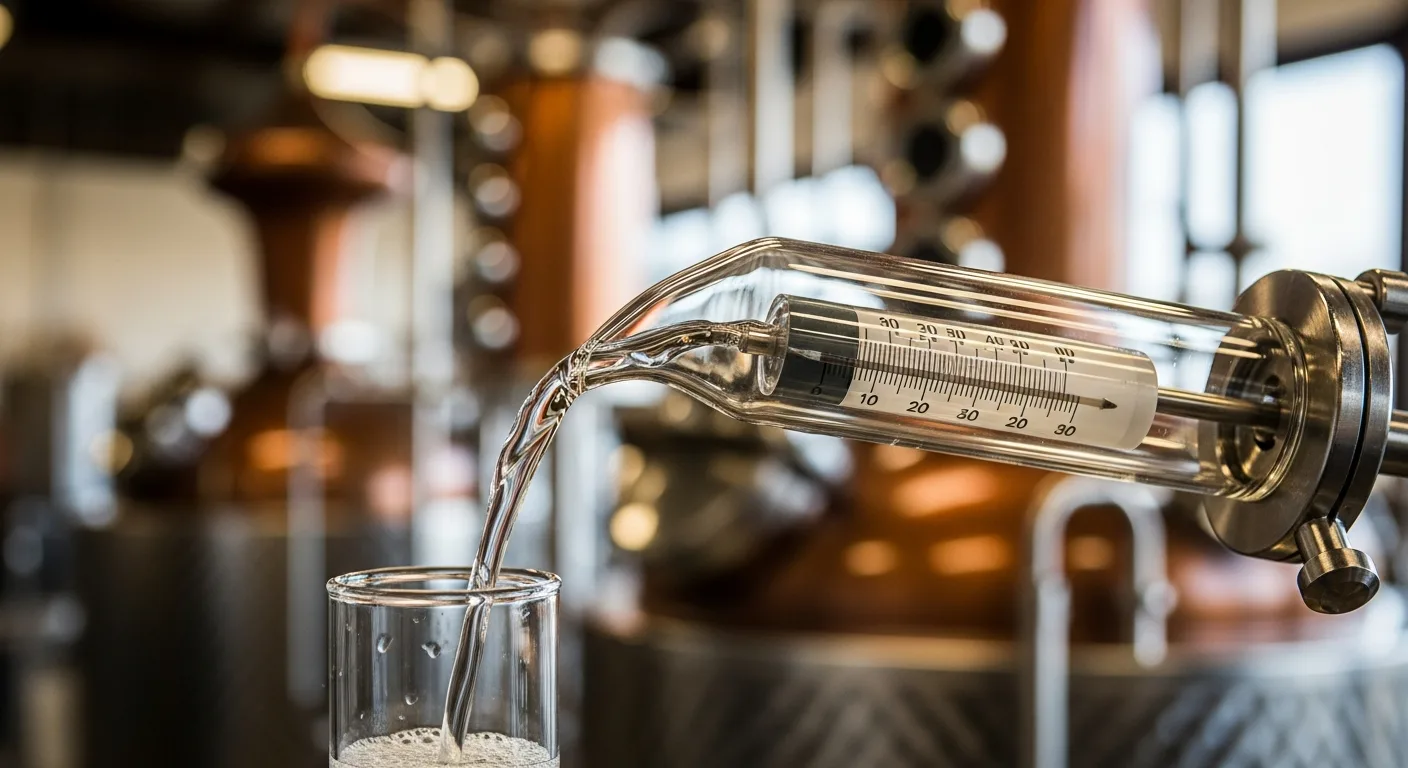
In short: A stripping run quickly extracts alcohol from a fermented wash to create low wines without making cuts. A spirit run slowly redistills those low wines to separate heads, hearts, and tails. Together, they improve throughput, protect equipment, and produce a refined finished spirit.
If you have spent any time in the commercial distilling industry, you have likely seen the same operational debate play out time and time again. Some equipment manufacturers tell new distillers to run traditional stripping runs followed by separate spirit runs. Others say you should just do one pass on a modern column. Both camps can make an excellent product, which is exactly why the question keeps coming back.
This guide walks through what each run actually does, when to choose one approach over the other, and the practical mistakes that catch operators on the production floor. By understanding the distinct mechanics of stripping and spirit runs, you can optimize your equipment, improve your yields, and scale your distillery operations efficiently.
What is the difference between a stripping run and a spirit run?
The two runs have completely different jobs on the production floor.
A stripping run is entirely about volume and speed. You charge the still with fermented wash, which usually sits somewhere around 8 to 10 percent ABV, and your primary goal is to extract the alcohol out of it as fast as your equipment safely allows. You run with little or no reflux, you do not fuss over separating compounds, and you collect everything that comes over as a single combined product. This cloudy, high-proof liquid is known as low wines.
As the commercial distilling community puts it plainly, the goal of a stripping run is to process large volumes of wash and concentrate the alcohol. For everything but neutral spirit, you collect all the alcohol and flavor compounds at a lower proof and worry about refining them later.
A spirit run is about separation, refinement, and character. You take the low wines gathered from one or more stripping runs, combine them into a concentrated charge, and run that pass slowly and deliberately. This is where you actually separate the run into distinct fractions. You collect the heads at the front, the hearts you actually want to keep for packaging or barreling, and the tails at the back.
The spirit run is where the finished product gets its shape. Run temperature, reflux control, and the timing of your sensory cuts all do their work here, not on the strip. In short, the stripping run answers how much alcohol is in the wash, while the spirit run dictates what the final product will taste like.
Why run a separate stripping still in your distillery?
The single biggest reason to separate these processes is throughput. A common complaint from growing distillers operating a single pot still is that the equipment quickly becomes a production bottleneck. One operator might spend three days running wash followed by one day running a spirit pass, meaning four full days are tied up on a single batch of finished spirit.
A dedicated stripping still breaks that logjam. Because several stripping runs typically feed each spirit run, a frequent rule of thumb for whiskey and rum producers is to size the stripping still roughly three times the volume of the spirit still. This allows the production team to process wash continuously while the finishing still is reserved for precise, high-value work.
The second major reason is protecting your capital investment. Copper finishing stills are expensive, and every brute-force stripping pass uses up a fraction of their working life. A common operational move is to buy a more affordable stainless steel stripping still to handle the heavy first passes. This protects the expensive copper finishing still and can roughly double your output for far less cost than purchasing a second finishing pot. Distillers who use this method report no negative changes in the finished product when the stripping still is built appropriately, and many have scaled their capacity significantly by adding one.
There is one critical tradeoff worth knowing if you move to a stainless vessel for your strip. Copper contact matters immensely for catalysis and sulfur management during distillation. For this reason, many operators add copper back into a stainless stripping still. You can achieve this with a bypassable copper catalyzer, a copper-lined column, copper packing, or a copper dephlegmator. Surface area is what counts rather than material thickness. Removable plates let you swap and clean them easily between heavy runs. This is not a free upgrade, and some find copper packing messy to manage, so you must weigh the benefits against your specific spirit profile and equipment budget.
Do you make cuts on a stripping run?
No, and this specific issue trips up many people transitioning from hobby setups to commercial production.
On a stripping run, you are not trying to separate heads, hearts, or tails. You collect the entire output as low wines. The separation and the critical sensory decision making belong entirely to the spirit run. Trying to make precise cuts on a strip wastes production time and gives you no real benefit, because you are going to redistill that exact same material anyway.
When running hard and fast, you also run the risk of foaming or puking, where liquid wash boils up into the column. Many operators use anti-foam agents during the strip to prevent this and maximize speed. Because you are not making cuts, a slight puke into the low wines is easily corrected during the subsequent spirit run.
The one major exception to this rule is neutral spirit. If you are chasing high-proof vodka, the logic changes because your entire process is built around stripping flavor out rather than preserving it. But for whiskey, rum, brandy, and anything else where raw character is the point, keep it simple on the strip and save your undivided attention for the spirit run.
Best practices for handling low wines before the spirit run
This is where a small habit prevents a completely ruined production day.
Before you charge the spirit still, combine your low wines and thoroughly check the proof of the charge. The reason matters immensely. Heads compounds can smear through an entire spirit run when the low wines are not reduced below approximately 30 percent ABV. Above that proof threshold, the harsh heads compounds stay dissolved in the charge and bleed across the entire run instead of presenting cleanly at the very front. This makes a clean heads cut nearly impossible. Excess heat and sloppy cuts only make the smearing worse. Many professional distillers deliberately dilute the spirit run charge with clean reverse osmosis water to bring it well under 30 percent ABV for exactly this reason.
Here are a few related best practices straight from the production floor:
- Store your low wines, heads, and tails securely in food-grade totes, stainless kegs, or intermediate bulk containers. This allows you to accumulate stripping output until you have enough volume for an optimal spirit run.
- Recycle heads and tails, which are often referred to collectively as feints, back into later runs to recover additional yield over time. You simply add them to your next batch of low wines.
- Keep your condenser cooling capacity adequate. Spirit collected above approximately 20 degrees Celsius can suffer a degraded congener balance. Hot distillate can actually pull feints into your hearts, undoing the careful sensory cutting you just performed.
We should also put down one persistent myth. There is no magic temperature setpoint that completes a stripping run or a spirit run in a fixed amount of time. Temperature has no fixed relationship to output volume. You control the run time by controlling the energy input to the charge, not by chasing a specific number on a column thermometer.
How do you manage cuts during a spirit run?
Once your low wines are loaded and diluted, the spirit run requires a distinct shift in methodology. Instead of running full throttle, you apply heat gently to bring the charge to a boil.
As the first vapors condense, you collect the foreshots and heads. These contain volatile compounds like methanol, acetone, and acetaldehyde. You must collect these slowly. Rushing the heat at this stage will push tails compounds up the column prematurely and ruin your hearts cut.
Many commercial distillers collect their cuts in smaller distinct fractions rather than running directly into a large blending tank. By filling a series of smaller vessels, the sensory panel can taste and evaluate each fraction the next day. This allows the master distiller to carefully construct the final hearts blend, discarding any fractions that lean too heavily into the harsh heads or the funky, oily tails.
When does single distillation make more sense than two runs?
You should choose your method based on your equipment, your specific spirit category, and your facility capacity rather than industry dogma.
Single distillation tends to make practical sense when you are running a modern plated or column-equipped pot still. It also makes sense when your throughput is low enough that one vessel is not a bottleneck, and when your team can dial in cuts perfectly on a single pass. A single column run with multiple plates gives a narrow heart cut, while using fewer plates can concentrate heads and tails and broaden the hearts for more total yield.
From a healthy, well-fermented wash, single distillation works incredibly well. However, if your wash ferments out below roughly 8 percent ABV, early tails onset starts to limit your useful extraction. This is just one reason a strong, clean fermentation process helps dictate your distillation strategy.
The traditional stripping and spirit approach tends to win when you have serious volume to move, when you want to protect an expensive copper still, and when you want the cleanest possible separation of congeners. Batch double distillation is the traditional route for many flavorful and heavy spirits, while continuous columns are the undisputed workhorses for neutral products. Continuous setups can make good whiskey too, but they tend to bleed some heads and tails into the hearts. This often means the spirit requires much longer barrel maturation time to clean up those harsh notes.
Managing compliance and TTB reporting for multiple runs
Regulatory compliance often dictates equipment choices for certain spirit categories. You cannot reach the legal proof required to label a spirit as vodka on a conventional pot still without forced reflux equipment.
The federal standards of identity for distilled spirits set the exact floor for vodka and other neutral spirits, and a simple pot still will not get you to the required 190 proof. You should review 27 CFR Part 5 at ecfr.gov and the official TTB beverage alcohol guidance at ttb.gov for the current legal standards before you commit to purchasing any equipment. Please note that this is general regulatory information and does not constitute legal or tax advice.
When you execute multiple runs, accurate recordkeeping becomes critical. You must track the proof gallons of your wash, the yield of your low wines, and the precise fractions of your finished spirit. Using robust production tracking ensures your distillery does not lose track of valuable inventory between runs.
The bottom line for your distillery operations
Stripping runs and spirit runs are not competing philosophies. They are two distinct tools available to a commercial distiller. The stripping run removes alcohol from your wash quickly and cheaply, ideally utilizing a vessel sized and built specifically for that rough job. The spirit run is where you slow down the process, make your precise sensory cuts, and decide exactly what your finished product becomes.
Whether you choose to run once or twice comes down to the design of your still, the character of your spirit, and how much volume you need to produce. Keep your low wines under about 30 percent ABV before initiating the spirit run, keep your condenser chilling water cold, and let energy input rather than a strict temperature setpoint dictate your production pace.
Whichever operational path you choose, your facility records have to hold up to scrutiny. Managing this data with dedicated compliance tools like Spirit Sight allows you to track each run securely. By logging the low wines and feints you carry between batches, and accurately recording the proof gallons at every transfer, your production ledger and your TTB reporting will always stay tied to what actually came off the still.
Key takeaways
- A stripping run processes large volumes of wash rapidly to extract low wines, while a spirit run slowly redistills those low wines to separate specific flavor fractions.
- Investing in a dedicated stainless steel stripping still can eliminate production bottlenecks, double your throughput, and extend the lifespan of your expensive copper finishing still.
- You should never make cuts during a stripping run, as the goal is to safely collect all alcohol and flavor compounds for later refinement.
- Diluting low wines to below 30 percent ABV before a spirit run prevents harsh heads compounds from smearing across the entire batch and ruining your hearts cut.
- Single distillation works well on modern plated stills for specific flavor profiles, but traditional double distillation remains the industry standard for maximizing volume and achieving precise separation.
Frequently asked questions
Can I use a stainless steel still for a stripping run?
Yes, many commercial distilleries use stainless steel for stripping runs to save money and protect their copper finishing stills, though adding some copper components to the stainless setup is highly recommended to help manage sulfur compounds.
What should the ABV of low wines be before starting a spirit run?
Low wines should typically be diluted with clean water to below 30 percent ABV before a spirit run. This ensures that volatile heads compounds separate cleanly at the very beginning of the distillation process.
Do I discard the heads and tails from a spirit run?
Heads and tails, collectively known as feints, are frequently recycled and added to future batches of low wines to recover additional usable alcohol and maximize yield over time.
Why does my pot still fail to reach the required proof for neutral spirits?
A traditional pot still lacks the necessary reflux to reach the 190 proof required by federal standards for neutral spirits, which is why columns equipped with multiple plates are required for compliant vodka production.