In short: Sustainability and ESG reporting for distilleries involves tracking environmental impacts like water usage, energy consumption, and waste across mashing, fermenting, and distilling operations. By measuring these metrics alongside standard production data, distilleries can lower utility costs, improve supply chain transparency, and demonstrate responsible resource management to investors and consumers.
Implementing sustainability and ESG reporting for distilleries gives operators a clear picture of how resource usage impacts their bottom line. Tracking energy, water, and waste alongside proof gallons and barrel inventory helps uncover inefficiencies in mashing, fermenting, and distilling. For craft and mid-size producers, environmental metrics are no longer just corporate buzzwords; they are practical tools for lowering utility costs and optimizing daily plant operations. Every drop of water, pound of grain, and kilowatt of electricity represents a cost. By formalizing how you measure these inputs, you can build a more resilient business that appeals to modern consumers and meets future regulatory demands.
What does sustainability and ESG reporting for distilleries actually mean?
ESG stands for Environmental, Social, and Governance. While it sounds like a framework designed for large public corporations, the principles apply directly to the daily reality of running a distilled spirits plant.
The environmental pillar focuses on your physical resources. Distilling is an inherently resource-heavy process. You use massive amounts of water for mashing and cooling, significant energy to boil thousands of gallons of liquid, and agricultural products that generate heavy organic waste. Measuring these inputs allows you to establish a baseline for efficiency.
The social pillar in a distillery context heavily involves workplace safety. Operating pressure vessels, handling hazardous ethanol vapor, and moving five hundred pound barrels in tight rickhouses require strict safety protocols. Protecting your staff and ensuring a safe working environment is a core component of good social governance.
The governance pillar relates to compliance and ethical business practices. Distilleries are strictly regulated by federal and state agencies. Maintaining precise records for excise taxes, correctly reporting your inventory, and ensuring transparent grain sourcing all fall under strong governance.
How can distilleries reduce energy and water usage?
One of the most effective ways to lower your carbon footprint and energy bill is by evaluating your distillation equipment and workflow. For example, relying on a single large pot still for every step of production might seem simpler, but it is rarely the most efficient method.
Running a separate stripping still is a highly efficient way to process your wash. A cheaper stainless steel stripping still protects your expensive copper finishing still from excess wear and tear. More importantly, it roughly doubles your output for far less cost and energy than buying a second finishing still. Stripping runs can be done quickly and aggressively, reducing the total hours your boilers are running at maximum capacity.
Your choice of mashing equipment also matters. Some new operators try to use their primary still as a mash tun to save money up front. However, doing so ties up the still and usually lacks a proper cooling jacket and agitation. This leads to wasted time and poor heat transfer. Using a dedicated mash tun with a lower geared paddle agitator allows for faster processing and lower overall energy consumption per batch. You can track this energy efficiency using modern distillery production software to see exactly how much utility cost goes into each proof gallon.
How does equipment choice impact distillery sustainability?
The materials used to build your stills directly affect both the longevity of your equipment and the amount of harsh chemicals required to keep them clean. The debate between copper and stainless steel is common among operators, and your choice has clear environmental implications.
Copper is absolutely necessary on the hot side of the process, such as the pot, head, and column plates. It acts as a catalyst that removes sulfur compounds and produces a softer spirit. However, copper is a soft metal that wears down over time and requires heavy chemical cleaning to maintain its reactive properties.
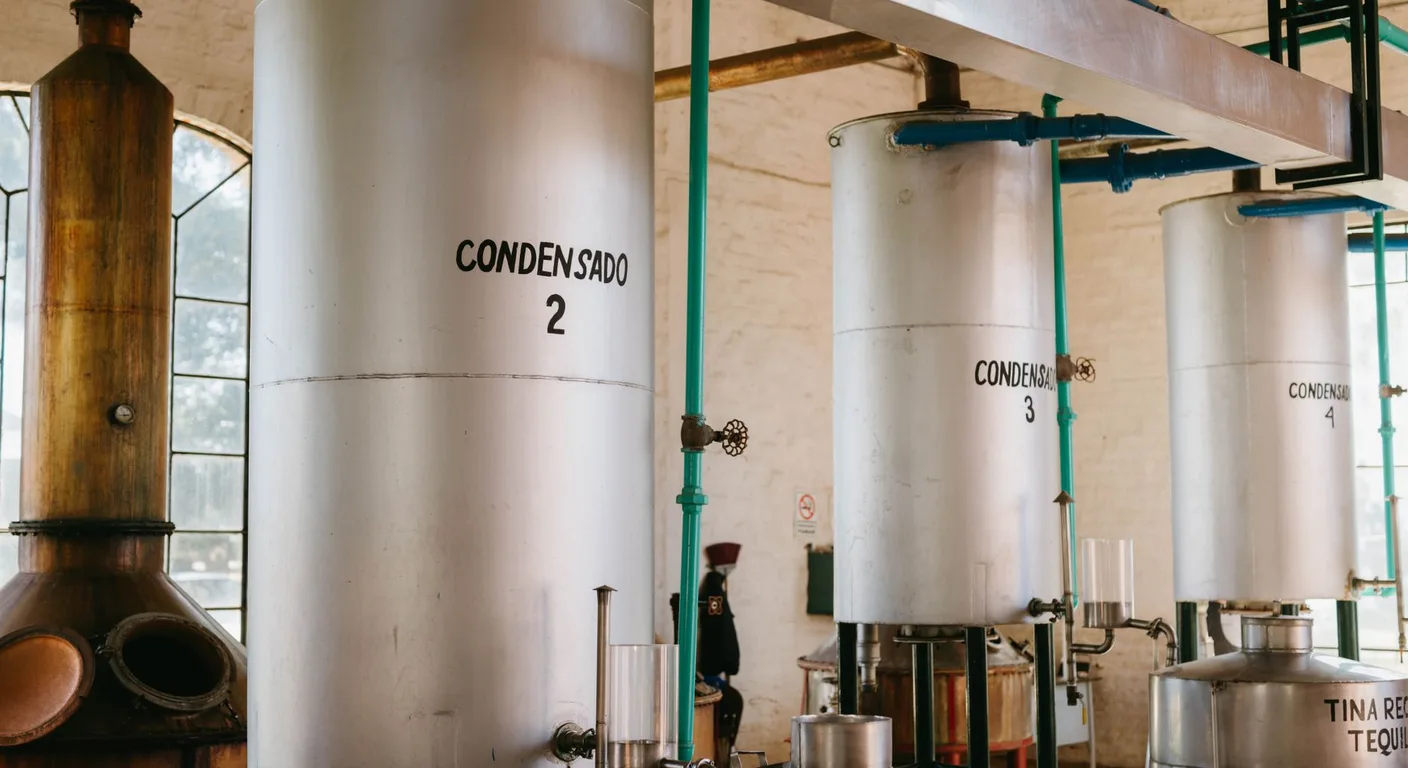
In the cooler distillate path, such as the condenser and spirit pipe, the chemical benefit of copper largely disappears. Using stainless steel in these sections is a much more durable and sustainable choice. Stainless steel is easier to clean, requires fewer harsh chemicals, and will not need to be replaced as quickly as copper. Replacing worn out equipment requires significant raw materials and manufacturing energy, so building a still that uses copper only where necessary is a smart long-term decision.
Additionally, operators who want to produce whiskey, rum, vodka, and gin should consider a versatile hybrid still. A column still with bypassable plates can make multiple product types. This single footprint prevents the need to manufacture, ship, and operate four separate dedicated stills, greatly reducing your environmental impact.
Managing waste: spent grain and stillage disposal
Mashing and fermenting grain leaves behind thousands of gallons of spent mash, commonly called stillage. This byproduct is highly acidic and has a massive biological oxygen demand. You cannot simply dump stillage down the municipal drain. Doing so will overwhelm local water treatment facilities and lead to severe fines.
Sustainable waste management requires finding a secondary use for this organic material. The most common and effective method is partnering with local agriculture. Pumping your spent grain into a holding tank for local cattle or pig farmers keeps the waste out of the sewer system and provides a cheap food source for livestock. This creates a local circular economy.
If farming partners are not available, some distilleries send their stillage to anaerobic biodigesters. These facilities use microorganisms to break down the organic waste and capture the resulting methane gas to generate electricity. Finding a responsible outlet for your stillage is one of the most impactful environmental decisions a distillery operator can make.
How do TTB records support environmental reporting?
You do not need to invent an entirely new data collection system to start tracking ESG metrics. Federal compliance already requires you to weigh your grain, measure your water additions, and gauge your final spirits.
The data you collect for 27 CFR Part 19 compliance forms the exact foundation needed for an environmental audit. For instance, by comparing the pounds of grain mashed to the proof gallons yielded on your mandatory production reports, you can calculate your raw material efficiency. Please note that this is general information and not tax or legal advice.
If your yield drops, it means you are using the same amount of electricity and water to produce less product, which hurts both your sustainability goals and your profit margins. You can easily spot check these numbers during a run using a proof gallon calculator to ensure your conversion rates remain stable. By simply adding your utility bills to your existing TTB spreadsheet, you instantly create a basic ESG report.
Measuring the carbon footprint of barrel storage and rickhouses
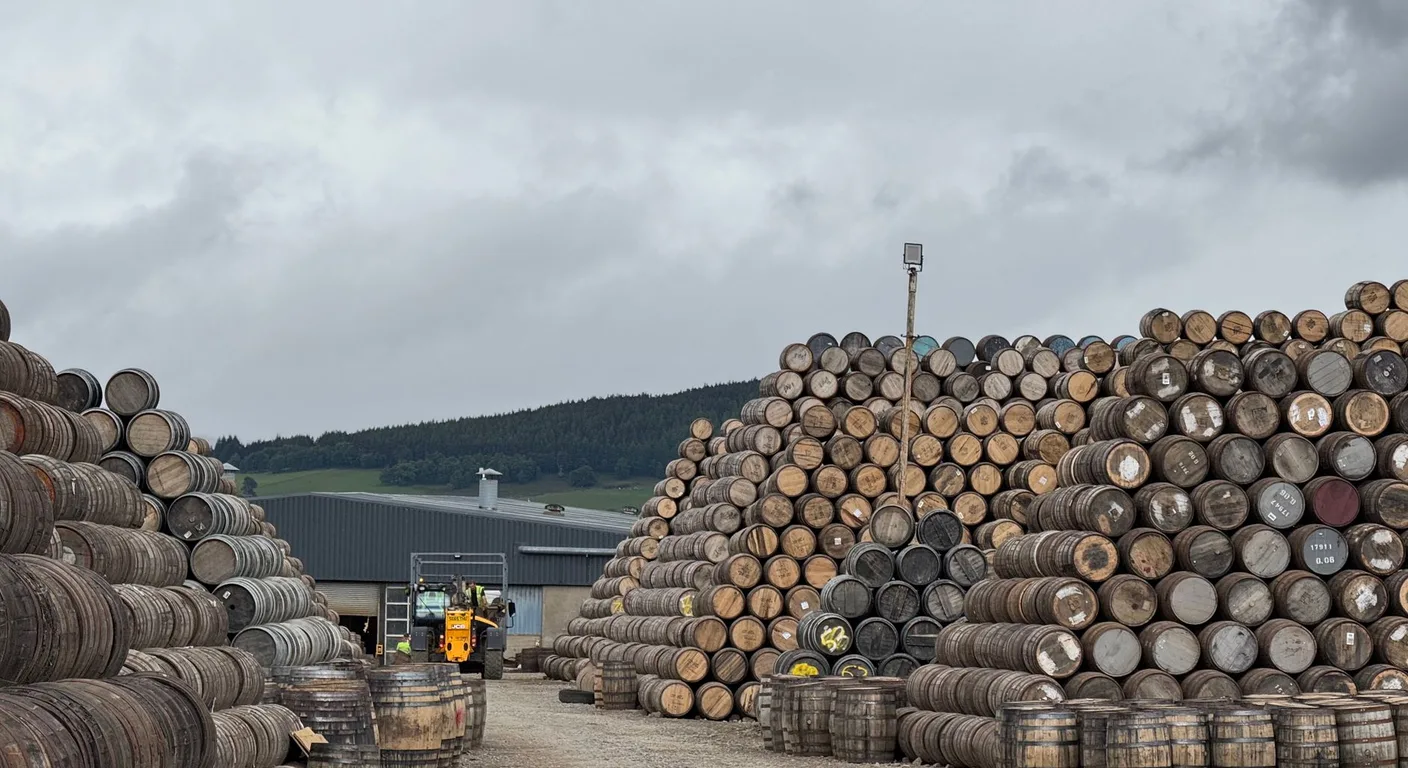
Aging whiskey is a waiting game, but the way you store your barrels impacts your overall carbon footprint. Rickhouse management strategies vary wildly depending on the climate and the specific style of bourbon or whiskey being produced.
Passive aging warehouses rely on natural temperature swings and ventilation. These buildings use very little electricity, relying instead on the natural heat of summer and the chill of winter to push the whiskey in and out of the barrel wood. Conversely, some large producers use heat-cycled warehouses, pumping in massive amounts of steam heat during the winter to simulate multiple aging seasons. Heat cycling consumes an enormous amount of energy and drastically increases the carbon footprint of the aging process.
There is also the environmental impact of the angels share. As ethanol evaporates through the oak staves, it interacts with the local environment. While evaporation is a natural and necessary part of aging spirits, tracking the precise volume lost over time helps operators understand their true yield. Using dedicated distillery management software allows you to track these losses by warehouse location, helping you optimize storage conditions and minimize unnecessary waste.
Getting started with sustainable distilling
Sustainability is not about buying expensive green technology; it is about operating your plant as efficiently as possible. By properly sizing your boilers, utilizing stripping stills, sourcing durable stainless steel components, and finding local partners for spent grain, you can dramatically lower your operating costs. When you treat environmental metrics with the same exactness as your daily proof gallon logs, your distillery becomes more profitable and better prepared for the future.
Spirit Sight helps distilleries track the vital production metrics that form the foundation of both regulatory compliance and sustainability reporting. By centralizing your data for mashing, fermenting, distilling, and barrel aging, you gain the visibility needed to optimize your resources, reduce waste, and confidently grow your spirits business.
Key takeaways
- Sustainability in distilling focuses on reducing energy use, conserving water, and responsibly managing biological waste.
- Operating a separate stainless stripping still saves energy and protects expensive copper finishing equipment from excessive wear.
- Using closed-loop chiller systems for condensers drastically lowers municipal water consumption and utility bills.
- Existing TTB production records provide the baseline data needed to build an accurate environmental impact report.
Frequently asked questions
What is a good water to spirit ratio for a sustainable distillery?
While it varies by equipment, highly efficient distilleries aim for less than five gallons of water per proof gallon of spirit produced, often achieved by using closed-loop chilling systems.
Can standard distillery equipment be used for ESG reporting?
Yes. The same scales, flow meters, and software used to track federal compliance and yield can be used to measure resource inputs for environmental reporting.
Does a hybrid still improve a distillery's environmental impact?
Using a single hybrid still for multiple spirit types reduces the manufacturing footprint, metal usage, and raw material extraction compared to building and operating four dedicated stills.