In short: Cost of goods sold for distilleries, explained simply: it is the total direct cost of producing the spirits you sell. This includes raw materials like grain and barrels, direct labor, and manufacturing overhead. Accurately tracking these costs is crucial to surviving the aging cash flow gap.
Having the cost of goods sold for distilleries, explained clearly is the first step toward building a profitable spirits brand. Cost of goods sold (COGS) represents the total direct costs required to produce the spirits you actually sell. In the distilling industry, calculating this number is uniquely challenging. You are not just tracking grain, yeast, and glass. You are accumulating costs over years of maturation, managing evaporative losses, and calculating complex excise taxes based on alcohol content. Accurately capturing these expenses prevents unexpected cash shortages and ensures your bottle pricing actually yields a sustainable profit.
Running a distilled spirits plant involves heavy upfront capital and a prolonged wait before revenue begins flowing. Understanding how raw materials, labor, and overhead translate into the final cost of a bottled product is what separates successful operations from those that run out of cash.
What goes into the cost of goods sold for distilleries, explained?
To understand your true production costs, you must break them down into three main categories: direct materials, direct labor, and manufacturing overhead. These categories apply to everything you produce, whether it is a fast turnaround vodka or a heavily aged bourbon.
Direct materials include every physical item that becomes part of the final product. On the liquid side, this means grain, malt, yeast, enzymes, and water. On the packaging side, it includes bottles, closures, labels, shrink seals, and the cardboard cases used for shipping. For brown spirits, the oak barrel is one of the most expensive direct materials you will purchase.
Direct labor consists of the wages paid to the people actively making the product. This covers the time a distiller spends mashing in, monitoring fermentations, running the stills, proofing the spirit, and operating the bottling line. It is important to note that tasting room staff, marketing teams, and sales representatives do not fall under COGS. Their wages are classified as operating expenses.
Manufacturing overhead includes the indirect costs of keeping your production floor running. This covers rent for the distillery space, utilities required for cooling and generating steam, insurance for the production facility, and the depreciation of your equipment.
How do equipment choices affect your overhead and COGS?
Your choices in distillation equipment directly impact your manufacturing overhead and direct labor costs. Many startup distillers attempt to save money by purchasing very small systems, but this often leads to a higher cost per bottle. If you use a 50 gallon still, your distiller will spend the entire day producing a very small yield. The labor cost absorbed by each bottle becomes unsustainably high.
Experienced operators consistently recommend starting with a larger system, such as a 300 gallon steam driven setup. The initial purchase price is higher, but it spreads your direct labor and utilities over a much larger volume of spirit, driving down your per unit cost. Furthermore, upgrading a small system later often costs twice as much due to facility downtime and the need to completely rebuild cooling and boiler infrastructure.
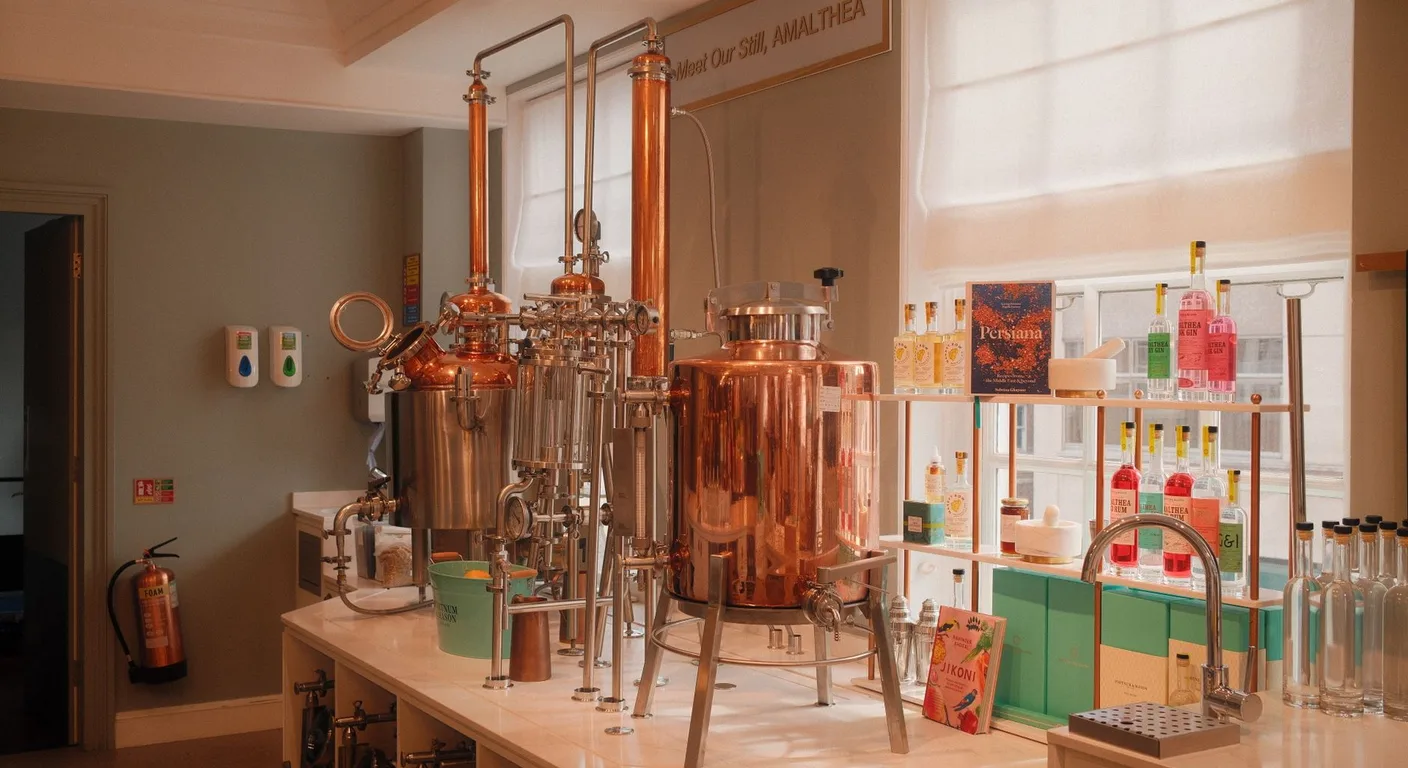
Another strategy to lower overhead is utilizing a separate stripping still. By using a less expensive stainless steel stripping still to perform the initial distillation, you protect your expensive copper finishing still from excess wear. Copper is highly effective at removing sulfur compounds in the vapor phase, which produces a softer spirit. However, running a continuous heavy load through a copper still requires extensive cleaning and maintenance. A stainless stripping still can roughly double your output for a fraction of the cost of buying a second finishing still, thereby lowering the overhead absorbed by each batch.
How do aging barrels impact your true COGS?
For whiskey and rum producers, aging introduces massive inventory carrying costs. When you put fresh distillate into a barrel, you cannot expense the cost of that production immediately. Instead, the cost of the grain, labor, overhead, and the barrel itself is capitalized into your inventory.
As the barrel sits in the rickhouse for years, it continues to accumulate manufacturing overhead. A portion of your monthly warehouse rent, insurance, and climate control utilities is added to the value of that barrel. This process is known as cost accumulation.
During this time, the angels' share (evaporative loss) reduces the total volume of liquid in the barrel. Because you have the same accumulated costs applied to a shrinking volume of liquid, your cost per barrel remains steady, but the cost per remaining proof gallon increases every single month. When you finally dump the barrel, filter the spirit, and bottle it, the total accumulated cost is transferred to finished goods. Only when that bottle is sold to a distributor or a customer does this figure finally hit your income statement as COGS.
Why is calculating excise tax and proof gallons so complicated?
The federal government taxes distilled spirits based on the alcohol content, not just the liquid volume. The Alcohol and Tobacco Tax and Trade Bureau (TTB) measures spirits in proof gallons. One proof gallon is defined as one liquid gallon of spirits that is 50 percent alcohol by volume at 60 degrees Fahrenheit.
Every time you move bulk spirits, gauge a tank, or bottle a product, you must calculate the exact proof gallons using rigorous temperature and density conversions. The official rules for these conversions are found in 27 CFR Part 30 of the federal regulations. Because these calculations are prone to human error, many operators rely on a digital proof gallon calculator to ensure compliance.
Federal excise tax becomes a factor in your COGS when the spirit is removed from your bonded premises for consumption or sale. If you qualify for the Craft Beverage Modernization Act (CBMA) reduced tax rates, you will pay a lower rate on your first 100,000 proof gallons removed during the calendar year. General information regarding these rates can be found on the Tax and Trade Bureau website. Please note that this is general information and does not constitute tax or legal advice.
Furthermore, to hold spirits in bond without immediately paying tax, you must carry a federal surety bond. The bond guarantees the government will receive its tax revenue even if your business defaults. If you cannot secure a surety bond, you must self fund a cash bond. Experienced distillers report cash bonds frequently starting between $11,000 and $16,000. This is a significant amount of working capital that is tied up and unavailable for daily operations.
How much operating capital do you need to survive the aging gap?
The financial reality of opening a distillery is that it always takes longer and costs more than expected. Estimates to start a craft distillery range wildly, but experienced operators repeatedly cite roughly $500,000 to $700,000 as the practical floor to get out of the red.
The timeline to open is also lengthy. You should plan on roughly two years from securing a properly zoned site to making your first sale. Federal distilled spirits plant approval typically takes about 120 days. Formula approvals and Certificate of Label Approvals (COLA) can add another 45 to 85 days.
Because of this delay, the single most common piece of advice among veteran distillers is to secure a minimum of one and a half to three years of operating capital before opening. Founders commonly pay themselves nothing for the first year and lose money daily while waiting for their spirits to mature. Running out of cash even once is the principal reason new distilleries fail.
How can you generate revenue while your whiskey ages?
The aging cash flow gap is the defining financial challenge of producing brown spirits. While your capital is locked up in maturing barrels, you still have to pay rent, utilities, and payroll. To survive this gap, distillers employ several revenue generating strategies.
Producing unaged spirits is the most common approach. Vodka, gin, white rum, and unaged agave spirits can be fermented, distilled, and bottled in a matter of weeks. This creates immediate cash flow to keep the lights on. Another popular strategy is sourcing aged wholesale whiskey and bottling it under your own label while your house distilled product matures.
Many startups also attempt to fund their operations by selling barrel futures. However, you must be extremely careful with terminology. Selling a financial future invokes strict federal and state securities regulations. A safer legal structure is offering barrel pre sales through a deposit, layaway program, or store credit system. When selling a full barrel to a private client, always let the customer pick their specific barrel at bottling time rather than at the initial fill, since every barrel ages differently.
Tracking the complex journey of raw materials, accumulating overhead, evaporative losses, and tax liabilities is impossible with simple spreadsheets. A dedicated distillery cost accounting platform gives you the visibility needed to price your bottles correctly and manage your cash flow confidently.
Spirit Sight is a specialized distillery ERP built to handle the unique financial realities of the spirits industry. By automatically tracking your direct materials, labor, and overhead from the mash tun to the rickhouse and finally to the bottle, Spirit Sight ensures your cost of goods sold is always accurate. With built in TTB reporting and automated proof gallon conversions, you can spend less time wrestling with compliance math and more time building a profitable distillery.
Key takeaways
- Distillery COGS includes direct materials, direct labor, and manufacturing overhead applied to finished goods.
- Whiskey aging creates a cash flow gap where costs accumulate for years before revenue is generated.
- Evaporative loss means the cost per remaining proof gallon increases every month a barrel sits in storage.
- Choosing properly sized equipment lowers direct labor and overhead costs per bottle.
- Federal excise taxes and cash bond requirements tie up significant working capital.
Frequently asked questions
What is included in the cost of goods sold for a distillery?
It includes raw materials like grain and barrels, direct labor such as the distiller's wages, and manufacturing overhead like facility rent and equipment depreciation. Operating expenses like marketing and tasting room staff are not included.
How does barrel aging affect distillery COGS?
Aging spirits accumulate costs over time, absorbing warehouse rent and insurance. As the volume decreases due to the angels' share evaporation, the cost per remaining proof gallon steadily increases.
Do I have to pay excise taxes on spirits as soon as they are distilled?
No, federal excise taxes are typically paid when the finished spirit is removed from the bonded premises for sale or consumption. You must maintain a federal bond to hold untaxed spirits in storage.
How can a startup distillery survive the aging cash flow gap?
Many operators produce unaged spirits like gin or vodka for immediate sale, source wholesale aged whiskey, or utilize carefully structured barrel pre sale programs to generate early revenue.