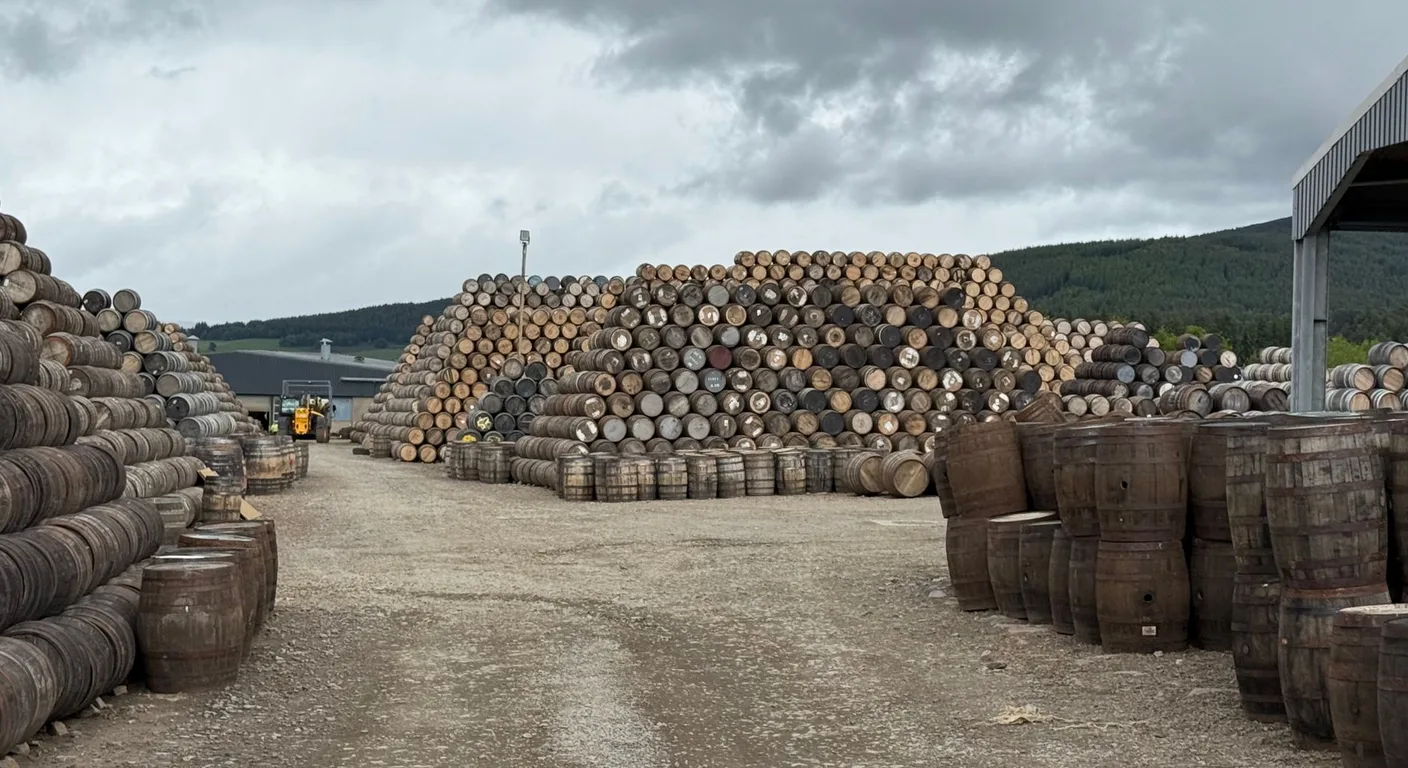
In short: Inventory valuation for aging whiskey on the balance sheet requires capitalizing direct materials, labor, overhead, and barrel costs into the asset's value. As whiskey matures, the total cost remains steady while evaporation increases the cost per proof gallon until the spirit is finally bottled and sold.
Mastering inventory valuation for aging whiskey on the balance sheet is one of the most critical financial tasks for any growing distillery. Because brown spirits sit in a rickhouse for years before they can be sold, you must capitalize direct materials, labor, and overhead into the value of those resting barrels rather than deducting them immediately as operating expenses. Doing this correctly ensures your financial statements reflect the true asset value of your aging stock. It also keeps you compliant with standard accounting practices and provides a clear picture of your distillery's financial health as you wait for your product to mature.
Why is inventory valuation for aging whiskey on the balance sheet so complex?
The defining financial challenge of producing brown spirits is the aging cash flow gap. Real world experience shows that founders routinely spend roughly two years just navigating zoning, securing permits, and building out the facility before making a single drop of alcohol. During this time, founders commonly pay themselves nothing. Many new owners project modest startup costs, only to find that practically, it takes roughly $500,000 to $700,000 just to open the doors and get the first batches legally distilled.
Once the equipment is running, the cash flow challenge intensifies. You are spending money daily on grain, utilities, and labor, but the resulting whiskey must sit in a barrel for two to four years, or even longer. Under standard accounting rules, you cannot simply write off the cost of that grain and labor in the year you spent the cash. Because the whiskey is an asset that will generate future revenue, the costs associated with producing it must follow the product. The expenses are capitalized, meaning they are held on the balance sheet as an inventory asset.
To bridge this long waiting period, distilleries often rely on alternative revenue streams. They might bottle sourced wholesale whiskey, produce unaged spirits like gin or vodka that sell immediately, or lean heavily on tasting room sales. Some even sell barrel presales or club vouchers, holding the deposits in a liability account until the product is bottled. However, for the whiskey you lay down yourself, tracking the exact cost built up inside each barrel is a complex but mandatory accounting exercise.
What costs should I capitalize into a barrel of whiskey?
Building the inventory value of a whiskey barrel requires tracking four main categories. These include direct materials, direct labor, manufacturing overhead, and the cost of the container itself.
Direct materials include the grain, yeast, enzymes, and water used to create the mash. In distilling, raw material volumes shrink dramatically through the production process. A typical pot still loses about 80 percent of the original volume when stripping mash into low wines. Once those low wines are distilled again in a spirit run, you end up with a small fraction of the starting liquid. Practically, expect to yield roughly 5 gallons of 120 proof spirit for every 100 gallons of 8 percent mash. All the grain and yeast used for those 100 gallons of mash must be capitalized into the cost of those 5 final gallons.
Direct labor is another major input. Mashing, fermenting, and distilling require human hours. Making precise cuts takes significant time and attention. Distillers cannot simply automate cuts by vapor temperature, because temperature is merely a proxy for composition and changes with weather and elevation. Instead, a distiller must collect the run across small numbered jars, dilute the samples, and make cuts by smell and taste. Typically, only about 65 percent of a spirit run is collected as usable hearts. The heads are discarded or redistilled, and the tails are recycled as feints into the next spirit run to encourage esterification. The hourly wages paid for this meticulous manual process must be captured and applied to your cost per barrel.
Manufacturing overhead includes the indirect costs of keeping the distillery running. A portion of your production floor rent, the utility bills to fire the boiler and heat the still, and the depreciation of your brewhouse and distillation equipment must be systematically allocated to the barrels you produce. Finally, the charred oak barrel itself is a massive capital expense. The purchase price of the new oak container is added directly to the capitalized cost of the whiskey resting inside it.
How do you measure and track inventory value over time?
Accurate valuation requires a precise unit of measurement. While the physical liquid is measured in wine gallons, the standard metric for tax and valuation purposes in the United States is the proof gallon. One proof gallon is equivalent to one liquid gallon of spirits that is exactly 50 percent alcohol by volume at 60 degrees Fahrenheit.
When you fill a barrel, you must gauge the liquid to determine both the wine gallons and the entry proof. By applying a proof gallon calculator, you convert these figures into a standardized proof gallon metric. This standardized number allows you to establish a baseline cost per proof gallon for that specific batch or barrel.
As the whiskey ages in the rickhouse, its value sits in a work in progress or storage inventory account on your balance sheet. Some distilleries track this valuation on a strict per barrel basis, while others use a batch costing or weighted average method for identical barrels filled on the same day. Whichever method you choose, consistency is paramount. You must be able to look at your balance sheet at the end of any quarter and see exactly how much capital is tied up in your aging inventory, broken down by mash bill and vintage.
How does the angel's share affect your balance sheet?
Evaporation is an unavoidable physical reality in every aging warehouse. Over the years, water and ethanol permeate the oak staves and escape into the atmosphere. This volume loss is universally known in the distilling trade as the angel's share.
From a financial perspective, evaporation creates an interesting dynamic. While the physical wine gallons and proof gallons inside the barrel decrease every year, the total capitalized cost of the barrel does not change. The cash you spent on the grain, labor, overhead, and the barrel itself is already sunk. Because the total cost remains steady while the volume drops, the average cost per remaining proof gallon naturally increases over time.
For example, if a barrel costs $1,200 to produce and initially holds 60 proof gallons, your baseline cost is $20 per proof gallon. If evaporation reduces the barrel's contents to 48 proof gallons over four years, the barrel still carries a $1,200 asset valuation on your books. However, your cost has now risen to $25 per proof gallon. You can project these physical volume losses ahead of time using an angels share calculator, which helps operations staff forecast future yields and finance staff anticipate the final unit cost at the time of bottling.
What TTB compliance rules apply to stored spirits?
Financial valuation does not happen in a vacuum, it goes hand in hand with federal compliance. The Alcohol and Tobacco Tax and Trade Bureau dictates strict recordkeeping requirements for every distilled spirits plant. Please note that this is general information, not tax or legal advice.
You are legally required to maintain daily records of your production, storage, and processing activities. The regulations governing these operational records are extensively detailed in 27 CFR Part 19 under the electronic code of federal regulations. When newly distilled whiskey is pumped into a barrel, it officially moves from your production account to your storage account. Your balance sheet should mirror this physical and regulatory movement, shifting costs from work in process directly into aging storage inventory.
Additionally, you must hold a federal bond to cover the excise taxes on these stored spirits. The bond acts as an insurance policy for the government, covering taxes due after spirits are removed for sale but before the actual payment is remitted. If you cannot secure a traditional surety bond, you must self fund a cash bond. Working distillers report that minimum cash bonds often run anywhere from $11,000 to $16,000 depending on the size of the operation. Without this bond, you cannot legally operate a commercial distillery. Keeping your balance sheet valuation accurate ensures that your financial reporting aligns seamlessly with the mandatory TTB reports tied to your bond.
How do you move costs to COGS at bottling?
When the whiskey finally reaches maturity and the desired flavor profile, it is time to harvest the barrels. The physical liquid is dumped from the barrels, usually passed through a filter, and proofed down to bottling strength with reverse osmosis water. At this point, the whiskey officially leaves the storage account and enters the processing account.
The labor required for dumping, filtering, and bottling, along with the cost of the glass bottles, labels, and closures, is added to the total capitalized cost of the whiskey. Once the liquid is sealed in the bottle and packed into cases, the fully burdened cost moves into your finished goods inventory.
The asset value remains safely on your balance sheet until the exact moment a customer or distributor purchases the bottle. When the sale occurs, the inventory value is finally relieved and recorded as cost of goods sold on your income statement. This transaction is the culmination of years of patience and meticulous accounting. It is the moment the initial startup capital, which was locked away in oak barrels for years, finally returns to the business as recognized revenue.
Managing the complex web of raw materials, direct labor, overhead allocations, and evaporation across hundreds of barrels over multiple years requires a highly organized tracking system. Spirit Sight is a robust distillery management software platform designed specifically to handle these intricate calculations for modern operators. It seamlessly tracks your proof gallons, applies accurate overhead costs to aging barrels, and keeps your balance sheet perfectly aligned with your physical rickhouse inventory without relying on fragile spreadsheets.
Key takeaways
- Distilleries must capitalize the costs of raw materials, direct labor, overhead, and barrels into their aging whiskey inventory.
- Evaporation reduces the total volume of aging spirits over time, which increases the average cost per proof gallon.
- Proper balance sheet valuation ensures compliance with standard accounting practices and provides an accurate picture of company assets.
- Accurate proof gallon tracking is required to align your financial valuation with mandatory federal tax and storage reports.
Frequently asked questions
What costs are included in the inventory value of a barrel of whiskey?
The value includes direct materials like grain and yeast, direct labor for mashing and distilling, manufacturing overhead such as utilities, and the purchase price of the oak barrel.
Does the angel's share decrease my total inventory value?
No. While you lose physical volume to evaporation, the total capitalized cost of the barrel remains the same, meaning the cost per remaining proof gallon simply increases.
When does aging whiskey inventory become a cost of goods sold?
Whiskey remains an asset on the balance sheet during the aging process and only moves to cost of goods sold when the final product is bottled and sold to a customer.