In short: Software for distillery operations centralizes production tracking, barrel maturation, and cost accounting. By automating proof gallon calculations and TTB reporting, operators can focus on mashing and fermenting instead of managing spreadsheets, ensuring accurate inventory and regulatory compliance as the facility scales.
Implementing reliable software for distillery operations is one of the most effective steps you can take to protect your margins, organize your facility, and stay compliant. Whether you operate a traditional pot still or run a continuous column system, tracking what goes into your mash tun and what comes out of your barrels is highly complex. Spreadsheets usually break down once a facility begins managing multiple mash bills, separate stripping runs, and growing rickhouse inventories. Finding the right digital system standardizes your production logs, simplifies regulatory compliance, and gives you a clear, realistic picture of your actual production costs.
In the early days of a startup, operations might be simple enough to track on a clipboard. However, as production increases, the sheer volume of data multiplies exponentially. A dedicated enterprise system ensures that every phase of the distilling process is recorded accurately and permanently. This lets operations staff focus on mashing, fermenting, and running the stills rather than hunting down missing paperwork or fixing broken spreadsheet formulas at the end of the month.
What makes software for distillery operations essential?
A distilled spirits plant generates a massive amount of data every single day. Between receiving grain, pitching yeast, logging fermentation temperatures, and recording distillation cuts, your production team has a lot to manage. Investing in dedicated distillery management software centralizes these daily logs into one accessible platform tailored specifically for the beverage alcohol industry.
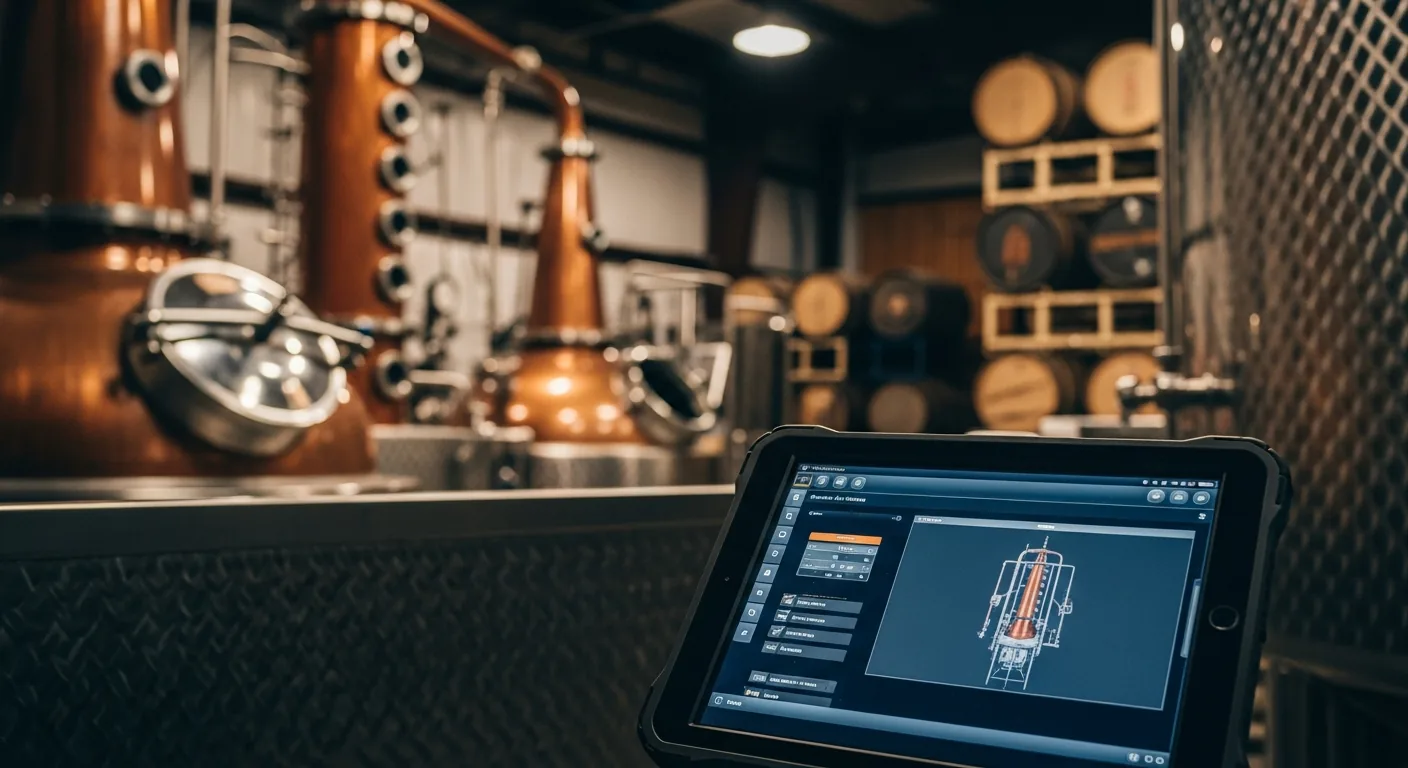
One primary benefit is real-time data capture. Operators can input data directly from the production floor using a tablet or mobile device. This eliminates the end-of-month scramble to decipher handwritten notes and prevents costly transcription errors. It also bridges the communication gap between the production floor and the back office. When a distiller logs a completed spirit run, the inventory manager instantly sees the new bulk spirit available for barreling, and the finance team sees the raw materials automatically deducted from current inventory.
Furthermore, lot traceability is a critical function for any food or beverage manufacturer. If a supplier recalls a specific batch of grain or yeast, your software allows you to instantly trace that exact ingredient lot through your fermentation tanks, into specific distillation runs, and ultimately to the exact bottles or barrels it ended up in. This level of granular traceability is incredibly difficult to maintain manually but becomes completely automatic with the right enterprise resource planning system.
How does software track stripping and finishing runs?
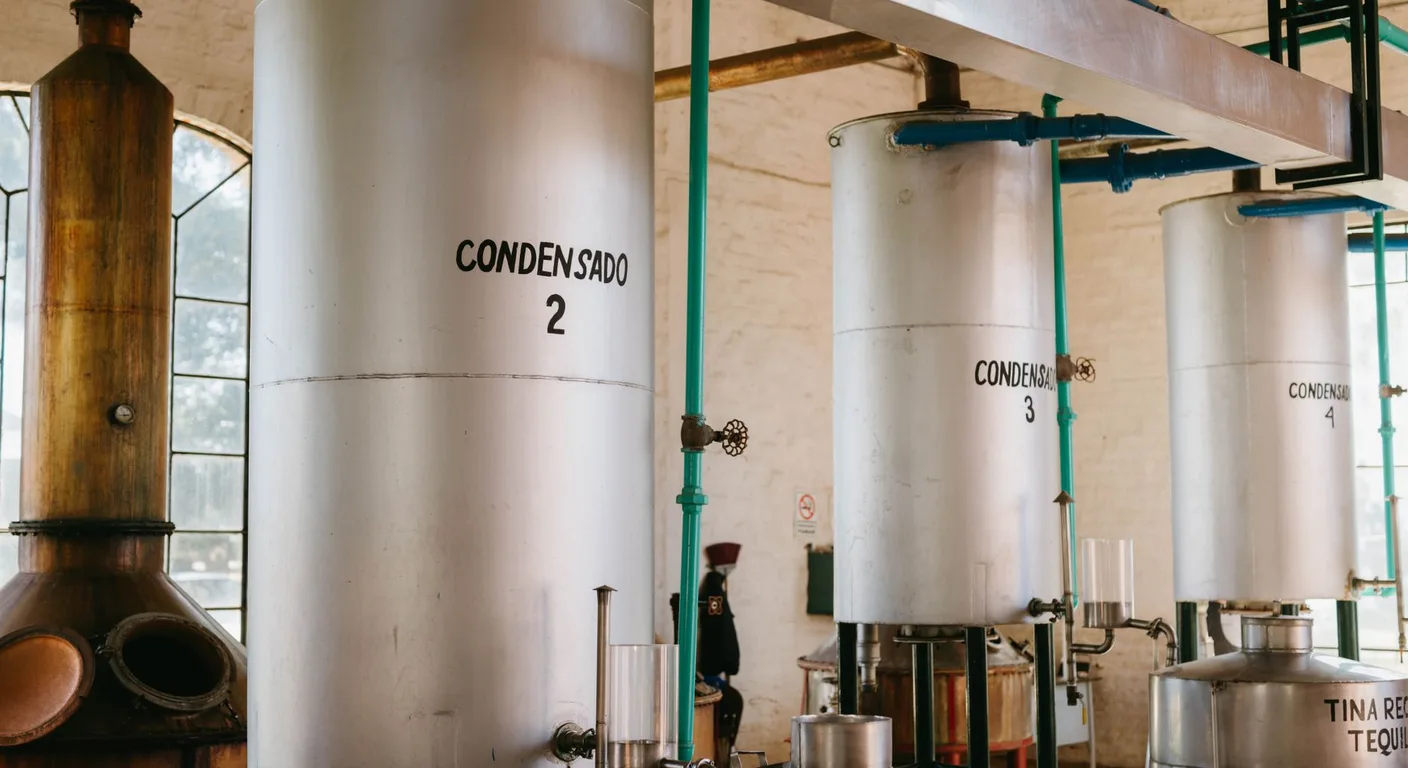
Distillation is rarely a single-step process, especially in bourbon and whiskey production. Many experienced operators utilize a less expensive stainless steel stripping still to process their wash. This approach protects their more expensive copper finishing still from excess wear and increases their overall output for a fraction of the cost of buying a second copper system.
However, this two-step production method heavily complicates yield tracking. You must log the low wines produced from the stripping run and then accurately allocate those bulk spirits into a subsequent finishing run. Good distillery software handles this parent-child relationship seamlessly. It tracks the volume and alcohol concentration at each stage. By doing so, it calculates the exact efficiency of your fermentation phase separately from the yield of your stripping and spirit runs.
This precise tracking lets you pinpoint the exact source of any production issues. If your final spirit yield drops unexpectedly, your data will show whether the issue was a stalled fermentation, a poor starch conversion in the mash tun, or an inefficiency at the still itself. It also helps manage different production styles. A traditional sour mash American whiskey process requires different handling, such as tracking backset percentages, and yields differently than a cleared wash process used for single malt. Your system should be flexible enough to track both methods accurately.
Managing equipment schedules and hybrid systems
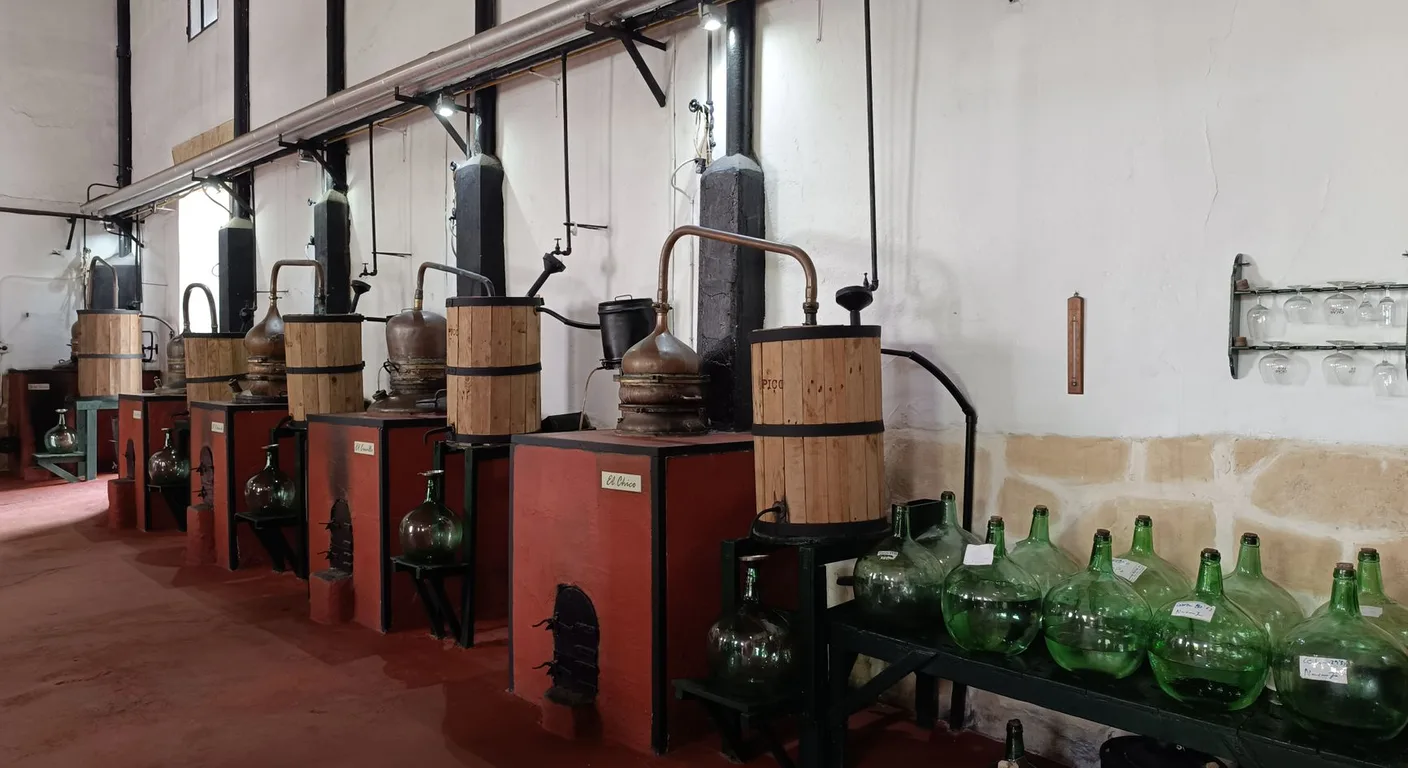
When scaling up, equipment bottlenecks are incredibly common. Some startups temporarily use their primary still as a mash tun to save capital. While this works initially, it ties up the still and usually lacks proper agitation or a cooling jacket. Others rely on a single hybrid still equipped with bypassable plates to produce a wider portfolio, including whiskey, rum, vodka, and gin.
A versatile hybrid still is excellent for product diversity, but it requires thorough cleaning between different spirit types to prevent flavor crossover. Software helps operations managers schedule these distinct batches and their mandatory cleaning cycles. You can easily track maintenance tasks, such as cleaning the copper plates. Copper acts as a vital catalyst on the hot side of the still to remove sulfur compounds, but it must be kept clean to function properly. Tracking these maintenance intervals ensures your equipment always produces a clean, soft spirit.
Additionally, if you use temperature-controlled fermenters, a management system tracks residence times and fermentation curves. This ensures that your batches are scheduled efficiently. Your still never sits idle waiting for a wash to finish fermenting, and your fermenters are turned over as quickly as possible. Production scheduling features allow you to look ahead and plan your raw material purchasing based on actual equipment availability.
How do you track barrel maturation and rickhouse inventory?
For brown spirits producers, the rickhouse is where the vast majority of the company capital is tied up. Managing barrel inventory is completely different from managing liquid in stainless steel tanks. Each barrel is a unique living vessel that loses volume over time due to evaporation, a loss commonly known as the angel's share.
A comprehensive software system gives you complete visibility into your maturation program. You can track the exact fill date, entry proof, cooperage details, and char level for every single cask. As you perform periodic regauges to check on the maturation progress, the software records the new physical volume and proof, automatically updating your bulk inventory totals. This is critical for knowing exactly how much mature product you actually have available for future blending and bottling.
Furthermore, the system helps you manage the physical location of each barrel. By mapping out your rickhouse by building, floor, row, and tier, you can easily locate specific casks for sampling or dumping. This prevents the costly mistake of losing track of premium barrels or allowing them to over-mature in the hottest part of the warehouse.
Navigating the complexities of blending and bottling
Moving liquid from the barrel to the bottle involves multiple steps where yield loss and formulation adjustments occur. When a master blender selects a group of barrels for a specific release, the software tracks the dumping process. It calculates the combined proof and volume of the mingled spirits in the blending tank.
From there, operators must calculate the exact amount of reverse osmosis water needed to proof the batch down to its target bottling strength. Enterprise software provides these calculations instantly, taking temperature and density into account. It also records any volume lost during chill filtration or transfer processes.
Tracking the bottling run itself is the final step in the production chain. The system matches the bulk spirit used against the dry goods consumed, including glass bottles, closures, labels, and packaging materials. This creates a finished good inventory record that includes every single component and cost associated with that specific batch of whiskey.
Why is accurate proof gallon and TTB reporting critical?
Regulatory compliance is the absolute backbone of any legal distilling operation in the United States. Federal excise taxes and reporting requirements are based on a very specific, heavily regulated metric. Converting physical liquid volume into a proof gallon equivalent is a daily requirement that accounts for both the physical volume and the exact alcohol concentration at a specific temperature.
Instead of relying on a manual proof gallon calculator for every single gauge, modern platforms automate these complex conversions based on your temperature and hydrometer readings. This ensures that your records are always mathematically perfect and ready for inspection.
Under 27 CFR Part 19, distillers are required to maintain precise daily records of their processing, storage, and production operations. Accurate software automatically maps your daily production logs to the correct lines on your monthly TTB reports, including the Production Report, Storage Report, and Processing Report. It also provides the precise audit trail needed to confidently claim reduced tax rates under the Craft Beverage Modernization and Tax Reform Act. Please note that this is general educational information, not tax or legal advice.
Tracking true costs as your distillery scales
As market demand grows, upgrading your distillation equipment becomes inevitable. Moving from a small direct-fired setup to a large steam-driven system requires significant capital expenditure. You must justify this investment by understanding exactly how it impacts your production costs over time.
A robust management platform helps track the changing cost of goods sold during these major transitions. By capturing the exact cost of raw materials, energy usage, overhead, and labor required for each batch, you can clearly see how equipment upgrades improve your overall margins through economies of scale.
The system tracks the true cost of the liquid as it enters the barrel. It then carries that precise financial value through years of maturation in the rickhouse. When it is time to harvest the whiskey, the software recalculates the cost per bottle, factoring in the physical volume lost to evaporation, as well as storage fees and insurance. This ensures that your wholesale and retail pricing strategies are based on the actual, fully burdened cost of the finished product. This level of financial clarity protects your profitability as your business expands.
Conclusion
Spirit Sight provides a comprehensive enterprise resource planning solution built specifically for the daily realities of running a commercial distillery. From tracking complex continuous column runs and rickhouse evaporation to automating your monthly compliance reports, our platform seamlessly connects your production floor with your financial data. Implementing the right system allows distillers, blenders, and operations staff to step away from the spreadsheets and focus entirely on making exceptional spirits.
Key takeaways
- Dedicated ERP platforms replace manual spreadsheets with real-time production, ingredient traceability, and inventory tracking.
- Digital systems accurately connect stripping and finishing runs to monitor fermentation efficiency and distillation yields.
- Automated proof gallon conversions ensure precise compliance for federal excise taxes and monthly TTB reporting.
- Inventory platforms track barrel locations, entry proofs, and volume lost to evaporation over years of maturation.
- Cost accounting features capture raw materials, labor, and overhead to determine the true cost of goods sold for finished spirits.
Frequently asked questions
Why do distilleries need specialized software instead of standard accounting tools?
Standard tools cannot handle complex volumetric conversions, such as calculating proof gallons based on temperature and density. Specialized software tracks these unique metrics and formats them for mandatory TTB compliance reports.
Can distillery software track both stripping and finishing runs?
Yes. A robust system tracks the low wines produced from a stripping still and accurately allocates those bulk volumes into a subsequent spirit run, ensuring accurate yield tracking at every stage.
How does distillery software help with barrel management and evaporation?
It tracks the original fill date, entry proof, barrel type, and physical location of each cask in the rickhouse. When regauges are performed, the software updates inventory totals to account for volume lost to evaporation over time.
Does distillery management software track raw material lot numbers?
Yes. Enterprise systems provide end-to-end lot traceability, allowing you to trace a specific delivery of grain or yeast through mashing, fermentation, distillation, and maturation straight to the finished bottle.