In short: Distillery software is a specialized enterprise resource planning tool that manages spirits production from raw materials to final bottling. It tracks mashing, distillation runs, barrel aging, and cost accounting while automating complex regulatory and TTB compliance reporting to help operators maintain quality and control costs.
Choosing the right distillery software is just as critical to your operations as selecting the correct boiler, fermenter, or column still. A dedicated enterprise resource planning system tracks your entire process from the arrival of raw grain all the way to the final bottled spirit. By replacing fragmented spreadsheets and dry erase boards, distillery operators gain total visibility into daily production operations, barrel inventory, and complex financial reporting.
Running a commercial distilled spirits plant involves an enormous amount of recordkeeping. Whether you are producing a grain-in American whiskey or a wash-style spirit, accurate data is what keeps the facility profitable and compliant. Production tracking systems must adapt to the realities of the distilling floor, the complexities of barrel aging, and the strict requirements of federal compliance.
What should distillery software track in your daily operations?
When a distillery first opens, it is common for operators to track batches on clipboards. However, as production scales to larger steam-driven systems and multiple fermenters, manual tracking quickly becomes a liability. A robust tracking system acts as the central hub for your entire facility. It logs the receipt of raw materials, schedules mashing and fermentation, and records the specific inputs and yields of every single distillation run.
Effective systems provide a complete chain of custody. If a specific batch of bourbon yields a lower than expected volume, you must be able to trace that spirit back to the exact delivery of corn, the specific yeast strain used, and the temperature logs from the fermenter. This level of traceability is not just about compliance. It is about maintaining a consistent flavor profile and identifying operational bottlenecks before they cost you money. Utilizing dedicated distillery production software ensures that nothing slips through the cracks during busy shifts.
Furthermore, proper software manages inventory levels for raw materials. When you issue grain to a mash bill, the system automatically deducts it from your bulk inventory. This real-time inventory tracking prevents stockouts, optimizes purchasing schedules, and helps maintain a steady rhythm on the production floor. You can easily track lot numbers from your suppliers, which is essential for maintaining strict quality control and managing any potential recalls on raw materials.
Adapting to different still configurations and processes
No two craft distilleries are built exactly the same, and your tracking system must reflect the physical realities of your equipment. Many startups begin with a versatile hybrid still to produce multiple products like whiskey, gin, and vodka. Moving between these different spirits requires bypassable plates, specific heating adjustments, and meticulous cleaning protocols. The right software helps you log these changeovers, ensuring that a high-proof vodka run does not carry over unwanted flavors from a previous batch of rum.
Other operations choose to separate their distillation phases to increase output and protect their equipment. Copper is expensive, but it is necessary on the hot side of the process to act as a catalyst that removes harsh sulfur compounds. To preserve their copper finishing stills, many distillers use a separate, less expensive stainless steel stripping still for the initial run.
Tracking this two-step process requires precise inventory management. The software must log the raw wash entering the stripping still, record the yield of the resulting low wines, hold those low wines in a digital tank inventory, and finally track their transfer into the copper spirit still for finishing. Accurately measuring these internal transfers requires constant conversions. Operators frequently rely on a proof gallon calculator integrated into their daily data entry to ensure exact measurements.
Scheduling is another major challenge that software helps solve. To save capital, some new distillers use their still as a mash tun. While this works initially, it ties up equipment and creates scheduling conflicts. As you transition to a dedicated mash tun to increase weekly output, your software must adapt its scheduling tools to manage simultaneous mashing and distilling operations seamlessly.
How do systems handle barrel inventory and the aging process?
For producers of bourbon, rye, and aged rums, the rickhouse is the most valuable and complicated area of the business. Barrels are not static storage containers. They are active, breathing vessels that change the volume and proof of the spirit over years of maturation.
Proper barrel management software allows you to digitally map your rickhouse. Every barrel entered into the system receives a unique identifier linked to its fill date, entry proof, mash bill, and specific location in the warehouse. As seasons change and the spirit interacts with the wood, water and alcohol evaporate. This natural evaporation, known as the angels' share, creates a discrepancy between what went into the barrel and what will eventually come out.
When you pull samples or regauge a barrel to prepare for a blending run, the software records the new volume and proof. This historical data is incredibly valuable. Over time, you will identify which specific tiers or corners of your rickhouse produce the best flavor profiles or experience the highest rate of evaporation. This insight allows you to optimize your barrel placement strategy for future production.
Software also helps with dump planning and blend management. When a master blender identifies a flavor profile they want to achieve, they can query the barrel database for specific ages, mash bills, and warehouse locations. The system then generates a dump sheet for the production team, outlining exactly which barrels to pull and process, ensuring consistency across large bottling runs.
Why is distillery cost accounting so complex?
Determining the true cost of a finished bottle of spirits is notoriously difficult. Unlike a standard manufacturing process where parts are assembled in a single day, distilling involves long timelines and fluctuating overhead.
To calculate an accurate cost per proof gallon, you must account for the purchase price of the grain, the yeast, and the enzymes. You must then allocate the utility costs required to run the boiler and the chillers during production. For aged spirits, you also have to factor in the cost of the oak barrel itself, along with the overhead costs of storing that barrel in a climate-controlled environment for several years.
Because volume is lost to evaporation during aging, the cost per proof gallon actually increases over time. The original costs must be divided by a shrinking volume of liquid. Implementing specialized distillery cost accounting tools allows your finance team to automatically roll up these material, labor, and storage costs. This ensures that when you finally set a wholesale or retail price for your bottles, you are operating with accurate and profitable margins.
Modern systems take this financial visibility a step further by integrating bills of materials for the packaging phase. A finished bottle includes the cost of the liquid, the glass, the closure, the label, and the labor required to run the bottling line. Software aggregates these expenses into a final cost of goods sold, providing clear visibility into the exact profitability of each distinct product line.
Streamlining quality control and sensor integration
Quality control is a continuous process in any commercial distillery. While taste and aroma are subjective, many elements of production are highly quantitative. Software systems allow operators to log specific gravity readings, pH levels, and temperature variations throughout the entire fermentation process.
By charting this data over time, distillers can identify trends and spot anomalies quickly. If a fermentation stalls, the historical data can help pinpoint whether the issue was a temperature spike, a low yeast pitch rate, or an inconsistent starch conversion during the mashing phase. Having this data easily accessible prevents future batch failures.
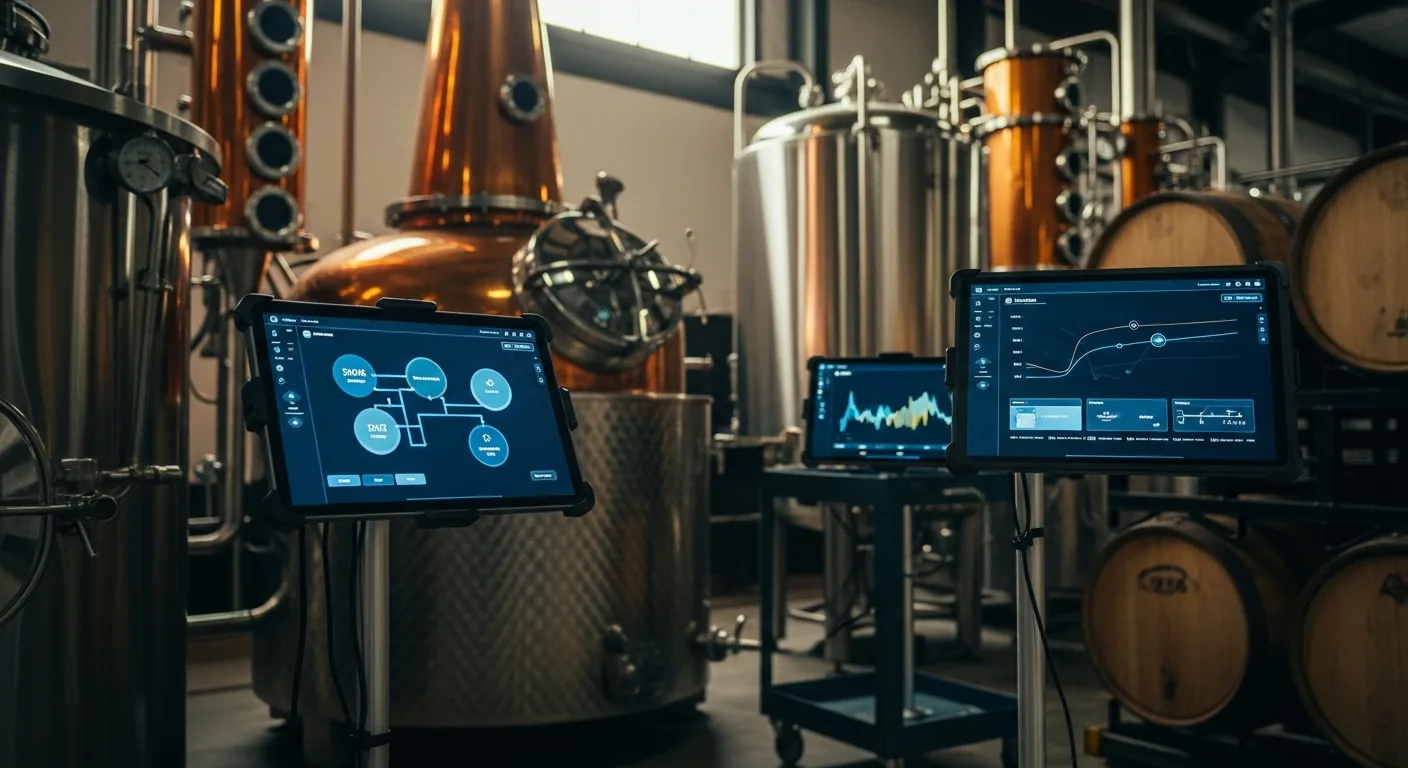
Advanced systems are now integrating directly with production hardware. Sensors can automatically feed temperature and pressure data into the distillery software. This integration reduces manual data entry and ensures that the digital record perfectly matches the physical reality of the plant. Maintaining strict quality control logs is also beneficial for achieving third-party food safety certifications and expanding your distribution network.
How does software simplify regulatory compliance and reporting?
The most stressful aspect of running a commercial distillery is often the monthly compliance reporting. The federal government strictly regulates the production, storage, and processing of distilled spirits to ensure the proper collection of excise taxes. Recordkeeping requirements are outlined in Title 27 Part 19 of the Code of Federal Regulations, which mandates daily logs for almost every physical movement of alcohol in your facility. Please note that this is general information and not formal tax or legal advice.
Distilleries must submit detailed monthly reports to the Alcohol and Tobacco Tax and Trade Bureau, commonly referred to as the TTB. You must accurately report the amount of grain mashed, the proof gallons produced, the spirits entered into wood, and the volume dumped for bottling.
Attempting to compile these reports manually from paper logs at the end of the month is a recipe for errors and audits. Quality distillery software automatically aggregates your daily production data, tank transfers, and bottling yields into the exact formats required by the TTB for distilled spirits reporting. This automation transforms a process that typically takes days of administrative work into a simple review and approval task.
Software also helps track your excise tax liability. When finished goods are removed from bond for sale, the system calculates the exact tax owed based on the proof gallons and the applicable tax rate. By keeping your records audit-ready and your filings grounded in your actual production data, you protect your distillery from costly penalties and operational shutdowns.
Managing case goods and distribution inventory
Once the spirit is bottled and labeled, it enters the final phase of the distillery workflow. Tracking case goods is vital for fulfilling orders accurately and managing relationships with your wholesale distributors.
Distillery software maintains real-time inventory counts of finished products. When a distributor places an order, the system can generate a pick list for the warehouse, print the necessary shipping manifests, and automatically deplete the inventory once the pallets leave the dock. This seamless transition from production to sales ensures that your sales team always knows exactly what products are available to sell.
Furthermore, tracking lot numbers through the bottling and distribution phases is essential for product recall management. If a supplier notifies you of a defect in a specific batch of glass bottles, your software allows you to trace those bottles forward to see exactly which distributors received the affected case goods, minimizing disruption and protecting your brand reputation.
Spirit Sight is an enterprise resource planning system built specifically for the daily realities of craft and mid-size distilleries. Our platform handles everything from complex barrel tracking and cost accounting to automated compliance reporting. We give you the accurate data you need to run an efficient, profitable plant without the administrative headaches.
Key takeaways
- Robust tracking systems map directly to your specific equipment, supporting everything from simple pot stills to complex hybrid setups.
- Accurate cost accounting calculates the true cost of finished bottles by rolling up raw materials, utility overhead, packaging, and long-term storage expenses.
- Digital barrel management applications track fill dates, entry proofs, and natural evaporation losses over the entire aging lifecycle.
- Integrated compliance tools automate the generation of mandatory federal reports for production, storage, and processing operations to keep your facility audit-ready.
- Total traceability ensures consistent flavor profiles and provides essential lot tracking from raw grain receiving to final case goods distribution.
Frequently asked questions
What operations should distillery software track?
A complete system tracks raw material receiving, mashing, fermentation, distillation runs, barrel aging, and final bottling. It also manages the associated cost accounting, inventory, and compliance reporting for each production phase.
Can I use basic spreadsheets instead of dedicated software?
Spreadsheets may work for very small startups, but they quickly become prone to errors as production scales and becomes more complex. Dedicated systems prevent data loss, automate complex conversions, and ensure accurate federal tax reporting.
Does software help with TTB compliance?
Yes. Purpose-built platforms automatically compile your daily logs into the exact formats required for federal production, storage, and processing reports. This automation saves hours of manual data entry at the end of each month and reduces the risk of compliance errors.
How does barrel tracking software handle evaporation?
As spirits age, water and alcohol evaporate, changing the volume and proof of the liquid. The software allows you to log regauge measurements, updating the inventory records and automatically recalculating the cost per proof gallon based on the reduced volume.