In short: While comprehensive free distillery software does not exist, startups often manage early production and compliance using carefully structured spreadsheets and online calculators. These unpaid tools require strict manual data entry, but they allow new distilleries to track proof gallons and barrel inventory before upgrading to a dedicated enterprise system.
When launching a new distilled spirits plant, many operators search for free distillery software to manage their production, barrel inventory, and regulatory reporting without adding fixed overhead. While there are no comprehensive enterprise-grade systems available at zero cost, distilleries often piece together free calculators, custom spreadsheets, and basic inventory applications to get started. Understanding how to structure your free software stack will help you maintain accurate records, track proof gallons, and ensure compliance in your early days. Building a solid foundation with these tools prepares your team for success until you are ready to invest in a dedicated management platform.
Why do startups look for free distillery software?
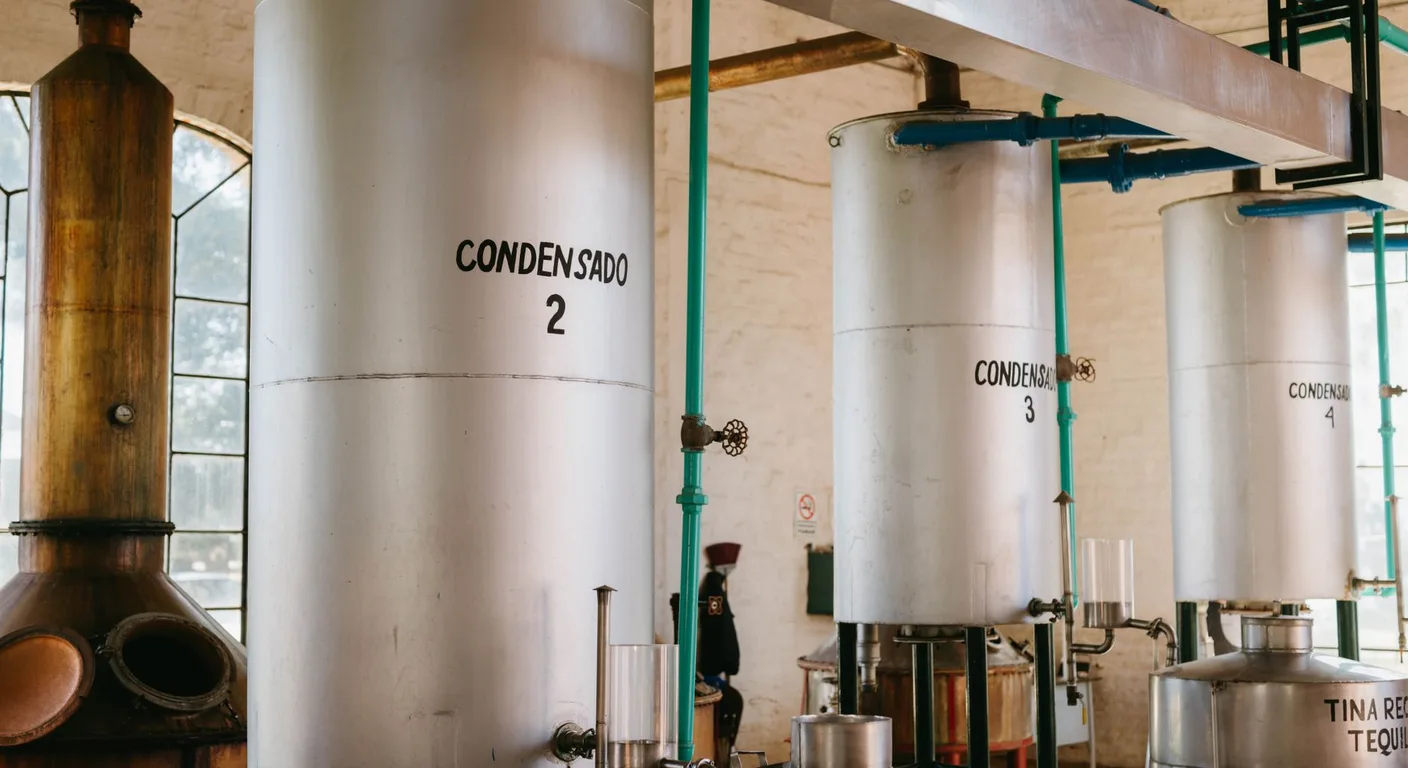
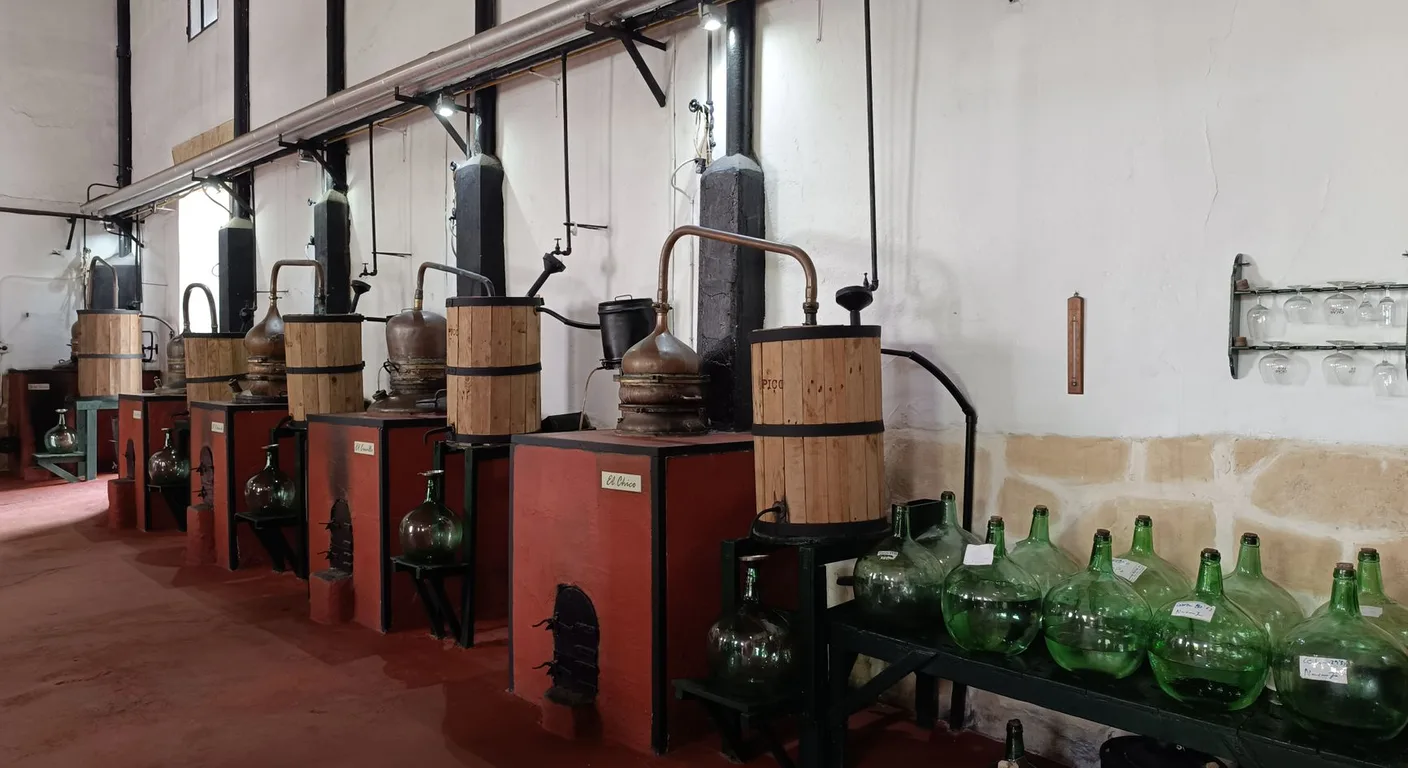
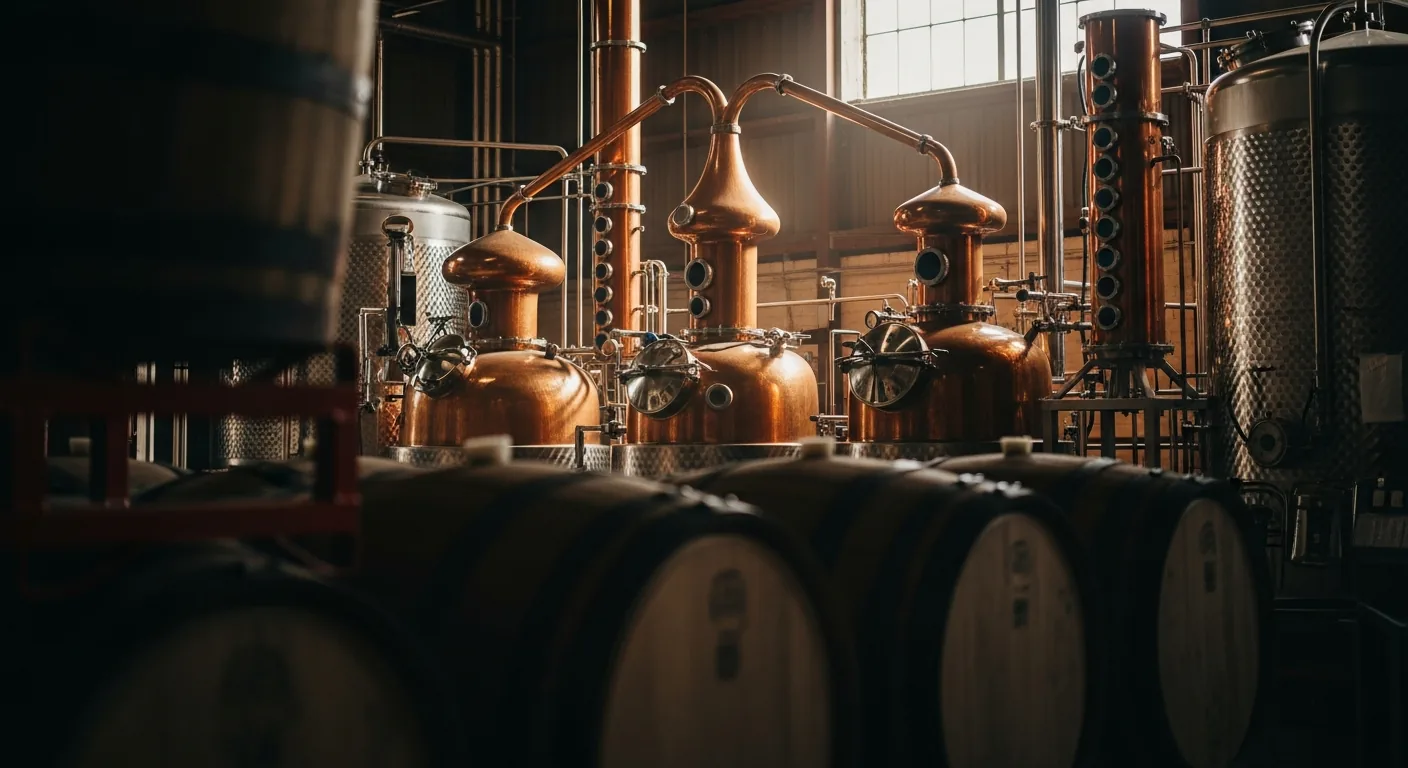
Capital is incredibly tight when opening a new distillery. The vast majority of a startup budget goes toward heavy equipment, facility buildouts, and securing your initial permits. As many experienced distillers know, buying reliable hardware is expensive. You might invest heavily in a 300-gallon steam-driven finishing still, alongside a cheaper stainless stripping still to protect your copper and increase output. You also need to purchase boilers, chillers, fermenters, pumps, and a dedicated mash tun.
Because a single copper column still or a versatile hybrid still can consume a massive portion of your funding, software often becomes an afterthought. Founders naturally turn to free or low-cost tools to manage their initial batches. The logic is practical and completely understandable for a business trying to achieve cash flow positivity. If you are only mashing a few times a week and laying down a small number of barrels, you can technically track the process on paper or in a basic spreadsheet.
Free tools allow a startup to allocate their scarce cash reserves toward raw materials, quality barrels, and utilities rather than monthly software subscriptions. However, relying on this approach requires strict discipline and a deep understanding of distillation math to avoid expensive mistakes down the road. An error early in your data tracking can cascade into larger issues once your inventory scales.
What can you accomplish with basic spreadsheets?
Spreadsheets are the most common form of free distillery software used by emerging brands. With careful formatting and locked formulas, a spreadsheet can serve as a functional production log for your initial operating years. You will need to build dedicated sheets for every phase of your operation, including grain receiving, mashing, fermentation, distillation, and barrel storage.
To make this work, your spreadsheets must track the conversion of raw ingredients into liquid volume and alcohol concentration. For instance, when your wash moves from the fermenter to the stripping still, you must record the volume and estimated alcohol by volume. When you run your finishing still and make your cuts, you must log the exact wine gallons and proof of your hearts. Calculating these conversions manually leaves room for error, so many distillers rely on a proof gallon calculator to double-check their math.
A well-built spreadsheet system can also manage your early barrel inventory. You can assign each barrel a unique serial number, log the entry date, record the entry proof, and calculate the fill volume. As your barrels age, you will periodically pull samples and perform a regauge to check on maturation and volume loss. Maintaining accurate historical data in a spreadsheet is possible when you have fifty barrels, but it requires diligent data entry. Every time you move a barrel in the rickhouse or dump a barrel for a batch, you must manually update multiple cells to reflect the current state of your inventory.
What core templates belong in your free tech stack?
If you are committed to running your plant on free tools for the first few years, you need a highly organized digital filing system. Instead of dumping all your data into one massive file, break your operations down into specific templates that mirror the physical flow of your distillery. This modular approach protects your data from catastrophic formatting errors.
First, build a raw materials ledger. This document should track all incoming grain, yeast, enzymes, and botanicals. You need to log the date of receipt, the supplier, lot numbers, and the cost per pound. Tracking lot numbers from the very beginning is critical for product trace recalls. If a supplier alerts you to a bad batch of grain, you must be able to trace that specific lot to the exact bottles of whiskey it produced.
Next, create a mash and fermentation log. This template should capture your recipes, water volumes, grain weights, strike temperatures, and starting gravity. As fermentation progresses, log your daily temperature and gravity readings. This not only helps you calculate your potential alcohol but also builds a historical record so you can troubleshoot any consistency issues down the line. If a batch of whiskey suddenly develops a strange flavor profile, your fermentation log is the first place you will look for answers.
Your distillation record is the most mathematically demanding template. It must capture the volume and alcohol by volume of the charge going into the still, as well as the yield of your heads, hearts, and tails. You should also include fields for tracking still temperatures, condenser water temperatures, and the time of your cuts. Because copper acts as a catalyst to remove sulfur during the run, tracking your cleaning cycles and copper maintenance in this log is also a good practice.
Finally, maintain a distinct packaging and finished goods template. When you dump barrels for a batch, you must record the total volume recovered and the proof. You then track the water added for proofing and the final yield in bottles. This template must calculate the exact number of proof gallons removed from bond so you can accurately determine your tax liability. By keeping these templates separate but standardized, you reduce the risk of a single formatting error destroying your entire database.
How do you handle regulatory compliance for free?
Navigating regulatory requirements is often the most stressful part of running a distillery. The Alcohol and Tobacco Tax and Trade Bureau dictates strict recordkeeping rules for distilled spirits plants. Please note that this is general information, not tax or legal advice.
If you are not using paid distillery compliance software, you must manually compile the data required for your monthly reporting. This involves tracking your operations across four distinct accounts. These accounts are production, storage, processing, and denaturing. Every drop of alcohol that is created, moved, lost, or bottled must be accounted for in your records accurately.
For example, Title 27 of the Code of Federal Regulations mandates daily records of physical inventories and transactions. You can read the specific recordkeeping requirements in 27 CFR Part 19. To complete your monthly forms, such as the Report of Storage Operations and the Report of Processing Operations, you will need to consolidate the daily logs from your spreadsheets.
You must also calculate your federal excise tax liability based on the proof gallons removed from bond for taxable use. The TTB offers guidance on tax rates and the Craft Beverage Modernization Act on their official tax rate page. Handling this manually is entirely feasible for a small operation, but it requires a meticulous operator. You have to ensure that your raw production logs perfectly match the summarized data submitted to the government. A single formula error in your spreadsheet can lead to discrepancies between your physical inventory and your tax reports, potentially triggering a compliance audit.
What are the hidden costs of unpaid software?
While spreadsheets and free calculators do not require a monthly subscription fee, they are far from truly free. The primary hidden cost is the sheer amount of administrative time required to keep them running. When a head distiller spends five hours at the end of the month hunting down a missing proof gallon to balance a report, that is five hours they are not spending on product development, mashing, or equipment maintenance.
Another major cost is the risk of data loss or corruption. Spreadsheets are notoriously fragile. A tired employee might accidentally delete a cell containing a complex formula, throwing off your entire inventory valuation. Without a proper audit trail, it is incredibly difficult to figure out who made the change or when it happened. Over time, your single spreadsheet often spawns multiple versions, leading to confusion over which file contains the most accurate data for your business.
Unpaid solutions also fall short when it comes to distillery cost accounting. Knowing exactly how much it costs to produce a single bottle of whiskey requires you to factor in raw materials, utilities, labor, barrel costs, and facility overhead. Spreadsheets struggle to dynamically allocate these costs as your spirit ages and loses volume to evaporation. If you cannot accurately track your costs, you cannot set profitable wholesale and retail pricing. This lack of financial visibility can severely impact your bottom line and limit your growth potential.
When is the right time to upgrade your software?
There is a clear tipping point where the effort required to maintain free tools outweighs their financial benefit. For many distilleries, this happens when they scale up their production equipment. Upgrading from a 50-gallon pot still to a 500-gallon system, or adding a continuous column, drastically increases your output and your administrative burden.
You should consider moving to a dedicated platform when your barrel inventory becomes too large to manually verify in a single afternoon. Once you surpass a few hundred barrels, tracking individual fill levels, regauges, and aging profiles in a spreadsheet becomes a logistical nightmare. The risk of losing track of a high-value barrel increases exponentially as your rickhouse fills up with aging stock.
Another trigger for upgrading is expanding your product line or your distribution footprint. If you are producing multiple types of spirits, such as bourbon, gin, and vodka, you will need a system that can handle complex blending and bottling runs. When you start selling across state lines and managing multiple distributor relationships, you need robust order fulfillment and invoicing tools that a spreadsheet simply cannot provide. Upgrading to a professional system allows you to centralize your operations, automate your regulatory reports, and gain real-time visibility into your business.
How do you transition from free tools to an enterprise system?
When the time comes to finally ditch the spreadsheets, the transition process requires careful planning. Moving from free distillery software to a comprehensive distillery ERP platform is a major operational shift. The key to a smooth migration is clean, organized data.
Before you even select a software vendor, audit your existing spreadsheets. Ensure that all your barrel serial numbers are unique and that your current on-hand inventory perfectly matches your digital records. Perform a full physical inventory of your raw materials, bulk spirits, aging barrels, and finished bottles. If your spreadsheet says you have fifty bags of malted barley, but there are only forty on the floor, correct the discrepancy before migrating the data.
You also need to map out your current workflows. Document exactly how your team logs a mash, runs a distillation, and files a monthly report. A good software provider will use these workflows to configure your new system, ensuring that the software matches your actual physical processes rather than forcing you to change how you make whiskey. By taking the time to clean your data and understand your workflows, you ensure that your new investment delivers immediate value and eliminates the headaches of your old free setup.
Spirit Sight provides a dedicated platform that eliminates the fragility of spreadsheets and manual calculations. When you are ready to move beyond free tools, our software centralizes your production data, automates your compliance reports, and tracks your true costs from grain to glass. It gives operators the confidence to focus on making great spirits rather than fixing broken formulas.
Key takeaways
- Free distillery software consists mainly of carefully structured spreadsheet templates and online calculators instead of comprehensive platforms.
- Startups utilize these unpaid tools to preserve limited capital for essential physical equipment like stills, fermenters, and chillers.
- Maintaining compliance without paid software requires precise manual tracking of proof gallons across all production, storage, and processing accounts.
- The hidden costs of free tools include significant administrative burden, vulnerability to data entry errors, and poor cost accounting visibility.
- Scaling barrel inventory, expanding product lines, or entering new distribution markets are key indicators that it is time to upgrade to an enterprise resource planning system.
Frequently asked questions
Is there completely free distillery software available?
There are no full-scale, free distillery software platforms on the market, but operators often build a free tech stack using custom spreadsheet templates and online calculators.
How do I calculate proof gallons without paid software?
You calculate proof gallons manually by multiplying your total wine gallons by the proof, then dividing by one hundred, often verifying the math with free online calculators for accurate reporting.
Can I use spreadsheets for TTB compliance reporting?
Yes, you can use spreadsheets to manage your TTB compliance by formatting your documents to track daily physical operations and perfectly summarizing that data for your monthly reports.
What is the biggest risk of using free spreadsheets for distillery inventory?
The greatest risk is data loss or formula corruption caused by human error, which can result in inaccurate inventory valuations and compliance discrepancies during a government audit.
When should a distillery upgrade from spreadsheets to a paid ERP system?
Distilleries should upgrade when they scale production capacity, exceed a few hundred aging barrels, or expand distribution footprint to a point where manual tracking becomes administratively unsustainable.