In short: The core TTB recordkeeping requirements every DSP has to meet include maintaining daily logs for production, storage, and processing accounts. Distilleries must accurately track proof gallons, calculate excise taxes, record barrel movements, and file monthly operations reports with the federal government to remain compliant.
Understanding the TTB recordkeeping requirements every DSP has to meet is one of the most critical responsibilities for distillery owners and operations staff. From the moment grain arrives at your loading dock to the day a finished bottle leaves your facility, the federal government expects a complete and accurate paper trail. Please note that this article provides general information and does not constitute tax or legal advice.
Running a compliant distilled spirits plant requires rigorous documentation. By organizing your daily records effectively, you protect your business from costly penalties while gaining valuable insights into your production efficiency and inventory costs.
What are the core TTB recordkeeping requirements every DSP has to meet?
The foundation of federal compliance for a distilled spirits plant is found in Title 27 of the Code of Federal Regulations Part 19. This section of the law outlines the specific records you must keep to satisfy the Alcohol and Tobacco Tax and Trade Bureau. The fundamental rule of TTB recordkeeping is traceability. An auditor must be able to trace any finished bottle back to the specific batch of spirits, and trace that batch back to the raw materials used.
To achieve this traceability, the federal government divides your distillery operations into three distinct accounts. These are the production account, the storage account, and the processing account. Every drop of alcohol in your facility must reside in one of these three accounts, and any movement between them must be documented daily.
The production account handles the initial creation of alcohol. This covers raw material receipt, mashing, fermentation, and distillation. The storage account handles bulk spirits held for maturation or holding. This is where your barrels age in the rickhouse. The processing account handles the preparation of spirits for the market. This includes filtering, blending, proofing down, and bottling. You must maintain separate, detailed daily logs for each of these three operational areas.
What details belong in daily production and storage logs?
Daily logs are the heartbeat of your compliance strategy. In the production account, your records must detail exactly what goes into your stills and what comes out. You are required to log the receipt of all raw materials, including grain, molasses, or sugar. When you begin a mash, you must record the quantities of raw materials used and the volume of the resulting mash. During fermentation, you need to track the progress of the batch. Finally, when you run the still, you must record the volume and proof of the distilled spirits produced. This creates a clear yield calculation that shows how efficiently you converted raw ingredients into alcohol.
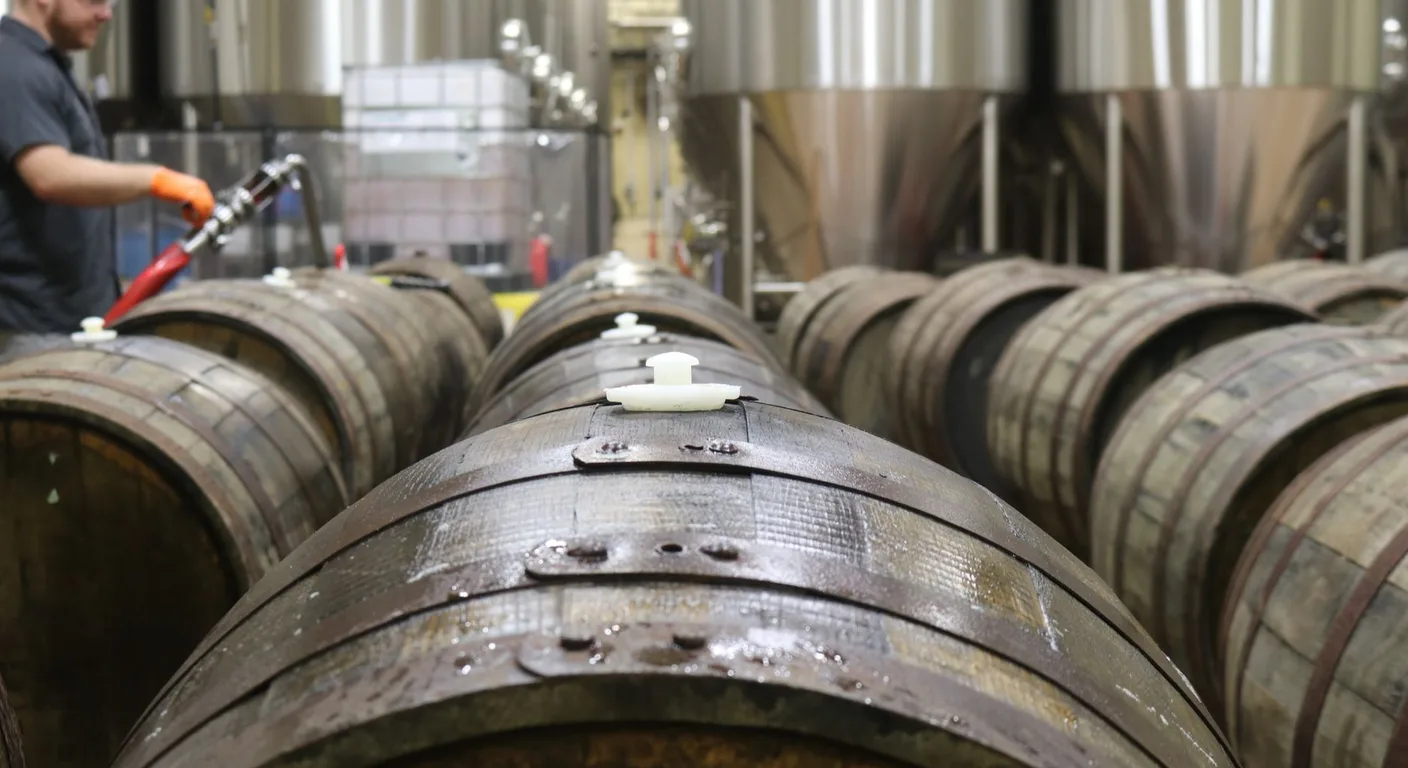
When spirits leave the production account and enter the storage account, the recordkeeping focus shifts to bulk inventory tracking. For most whiskey and bourbon distilleries, this means filling barrels. Your storage logs must document the date of fill, the exact barrel identification number, the liquid volume, the entry proof, and the total proof gallons deposited into each cask. Proper barrel management is vital here, as spirits may sit in the storage account for years.
Over time, barrels lose volume to evaporation, commonly known as the angel's share. The TTB understands that this loss occurs, but you cannot simply guess how much alcohol evaporated. When you eventually pull a barrel from the rickhouse to empty it, you must perform a regauge. This means measuring the liquid volume and proof again to determine the exact amount of alcohol remaining. The difference between the original entry gauge and the final removal gauge must be recorded as a storage loss. If your losses exceed expected norms, the federal government may require an explanation or assess taxes on the missing volume.
How do I track proof gallons and calculate excise tax?
Virtually all federal recordkeeping and taxation revolve around the concept of a proof gallon. A proof gallon is defined as one liquid gallon of spirits that is exactly 100 proof, meaning it contains fifty percent alcohol by volume at sixty degrees Fahrenheit. Because excise tax scales with alcohol content, the tax on a given liquid volume rises and falls based on its proof. You must convert your liquid volumes into proof gallons at every major operational step using official gauging manuals or a reliable proof gallon calculator.
The standard federal excise tax on distilled spirits is $13.50 per proof gallon. However, under the Craft Beverage Modernization Act, qualifying domestic producers benefit from a significantly reduced rate. Currently, the reduced rate is $2.70 per proof gallon on the first 100,000 proof gallons removed for consumption or sale during a calendar year. This is a massive financial relief for craft distilleries, but claiming it requires precise recordkeeping to prove your production and removal volumes. You can use an excise tax calculator to forecast your liability as you plan your bottling runs.
Tax liability is triggered when spirits are removed from your bonded premises. Until that moment, the alcohol is considered in bond, meaning the tax is deferred. Accurately tracking your proof gallons ensures you pay exactly what you owe, no more and no less. Errors in gauge records can compound over time, leading to overpayment of taxes or, worse, underpayment that triggers steep fines during an audit.
How must I document bonded versus tax-paid spirits?
Maintaining the physical and administrative boundary between bonded premises and tax-paid areas is a strict federal requirement. The area where you distill, store, and process spirits is your bonded premises. TTB regulations do not allow tax-paid sampling, retail sales, or public consumption inside this bonded area.
If you want to offer tastings or sell bottles directly to consumers at the distillery, you must designate a separate, non-bonded retail area. This tasting room must be physically distinct from the production floor. When you move finished bottles from your bonded processing account into your tasting room, you are officially removing them from bond. This action triggers the excise tax liability. You must maintain a daily log of these removals, documenting the exact number of bottles, their proof, and the total proof gallons transferred.
Your bonded inventory also determines the size of the surety bond you must carry. A distilled spirits plant needs a bond with a penal sum large enough to cover the potential federal tax liability of all the spirits it holds. This liability is calculated using the standard $13.50 per proof gallon rate, regardless of whether you qualify for reduced rates. As your barrel inventory grows, your total proof gallons in bond will increase. You must actively monitor your records to ensure your bonded inventory does not exceed the limit of your penal sum. If you approach your limit, you are legally required to file for an increase to your bond amount.
When do I file monthly operations reports?
Daily logs are kept on-site for your own records and for auditors, but you must summarize these activities and submit them to the government every single month. Distilleries are required to file monthly operations reports detailing the total movements within their three accounts. These are TTB Form 5110.11 for the production account, Form 5110.28 for the storage account, and Form 5110.40 for the processing account.
These reports are typically due by the fifteenth day of the month following the reporting period. The numbers on these forms must perfectly match the totals from your daily logs. Compiling this data manually can be a time-consuming source of errors, which is why many modern distilleries rely on dedicated TTB reporting software to aggregate the data automatically.
One common trap for new distillery owners involves the timeline of starting operations. Once your basic permit and registration are approved, you are an active distilled spirits plant in the eyes of the government. Even if your facility is still under construction and you have not produced a single drop of alcohol, you are legally required to file your monthly operations reports. In this scenario, you must file zero reports, showing zeroes across all fields. Failing to file these early zero reports is a frequent cause of initial compliance warnings.
How often should a distillery conduct physical inventory?
While daily logs and monthly reports handle the ongoing flow of operations, you must periodically verify that your physical reality matches your paper records. TTB regulations require distilleries to conduct a physical inventory of their storage and processing accounts at least once per year, usually at the end of the calendar year or the end of your fiscal year.
However, waiting an entire year to count your inventory is a risky business practice. Most experienced operators choose to conduct physical inventory counts much more frequently, often on a monthly or quarterly basis. Frequent cycle counts help you catch discrepancies early. If a barrel is leaking in the rickhouse, or if a data entry error resulted in a missing case of finished bottles, finding the mistake within a few weeks is much easier than trying to solve a year-old mystery.
When a physical inventory count reveals a discrepancy between your written logs and the actual alcohol on hand, you must investigate the cause. Minor shortages due to routine spillage or evaporation are normal and must be logged as ordinary losses. Large, unexplained shortages are viewed with suspicion by regulators, as the assumption is often that the alcohol was removed without taxes being paid. Documenting your physical inventory thoroughly provides a defensible record of your operational integrity.
Keeping up with federal compliance does not have to be an overwhelming burden. Spirit Sight is an enterprise distillery management system built specifically to handle the complex realities of bourbon and whiskey production. Our software automatically tracks your proof gallons across production, storage, and processing accounts, instantly generating the data you need for accurate TTB reporting so you can focus on making great spirits rather than fighting with spreadsheets.
Key takeaways
- Every distilled spirits plant must maintain daily records for their production, storage, and processing accounts.
- Federal excise tax and bond limits are calculated based on proof gallons, making accurate gauge records essential.
- Distilleries must file monthly operations reports even during months when no production or bottling occurs.
- Tasting rooms and retail areas must be physically separated from bonded premises, with daily logs for any tax-paid removals.
Frequently asked questions
Are monthly TTB reports required if a distillery has no production?
Yes. Once your federal permit is approved, you must file monthly operations reports as zero reports even if you have not started producing spirits.
How is the federal excise tax on distilled spirits calculated?
The tax is based on proof gallons, which is one liquid gallon at 100 proof. The standard rate is $13.50 per proof gallon, though the Craft Beverage Modernization Act provides reduced rates for qualifying producers.
Can a distillery sell bottles directly out of its bonded warehouse?
No. The TTB requires all tax-paid retail sales and tastings to occur in a separate, non-bonded area. Spirits must be properly removed from bond and logged before they can be sold to consumers on site.