In short: Scaling a craft distillery without losing control of operations requires moving away from manual spreadsheets to structured systems. Distillers must anticipate equipment bottlenecks, secure at least eighteen months of operating capital, properly size stripping stills, and implement rigorous proof gallon tracking to maintain compliance and quality.
Scaling a craft distillery without losing control of operations requires moving away from manual tracking and reactive equipment purchases to a model built on accurate financial forecasting, properly sized production gear, and strict compliance management. Many distillers find that as product demand increases, their initial startup processes begin to break down. Stills become production bottlenecks, rickhouses turn into unmanageable mazes of unmapped barrels, and available cash flow dwindles while brown spirits mature. Overcoming these hurdles means securing adequate operational capital, upgrading equipment strategically, and implementing robust tracking for every drop of alcohol produced. By anticipating these operational shifts, distillers can increase their output significantly while maintaining the exact flavor profile and product quality their early customers expect.
How much capital and time does it really take to grow?
Transitioning from a small startup to a mid-size distillery requires significant financial preparation. Experienced operators repeatedly cite that the practical floor to get out of the red organically is roughly $500,000. However, the most critical piece of financial advice for growing distilleries is to double your initial expansion cost estimate and triple your ongoing yearly operating cost estimate. Construction, rezoning, and equipment installations almost always run over budget.
Time is another massive factor that limits rapid growth. If your expansion requires updating your DSP premises or opening a second location, you must factor in regulatory waiting periods. Federal DSP approval can take around 120 days. Securing new Certificate of Label Approval applications adds another 45 days, and if you are developing new products that require formula approval, you must add approximately 85 more days to your timeline.
Because of these delays, operators highly recommend holding a minimum of 1.5 to 3 years of operating capital in reserve. Running out of cash even a single time can immediately end the business. You must ensure you have the runway to keep the lights on while waiting for local fire marshals, state authorities, and federal regulators to sign off on your expanded capacity.
Scaling a craft distillery without losing control of operations: equipment choices
When demand outpaces capacity, the initial reaction is often to purchase the largest still available. However, a massive equipment upgrade is not always the most efficient path. Upgrading a steam-driven system later costs roughly twice as much in the long run because it often requires a full boiler and cooling system rebuild, plus weeks of downtime. Experienced operators advise sizing your boiler, chiller, cooker, and fermenters for future expansion from day one.
If you did not start with oversized support equipment, you can still increase production without abandoning your current finishing still. Adding a dedicated stripping still is a highly favored strategy. A dedicated stripping still roughly doubles your production output for far less cost than buying a second finishing still. Furthermore, sizing the stripping still to be about three times the volume of your spirit still creates an incredibly efficient production loop.
Many distillers also find success incorporating microbrewery equipment into their expanding operations. Standard brewery tanks and temperature-controlled fermenters work exceptionally well, especially since a whisky wash is essentially a beer brewed without hops. However, you must match the equipment to your specific process. Grain-in American whiskey processes require specialized gear, such as kettle cookers and agitated stills, which standard brewery setups cannot handle without major modifications.
Can I use my still as a mash tun during expansion?
When initially launching, many budget-conscious distillers use their still as a mash tun to save money on equipment. While this works in the short term, it creates a severe bottleneck when you attempt to scale production. Tying up the still for mashing prevents you from running distillation cycles concurrently.
Furthermore, stills usually lack the proper cooling jackets required for efficient mashing and fermentation prep. If you must mash in a still temporarily, you need to order a lower-geared paddle agitator capable of moving thick grain beds, or utilize a recirculation system to prevent scorching.
As soon as your budget allows, moving to a dedicated mash tun is the most impactful operational upgrade you can make. Separating your mashing and distilling phases allows your team to prepare the next batch of wash while the current batch is actively stripping, massively increasing the amount of product you can generate per week.
Do you need an all-copper still to maintain product quality?
As you look at pricing for larger equipment, the cost of raw copper can be shocking. A common concern is whether moving away from a solid copper still will ruin the flavor profile of an established spirit. The good news is that an all-copper system is not strictly necessary to produce high-quality alcohol.
Copper is essential on the hot side of the distillation process. The pot head, column, and plates need to feature copper because the metal acts as a catalyst in the vapor phase. It removes harsh sulfur compounds and produces a noticeably softer, cleaner spirit. Distillers who have experimented with entirely stainless steel hot sides report that it produces a distinct and undesirable funky flavor.
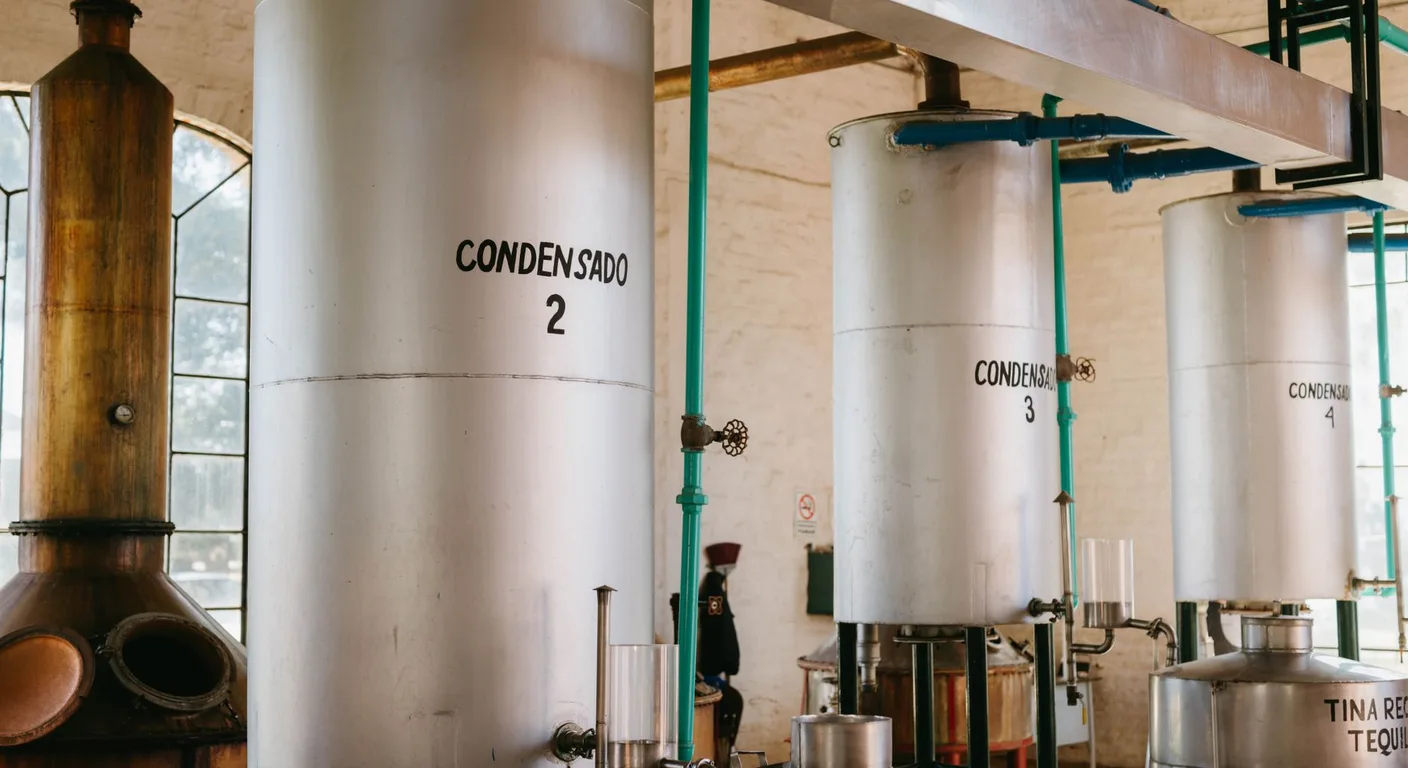
However, in the cooler distillate path, the chemical benefits of copper largely disappear. For components like the condenser and the spirit pipe, stainless steel is a perfectly reasonable choice. A stainless steel stripping still protects your expensive copper finishing still from unnecessary wear and tear. Many award-winning whiskeys are produced using stainless steel kettles equipped with a copper catalyzer, a copper column, or replaceable copper packing in the vapor path. Utilizing stainless steel on the cold side provides a more durable, cost-effective, and easier-to-clean alternative without sacrificing product quality.
How do I fund operations while my whiskey ages?
The defining financial challenge of producing brown spirits is the aging cash flow gap. You are paying for grain, labor, utilities, and barrels today, but you cannot sell the resulting product for years. To bridge this gap during a period of scaling, distilleries rely on a mix of immediate-revenue products and creative funding structures.
Common approaches include bottling sourced wholesale aged whiskey under your own label while your distilled product matures. Others focus heavily on unaged spirits like gin, vodka, white whiskey, or fruit-based eau de vie that can be sold immediately. Maximizing tasting room sales is also critical, as the profit margins on direct-to-consumer pours and bottles are significantly higher than wholesale distribution.
Some operators attempt to fund their rickhouse expansion by selling barrel shares before the spirit is fully aged. You must be extremely careful with the terminology you use. Advertising investment futures invokes strict federal SEC and state securities regulations. Safer structures involve barrel pre-sales structured as a layaway deposit on numbered bottles, private club programs, or selling redeemable gift certificates held in a liability account until bottling. It is best practice to let customers pick their actual barrel at the time of bottling rather than at the initial fill, because individual barrels age and evaporate differently.
As your aging inventory grows, your tax obligations and bond requirements grow with it. Federal law requires a distilled spirits bond to cover federal alcohol taxes due after spirits are sold but before the payment is remitted. Under 27 CFR Part 19, operating without adequate bond coverage is prohibited, and you must maintain separate bonds for state tax liabilities. If you cannot secure a standard surety bond, you will be required to self-fund a cash bond to cover this liability. Please note that this is general information and not intended as legal or tax advice.
Managing rickhouses and TTB compliance during growth
When a distillery produces a few barrels a month, tracking inventory on a spreadsheet or a whiteboard is feasible. When you scale to producing hundreds or thousands of barrels a year, manual tracking becomes a massive liability. Losing track of a single barrel means losing thousands of dollars in future revenue.
As operations scale, you must implement strict daily record-keeping for every storage and processing operation. You must track the exact entry proof, the tare weight of the barrel, and the fill date. Over the years, liquid is lost to the angels share through evaporation. When it comes time for dumping and blending, you must regauge the barrel accurately to report your losses and calculate your tax liabilities.
Miscalculating proof gallons can lead to overpaying excise taxes or facing severe penalties during a federal audit. Utilizing a reliable proof gallon calculator helps operations staff verify fill and dump records on the floor. Additionally, understanding your financial exposure before tax day requires constant monitoring, which is why operators often rely on an excise tax calculator to project liabilities based on their current shipping volumes. Implementing dedicated barrel inventory software ensures that you never lose track of high-value aging assets and always have the documentation necessary to pass a TTB audit smoothly.
Scaling operations successfully is about creating repeatable, trackable, and compliant processes. By carefully managing your equipment upgrades, securing a long financial runway, and strictly monitoring your tax liabilities, you can confidently grow your distillery into a dominant regional or national brand.
Spirit Sight is a specialized distillery ERP built to help growing operations replace chaotic spreadsheets with a single, reliable system of record. From mapping out complex rickhouse locations and tracking barrel maturation to automating proof gallon calculations for TTB reporting, our platform simplifies the daily realities of running a distilled spirits plant. Spirit Sight provides the real-time financial and operational visibility owners need to scale production confidently without ever losing control of their facility.
Key takeaways
- Expect expansion costs to double and operating expenses to triple compared to initial projections.
- Add a dedicated stainless steel stripping still to double production output while protecting your primary copper still.
- Transition away from mashing in your still to utilizing a dedicated mash tun to eliminate production bottlenecks.
- Avoid using the term futures when pre-selling barrels to prevent triggering federal or state securities regulations.
- Maintain accurate federal bonds and track proof gallons precisely to ensure TTB compliance during periods of rapid growth.
Frequently asked questions
How much operating capital does a growing distillery need?
Experienced operators recommend keeping a minimum of 1.5 to 3 years of operating capital on hand. Running out of cash even once can permanently shut down the business, especially when waiting for brown spirits to age.
Can I use brewery equipment to scale my distillery?
Yes, brewery tanks and temperature-controlled fermenters work exceptionally well for scaling wash-style processes. However, grain-in American whiskey production requires specialized equipment like agitated stills and dedicated cookers that standard brewery gear cannot always handle.
Do I need a larger finishing still to increase whiskey production?
Not necessarily. Adding a stainless steel stripping still that is roughly three times the size of your spirit still is a more cost-effective way to double your output while preserving your existing copper equipment.
What happens if my distillery cannot secure a surety bond?
If a surety bond is unavailable, you must self-fund a cash bond to cover your excise tax liabilities. Operating without a valid federal bond is illegal under federal regulations.